Skip to content
For global buyers, motor starters are more than simple switching devices. They control how motors begin operation, manage starting current, and help protect equipment from avoidable damage. A poorly selected starter may cause voltage drops, overheated windings, or unexpected production stoppages. These problems become more serious when equipment crosses borders and enters unfamiliar electrical environments.
A reliable purchasing decision begins with practical details. Buyers should check motor power, rated voltage, frequency, phase configuration, enclosure protection, and control requirements. A starter designed for a 400-volt, 50-hertz system may not suit a 480-volt, 60-hertz installation. Ambient temperature matters too. A dusty factory floor can expose weaknesses that were invisible during a clean warehouse inspection. Small details matter.
Documentation also deserves careful attention. Reputable suppliers should provide test records, wiring diagrams, installation guidance, and clear warranty terms. Independent certification can support confidence, but certification alone does not guarantee a perfect application. Product quality, supplier experience, replacement-part access, and technical response times should be reviewed together. Global logistics can introduce delays, language gaps, and specification misunderstandings. Plan for them.
Some buyers focus heavily on purchase price. That can be a mistake. A cheaper starter may increase maintenance costs or shorten motor life. However, premium pricing is not automatic proof of better value. Every application needs verification from qualified electrical professionals and the equipment manufacturer. Specifications can look complete, yet one missing detail may change the entire selection. Careful comparison helps global buyers choose motor starters that support safer operation, stable performance, and more predictable long-term costs.
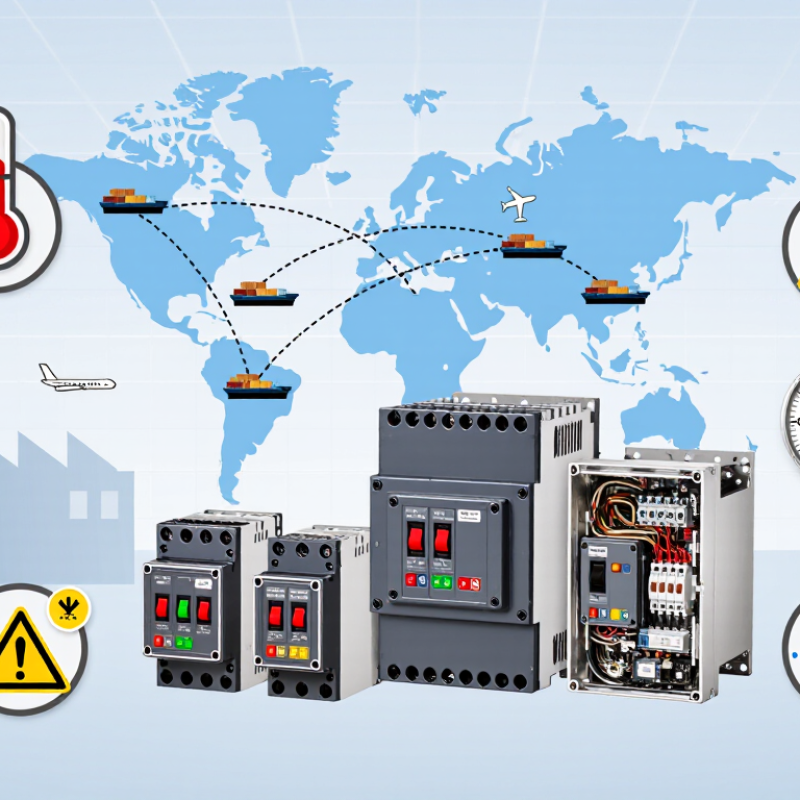
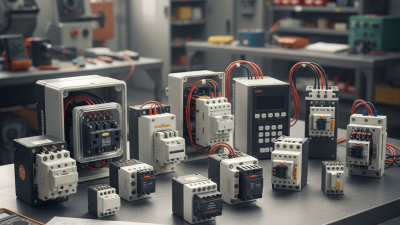
Motor starters are switching and protection assemblies that control how an electric motor begins, runs, and stops. They commonly include a contactor, overload relay, and control circuit. The contactor connects power to the motor. The overload relay reacts when current remains too high for too long. It is simple. But the details matter.
When an operator presses the start button, the control circuit energizes the contactor coil. The motor then receives power through the main contacts. Pressing stop opens the circuit and disconnects the motor. If the motor draws excessive current, the overload relay interrupts the control circuit. This helps reduce damage from stalled shafts, blocked equipment, or phase problems. Direct-on-line starting is easy to maintain, while reduced-voltage methods can limit starting stress on larger systems. Local voltage, frequency, motor rating, and control standards must match.
For global buyers, a starter should be checked beyond its catalog price. Confirm rated current, enclosure protection, terminal markings, coil voltage, reset behavior, and replacement parts. Ask for wiring diagrams and test records. In practical inspections, unclear labels often create more trouble than complex components. Small errors spread. A starter may operate correctly in a warehouse test, yet fail after installation if ambient heat or cable length changes. I would also question whether the overload setting suits the actual motor, not only its nameplate. That judgment requires care, and sometimes the first selection is not the best one.
Why Are Motor Starters Important for Global Buyers?
How Motor Starters Protect Motors from Electrical and Mechanical Damage
A motor starter controls how a motor receives electrical power. It usually combines a contactor, overload protection, and coordinated short-circuit protection. This arrangement limits damage during starting, stopping, and abnormal operation. Without suitable protection, a motor can overheat within minutes.
Starting current may reach several times the motor’s normal running current. The starter manages this demand and disconnects power when an overload continues. An overload relay can respond to locked-rotor conditions, blocked pumps, or jammed conveyors. These faults create excessive heat and torque. That heat can weaken insulation, while sudden torque can damage shafts, couplings, and gearboxes.
Protection must match the real application. A lightly loaded fan needs different settings from a crusher or compressor. Buyers should check motor voltage, frequency, rated current, starting method, enclosure conditions, and control requirements. Local installation rules also matter. A properly selected starter reduces nuisance trips without allowing dangerous overheating. It should also work with upstream protective devices, not replace them.
Field experience shows that many failures begin with rushed selection. An oversized setting may keep production running briefly, but it can hide a serious mechanical problem. An undersized setting may trip repeatedly and frustrate operators. There is no perfect setting without accurate motor data and operating knowledge. That is the part worth reviewing carefully.
Motor starters help limit electrical inrush current and control starting torque, reducing voltage dips, winding stress, belt shock, and gearbox wear. The chart shows representative engineering values for a typical low-voltage induction motor. Actual results vary with motor design, supply conditions, starter settings, and load characteristics.
Choosing the right motor starter depends on the application, not only motor power. Direct-on-line starters suit small pumps, fans, and conveyors with strong power networks. They are simple, economical, and easy to maintain. However, their starting current can reach five to eight times the motor’s full-load current. The U.S. Department of Energy’s Motor System Market Assessment reports that motor-driven equipment uses about 70% of industrial electricity in the United States. A poor starting method can therefore increase electrical stress and operating costs.
Star-delta starters reduce starting current for larger motors, but they need compatible motor connections and moderate load torque. Soft starters provide smoother acceleration for pipelines, compressors, and belt conveyors.
Variable frequency drives offer stronger control when speed changes, energy savings, or frequent starts matter. IEC 60947-4-1 provides a key reference for low-voltage contactors and motor starters.
In practice, buyers should also check ambient temperature, enclosure rating, short-circuit coordination, service access, and local voltage standards. Specifications often look complete. They are not always complete.
Tips:
Ask for the motor’s starting torque, locked-rotor current, duty cycle, and installation altitude. Confirm whether the load can tolerate sudden acceleration. A cheaper starter may become expensive after repeated trips, contact wear, or unplanned downtime. The IEA has repeatedly identified motor-system efficiency as a major industrial energy opportunity, yet selection errors still occur. Engineers should verify the load profile with measured data, not assumptions.
Why Are Motor Starters Important for Global Buyers?
Global buyers evaluate motor starters through three practical questions: What voltage is available, which standards apply, and will the starter fit the machine? A starter designed for 400 V, 50 Hz may not suit a 480 V, 60 Hz installation. The motor nameplate, control circuit, and starter coil must agree. A small mismatch can cause overheating, nuisance trips, or failed starting.
Standards also influence procurement decisions. Buyers often compare IEC or NEMA-based specifications, enclosure ratings, short-circuit ratings, and overload protection. These details matter in a dusty workshop or a humid processing room. An IP-rated enclosure may protect against moisture, but the exact rating still needs verification. Ask for test reports, wiring diagrams, terminal layouts, and declared operating limits. Paperwork matters.
Compatibility goes beyond electrical ratings. Check mounting space, cable entry direction, auxiliary contacts, reset methods, and communication requirements. A starter may be technically suitable but awkward to install. That creates delays. In practice, I would request a sample datasheet and compare it with the motor drawing before ordering. Even careful reviews can miss a control-voltage difference. That is the part worth questioning. Procurement teams should also confirm local service skills, spare components, and commissioning support. A lower purchase price can become expensive when one missing contactor or incorrect coil stops production.
| Evaluation Dimension | Common Global Reference | Typical Data or Requirement | Why It Matters for Motor Starters | Buyer Compatibility Check |
|---|---|---|---|---|
| Supply Voltage | Low-voltage industrial systems | Common three-phase systems include 230 V, 400 V, 415 V, 480 V, and 600 V. | The starter's main-contact rating and insulation rating must be equal to or higher than the actual line voltage. | Confirm phase-to-phase voltage, permissible tolerance, system grounding, and the starter's rated operational voltage (Ue). |
| Frequency | 50 Hz or 60 Hz power networks | Europe, Asia, Africa, and Australia commonly use 50 Hz; North America commonly uses 60 Hz. Some countries use both. | Frequency affects motor speed, starting current, thermal behavior, and the suitability of the control circuit. | Check whether the motor, overload relay, timer, coil, and auxiliary devices are rated for 50 Hz, 60 Hz, or both. |
| Regional Voltage Examples | Representative public supply systems | European and many Asian industrial sites: approximately 400 V three-phase, 50 Hz; North American industrial sites: commonly 480 V three-phase, 60 Hz; Japan: commonly 200 V three-phase, with 50 Hz or 60 Hz depending on region. | A starter selected for one regional system may not be suitable for another without a different contactor, coil, overload range, or enclosure configuration. | Use the installation's actual nameplate and electrical drawing rather than relying only on the destination country. |
| Motor Full-Load Current | Motor nameplate current | For a three-phase motor, approximate input current can be estimated as I = P ÷ (√3 × V × efficiency × power factor), but the nameplate value should be used for final selection. | The contactor must handle the motor duty, while the overload relay must provide an adjustable range that includes the motor's rated current. | Match the starter's AC-3 current or horsepower/kilowatt rating and set the overload protection according to applicable local requirements. |
| Starting Method | Direct-on-line, reversing, star-delta, or reduced-voltage starting | Direct-on-line starting is simple; star-delta and other reduced-voltage methods can reduce starting current but require additional coordination and suitable motors. | The starting method determines the number of contactors, interlocks, timer functions, wiring complexity, and available starting torque. | Confirm load inertia, permitted voltage dip, required starting torque, motor terminal arrangement, and control sequence. |
| Applicable Product Standard | IEC 60947-4-1 | Covers contactors and motor-starters for low-voltage electromechanical switching and motor-control applications. | A recognized product standard provides a common basis for electrical ratings, endurance, temperature rise, and testing. | Request the exact standard edition, conformity documentation, rated utilization category, and test information for the supplied configuration. |
| North American Requirements | UL 60947-4-1A and applicable installation codes | Motor-control equipment may be evaluated using North American construction, marking, short-circuit, and installation requirements. | Electrical approvals and markings used in one regulatory region may not automatically satisfy the requirements of another. | Verify required approval marks, SCCR, enclosure type, terminal markings, and documentation accepted by the installation authority. |
| Utilization Category | AC-3 for squirrel-cage motor starting and stopping | AC-3 applies to starting motors and switching off during running operation; plugging, inching, and frequent reversing may require a different category or rating. | The same current rating may not provide the same service life under different switching duties. | Compare actual starts per hour, reversing frequency, jogging duty, load type, and required electrical endurance. |
| Control-Circuit Voltage | Common values include 24 V AC/DC, 110–120 V AC, and 220–240 V AC | The contactor coil must match the available control voltage and frequency; DC coils require DC control power. | A mismatch can cause failure to pull in, overheating, contact chatter, or immediate coil damage. | Check coil voltage, AC/DC type, frequency, tolerance, inrush demand, and the output capacity of the control device. |
| Short-Circuit Coordination | Type 1 or Type 2 coordination under IEC practice | Type 2 coordination is intended to limit damage to the starter after a short circuit, subject to the specified protective device and prospective fault current. | Coordination affects downtime, replacement cost, safety, and whether the starter can return to service after a fault. | Confirm the tested combination of starter, fuse or circuit breaker, maximum prospective fault current, and coordination type. |
| Environmental Protection | IEC 60529 IP ratings and regional enclosure classifications | IP54 provides limited dust ingress protection and protection against water splashes; higher protection may be necessary for washdown, dust, or outdoor exposure. | Moisture, dust, chemicals, vibration, and temperature can shorten contactor and overload-relay life. | Specify ambient temperature, altitude, humidity, washdown conditions, corrosive substances, ventilation, and required enclosure rating. |
| Auxiliary Contacts and Integration | Normally open and normally closed auxiliary contacts | Auxiliary contacts support holding circuits, interlocking, fault indication, remote status, and control-system feedback. | Insufficient or incompatible auxiliary contacts may require redesign of the control panel. | Check contact arrangement, control voltage, current rating, terminal layout, communication needs, and available panel space. |
| Documentation and Marking | Nameplate, wiring diagram, ratings, warnings, and installation instructions | Important markings include Ue, Ui, Ie, utilization category, coil voltage, overload range, ambient limits, and short-circuit data. | Complete documentation reduces customs delays, installation errors, commissioning time, and maintenance risk. | Require documents in the project language where necessary and verify that ratings match the exact shipped model and accessories. |
Note: Voltage and frequency values are representative nominal systems. Final motor-starter selection must be based on the motor nameplate, local electrical regulations, installation conditions, protective-device coordination, and the requirements of the authority having jurisdiction.
Motor starters influence more than startup performance. They affect purchase cost, equipment uptime, and maintenance planning. Buyers should match the starter’s current rating with the motor’s full-load current, not only its horsepower. Starting current can be several times higher. A small mismatch may cause nuisance trips, overheated contacts, or early failure.
Enclosure protection also matters. Dusty workshops, humid ports, and outdoor panels require different protection levels. Check the rated operating temperature, coil voltage, overload range, and available auxiliary contacts. These details affect installation time and future repairs. Ask suppliers for test reports, wiring diagrams, service instructions, and spare-part availability. Reliable documentation reduces mistakes across different countries and electrical systems. Certification requirements must also fit the destination market. Local approval can change the real purchase cost.
Tips: Compare total ownership cost, not the invoice alone. Include shipping, compatible accessories, inspection fees, energy losses, and replacement parts. Request a sample unit when possible, then inspect terminal strength and labeling. Test it under realistic load conditions. A cheaper starter may look attractive, but its contacts may wear faster. I have seen buyers overlook ambient temperature and regret it later. That mistake is easy to repeat. Leave a maintenance margin, especially for motors operating many hours each day.