 Skip to content

What Are the Top 10 Types of Motor Starters?
Motor starters do more than switch a motor on. They help manage starting current, protect equipment, and shape how machinery responds under load. The choice matters in a pump room, where a sudden pressure change can disrupt flow, or on a conveyor, where a heavy load must move smoothly.
The International Energy Agency’s 2011 report, Energy Efficiency Policy Opportunities for Electric Motor-Driven Systems, estimates that electric motor systems use 43–46% of global electricity. That figure puts starter selection in a wider efficiency conversation. A starter cannot make an unsuitable motor efficient, but the right control method can support reliable operation and reduce avoidable stress. Small details matter: supply voltage, starting frequency, load inertia, and the need for speed control.
This guide compares ten common motor starters, from direct-on-line and star-delta designs to soft starters and variable-frequency drives. Each has trade-offs in cost, wiring, starting torque, and control. IEEE Fellow Austin H. Bonnett is recognized for his work on motor reliability; however, I cannot verify a direct quotation from him about starter selection, so I will not invent one. A sound engineering principle remains clear: match the starter to the motor, the load, and the operating conditions. That is the practical lens for comparing the options ahead.
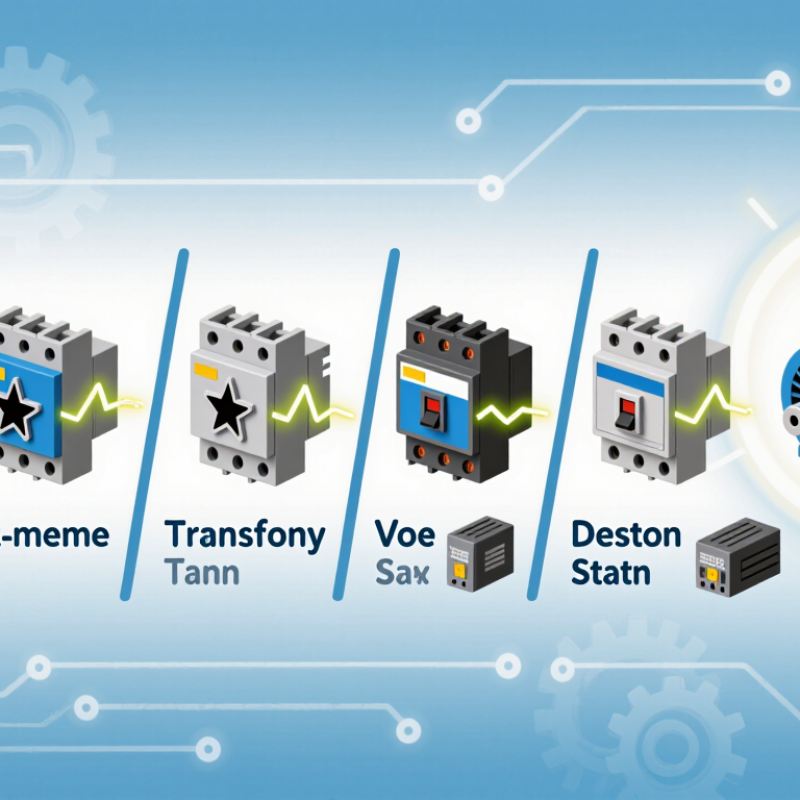
Motor Starters: Purpose, Components, and Operating Principles
What Are the Top 10 Types of Motor Starters?
Motor Starters: Purpose, Components, and Operating Principles
A motor starter controls when an electric motor starts and stops, while helping protect it from overload. Its main parts are a contactor, an overload relay, and a control circuit. When the control circuit energizes the contactor coil, its contacts close and supply power to the motor. If sustained overcurrent occurs, the overload relay opens the control circuit. The motor stops. Short-circuit protection is usually provided by a coordinated fuse or circuit breaker.
Starter designs vary in how they limit starting current and manage acceleration. The U.S. Department of Energy’s Improving Motor and Drive System Performance: A Sourcebook for Industry reports that motor systems account for about 68% of industrial electricity use in the United States. That figure describes motor systems overall, not savings from starters alone. Still, choosing a suitable starter can help reduce mechanical shock and support dependable operation. Actual performance depends on the motor, load, and installation.
Tip: Check the motor nameplate current and the driven load before selecting or adjusting a starter. Inspect contact wear and overload settings during maintenance. A tidy panel can still hide a poor setting.
What Are the Top 10 Types of Motor Starters? — Motor Starters: Purpose, Components, and Operating Principles
| Motor Starter Type | Starting Principle | Typical Main Components | Common Applications | Key Considerations |
|---|---|---|---|---|
| Direct-on-Line (DOL) | Connects the motor directly to the supply at full voltage. The motor draws its normal high starting current while accelerating. | Contactor, overload relay, short-circuit protective device, and start/stop controls. | Small motors and installations where the supply system can tolerate the starting current. | Simple and economical, but produces high inrush current and comparatively high starting torque. |
| Reversing Starter | Changes the direction of rotation of a three-phase motor by swapping any two supply phases. It can start the motor at full voltage. | Forward and reverse contactors with mechanical and electrical interlocks, overload relay, and control circuit. | Conveyors, hoists, machine tools, and other equipment that must run in both directions. | Interlocks prevent both contactors from closing together. Reversing before the motor stops can cause severe electrical and mechanical stress. |
| Star-Delta Starter | Starts a suitable three-phase motor with its windings connected in star, then switches them to delta for normal running. Starting line current and torque are approximately one-third of direct-on-line values under ideal conditions. | Three contactors, timer or transition control, overload protection, and a motor with accessible winding terminals. | Fans, pumps, and other loads that can accelerate with reduced starting torque. | The motor must be designed to run in delta at the supply voltage and have the required winding leads. Switching may cause a current or torque transient. |
| Autotransformer Starter | Applies reduced voltage through transformer taps during starting, then connects the motor to full supply voltage. | Autotransformer, switching contactors or switchgear, timing/control circuit, and protection. | Medium or large induction motors where reduced line current is needed but more starting torque is required than some simpler reduced-voltage methods provide. | Transformer taps determine the voltage reduction. The equipment is larger and more complex than a basic DOL starter. |
| Primary-Resistance Starter | Places resistors in series with the motor during starting to reduce the voltage at its terminals; the resistors are bypassed as the motor accelerates. | Starting resistors, contactors or switching devices, control circuit, and overload protection. | Some older or specialized applications requiring a basic reduced-voltage starting method. | Starting torque falls roughly with the square of applied voltage. Resistors dissipate heat and are generally less efficient than modern electronic methods. |
| Part-Winding Starter | Energizes one part of a specially designed motor winding first, then connects the remaining winding section after a short interval. | Two contactors, time-delay control, overload protection, and a compatible part-winding motor. | Motors specifically designed for part-winding starting, including certain refrigeration and air-handling applications. | It is suitable only for motors built with split windings. Starting-current and torque reduction depend on the motor design. |
| Soft Starter | Uses controlled semiconductor switching to increase motor voltage gradually during acceleration; some units also provide a controlled stop. | Power semiconductors, control electronics, current or voltage sensing, protective functions, and sometimes a bypass contactor. | Pumps, fans, and conveyors where reduced mechanical shock and lower starting current are useful. | Controls starting and stopping rather than providing broad continuous speed control. Heat dissipation and motor protection must be considered. |
| Variable-Frequency Drive (VFD) | Starts the motor by varying both supply frequency and voltage, allowing controlled acceleration and adjustable operating speed. | Rectifier, DC link, inverter, control system, protective functions, and associated input/output equipment as required. | Fans, pumps, compressors, and process machinery that need speed control or a controlled start. | Can reduce starting current and provide speed regulation, but introduces power-electronic considerations such as harmonics, motor insulation stress, and cooling at low speeds. |
| Rotor-Resistance Starter | Adds external resistance to the rotor circuit of a wound-rotor induction motor during starting; resistance is gradually removed as the motor accelerates. | External resistors, rotor-circuit switching equipment, control mechanism, and protection. | Wound-rotor motors used in applications requiring high starting torque, such as certain cranes or heavy-duty drives. | Requires a slip-ring motor. The external resistors and slip-ring equipment add maintenance and energy losses. |
| Stator-Resistance Starter | Reduces the voltage applied to a motor by inserting resistance in series with the stator during starting, then bypasses the resistance. | Series resistors, switching devices, control circuit, and overload protection. | Legacy or specialized reduced-voltage starting installations. | Reduced stator voltage also reduces starting torque substantially; resistor heating and energy loss limit its suitability in many modern installations. |
Selection depends on motor design, load torque, required acceleration, supply capacity, operating frequency, and applicable electrical codes. A motor starter typically combines switching with appropriate motor and circuit protection.
Related Posts
-
Top 10 Motor Starters You Need to Know About?
-
What is a Motor Starter and How Does it Work?
-
Why Use Soft Starters for Motor Control and Energy Efficiency?
-
Why Are Motor Starters Important for Global Buyers?
-

2025 Guide to Motor Control Centers: Features, Benefits, and Selection Tips
-
How to Choose the Best Motor Control Solutions?