 Skip to content

What Is a Power Source and How Does It Work?
A power source provides the energy needed to operate an electrical device. It may produce electricity directly or convert another form of energy into electrical energy. Batteries use chemical reactions, solar panels convert sunlight, and generators transform mechanical motion. Even a wall outlet depends on a larger network of generators, transformers, and protective equipment.
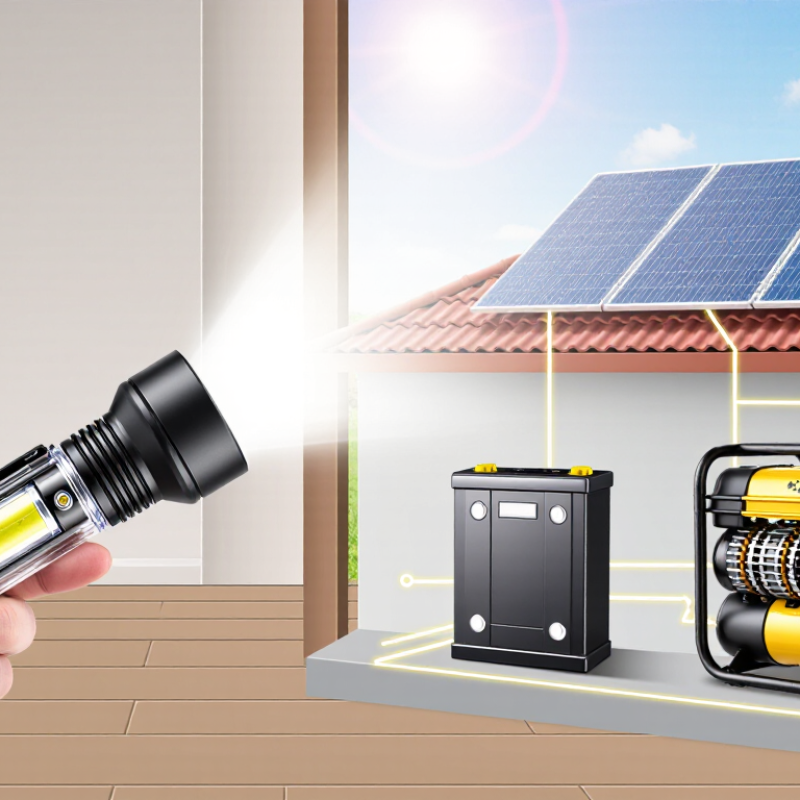
A flashlight offers a simple example. Its battery creates a voltage difference between two terminals. When the switch closes, current travels through the circuit and reaches the lamp. The lamp converts electrical energy into light and heat. No closed path, no useful output. This basic relationship helps explain why voltage, current, resistance, and power must be considered together. Engineers often measure power in watts and stored energy in watt-hours. These figures describe different things.
The same principles apply to phones, vehicles, medical equipment, and industrial machines. However, a simple explanation can hide important limits. A battery’s printed capacity may change with temperature, age, or operating speed. A solar panel may produce less power under clouds or shade. Real systems also lose energy through heat, wiring, and conversion equipment. Reliable designs use tested components, clear ratings, insulation, fuses, and suitable charging controls. Standards and manufacturer instructions provide stronger guidance than guesswork. From practical testing, checking the label and measuring the load can prevent disappointing results. The model is useful, but never perfect. Understanding how a power source works makes electrical choices safer, clearer, and more efficient.
Defining a Power Source and Its Essential Purpose
A power source is the origin of energy that enables a device, machine, or system to operate. Its essential purpose is to supply usable power at a controlled voltage, current, pressure, or temperature. Batteries convert stored chemical energy into electricity. Solar panels convert sunlight directly into electrical energy. Generators transform mechanical motion into electrical output. The method changes, but the purpose remains constant: deliver dependable energy when and where work is required.
Power availability matters as much as energy capacity. A battery may store substantial energy yet fail if it cannot provide enough current during startup. In practical testing, engineers measure voltage stability, output power, efficiency, operating temperature, and response time. Safety also depends on source design, including insulation, overload protection, and thermal control. The International Energy Agency reported that global electricity demand is expected to grow by about 4% in 2024, showing why reliable generation and distribution remain essential (IEA, Electricity 2024).
Scale is changing quickly. The International Renewable Energy Agency reported approximately 473 gigawatts of renewable capacity added worldwide in 2023, bringing total renewable capacity near 3,870 gigawatts (IRENA, Renewable Capacity Statistics 2024). These figures indicate strong investment in cleaner power sources, but capacity alone does not guarantee constant supply. Weather, storage limits, transmission constraints, and maintenance still affect performance. That definition is useful, but incomplete. A power source must be judged in real conditions, where demand changes suddenly and efficiency rarely reaches its ideal laboratory value.
What Is a Power Source and How Does It Work? - Defining a Power Source and Its Essential Purpose
| Power Source | Energy Input or Storage Medium | How It Works | Typical Electrical Output | Typical Efficiency or Performance Metric | Main Advantages | Common Limitation |
|---|---|---|---|---|---|---|
| Alkaline Battery | Chemical energy stored in zinc and manganese dioxide | An electrochemical reaction produces a flow of electrons through an external circuit. The cell voltage gradually decreases as the reactants are consumed. | 1.5 V nominal per cell | Primary, non-rechargeable; performance depends strongly on load and temperature | Inexpensive, portable, and widely available | Must be replaced after discharge and can supply limited continuous power |
| Lithium-Ion Battery | Reversible chemical energy stored in lithium-containing electrode materials | During discharge, lithium ions move between electrodes while electrons flow through the external circuit. Charging reverses the ion movement. | 3.6–3.7 V nominal per cell | Typically about 85–95% round-trip efficiency, depending on design and operating conditions | High energy density, rechargeable, and suitable for portable electronics and vehicles | Requires protection and thermal management; capacity declines with age and use |
| Lead-Acid Battery | Chemical energy stored in lead-based electrodes and sulfuric acid electrolyte | A reversible electrochemical reaction generates direct current. Charging restores the original chemical state. | 2 V nominal per cell | Typically about 70–85% round-trip efficiency | Low cost, high surge current, and reliable for backup applications | Heavy, relatively low energy density, and sensitive to deep discharge |
| Solar Photovoltaic | Radiant energy from sunlight | Semiconductor photovoltaic cells convert light directly into direct-current electricity through the photovoltaic effect. An inverter can convert it to alternating current. | DC output; system size varies from watts to utility scale | Commercial module efficiency is commonly about 15–23%; output varies with sunlight and temperature | No fuel consumption during operation, quiet operation, and scalable installation | Intermittent output; requires space and often storage or grid support |
| Wind Turbine | Kinetic energy in moving air | Wind turns rotor blades connected to a generator, which converts mechanical rotation into electricity. | AC output; commonly kilowatts to megawatts | Typical capacity factor is approximately 25–45% on land and higher at many offshore sites | Renewable operation with low direct emissions and useful large-scale output | Variable wind conditions, visual and acoustic impacts, and site requirements |
| Hydroelectric Generator | Gravitational potential energy of elevated or flowing water | Moving water spins a turbine, and the turbine drives an electrical generator. | AC output; commonly megawatts to gigawatts | Overall turbine-generator efficiency can reach approximately 80–90% | High efficiency, controllable output, and long service life | Requires suitable geography and may alter river ecosystems and land use |
| Reciprocating Engine Generator | Chemical energy in a combustible fuel | Fuel combustion drives pistons and a crankshaft. The rotating shaft turns an alternator to produce electricity. | AC output; commonly a few kilowatts to tens of megawatts | Electrical efficiency is commonly about 30–45%, depending on engine size and load | Dispatchable, responsive, and suitable for backup or off-grid use | Requires continuous fuel and produces emissions, noise, and heat |
| Fuel Cell | Chemical energy supplied by a fuel and an oxidant | An electrochemical reaction produces electricity without combustion. Hydrogen-based systems commonly combine hydrogen with oxygen to form water and heat. | DC output; inverter often required for AC loads | Electrical efficiency is commonly about 40–60%; combined heat and power can achieve higher total utilization | Quiet operation, high efficiency at suitable loads, and low local emissions for hydrogen systems | Fuel storage, fuel availability, cost, and system durability can be challenging |
| Thermal Power Plant | Heat from combustion or nuclear fission | Heat produces steam or hot gas, which expands through a turbine connected to an electrical generator. | AC output; commonly hundreds of megawatts to gigawatts | Large steam-cycle plants often operate around 30–45% electrical efficiency, depending on technology | Can provide steady, high-volume power for electrical grids | Large infrastructure, cooling requirements, and fuel or waste-management concerns |
Note: Values are representative ranges rather than guaranteed specifications. Actual performance depends on design, operating conditions, temperature, maintenance, resource availability, and system scale.
Related Posts
-
Why Choose the Right Power Source for Your Business Needs?
-
10 Essential Tips for Efficient Electric Power Distribution
-
How to Choose the Right Power Source for Your Needs?
-
Why Are Power Solutions Essential for Global Buyers?
-

How to Choose the Right Power Controller for Your Needs?
-
2026 Top Power Distros for Efficient Energy Management Solutions?