 Skip to content

What Is a Power Source and How Do You Choose One?
A power source converts stored or supplied energy into usable electrical power. It may be a wall outlet, battery pack, solar panel, generator, or fuel cell. The best option depends on the device, environment, and acceptable risk. A camera in a remote field needs different support than a medical monitor or data-center server. Small details matter. Check voltage, current, connector type, capacity, runtime, charging speed, and operating temperature. A wrong match can damage equipment or create unnecessary heat.
Industry data shows why this decision deserves care. The International Energy Agency’s Electricity 2024 report projects global electricity demand growth of about 3.4% annually through 2026. Meanwhile, the IEA’s Global EV Outlook 2024 expects electric-car sales to exceed 17 million in 2024. These trends point toward greater demand for batteries, charging systems, and dependable grid connections. Still, bigger capacity is not always better. A heavy power station may be wasteful for a phone, while a small battery could fail during a long outage. The U.S. Department of Energy recommends comparing efficiency, operating conditions, and total energy use rather than relying only on advertised capacity. That advice is practical, but not perfect. Product labels can simplify real performance. Temperature, cable losses, aging, and peak loads may change the result. This guide explains how to choose a power source using measured requirements, credible specifications, and basic safety principles. Reliability comes before convenience.
What Is a Power Source?
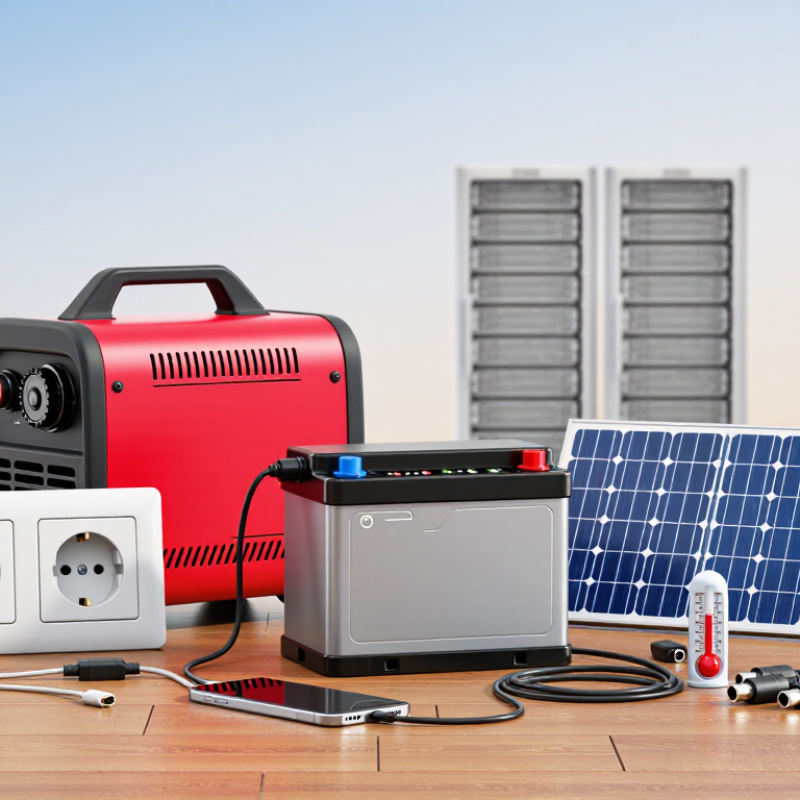
Power source is the part of a system that supplies usable energy. It may convert stored chemical energy, sunlight, motion, or wall electricity into power. Batteries store energy chemically and release it as electrical current. Generators create electricity through mechanical movement. Solar panels convert light into electrical energy. A power source is not simply “the battery.” It also includes output, storage, control, and safety features.
In practical work, I check the device’s voltage and current requirements before choosing a source. A mismatch can cause weak performance, overheating, or permanent damage. Capacity matters too. A small battery may run a sensor for weeks, but only minutes in a heated appliance. Portable equipment also needs attention to weight, charging time, temperature, and expected use. These details are easy to underestimate. I have made that mistake myself. Real conditions often differ from laboratory estimates.
Tips: Read the device label carefully. Match voltage exactly when possible. Choose current capacity above normal demand. Confirm the charging method and protection features. Keep a small safety margin. More capacity is not always better, because extra weight and cost can reduce usability. Test the setup under realistic conditions, including startup loads and cold weather. Record the results, even when they look disappointing.
What Is a Power Source and How Do You Choose One?
| Power Source | How It Produces or Supplies Power | Typical Output Characteristics | Rechargeable or Refillable? | Key Advantages | Main Limitations | Suitable Applications |
|---|---|---|---|---|---|---|
| Primary Battery | Converts stored chemical energy into electrical energy through an electrochemical reaction. | Usually provides a stable direct-current output; common individual cells range from about 1.2 to 3.6 volts, depending on chemistry. | No; designed for one discharge cycle and later recycling or disposal. | Long shelf life, simple installation, low maintenance, and reliable operation in small devices. | Finite capacity; performance can decline in extreme temperatures; replacement creates material waste. | Remotes, clocks, medical instruments, sensors, and emergency equipment. |
| Rechargeable Battery | Stores electrical energy chemically and releases it as direct current when needed. | Common cell voltages are approximately 1.2 volts for nickel-based cells and 3.6–3.7 volts nominally for many lithium-ion cells. | Yes; cycle life varies by chemistry, operating conditions, depth of discharge, and charging method. | Portable, quiet, efficient, and able to provide power when renewable generation is unavailable. | Limited energy capacity, charging time, aging, thermal-management requirements, and recycling considerations. | Mobile devices, cordless tools, electric vehicles, backup systems, and energy storage. |
| Fuel Cell | Generates electricity through an electrochemical reaction between a fuel and an oxidant without combustion. | Produces direct current continuously while fuel and oxidant are supplied; electrical efficiency is commonly higher than that of combustion-only generators. | Not electrically rechargeable; it is refueled with an appropriate fuel. | Quiet operation, continuous output, and potentially low local emissions when using hydrogen. | Fuel storage and distribution can be difficult; system cost, durability, and fuel purity may be concerns. | Backup power, specialized vehicles, remote installations, and stationary electricity generation. |
| Solar Photovoltaic | Semiconductor cells convert sunlight directly into direct-current electricity through the photovoltaic effect. | Output varies with sunlight, shading, temperature, orientation, and panel area; an inverter is normally used for alternating-current loads. | No; it generates electricity rather than storing it. Batteries may be added for storage. | Renewable, quiet, scalable, and generally low-maintenance after installation. | Intermittent output, reduced generation at night or in heavy cloud, and upfront installation requirements. | Rooftops, calculators, remote sensors, water pumping, and utility-scale generation. |
| Wind Turbine | Uses the kinetic energy of moving air to rotate a generator and produce electricity. | Output depends strongly on wind speed; available power increases approximately with the cube of wind speed within the operating range. | No; batteries or other storage systems can be used to retain excess electricity. | Renewable, suitable for large-scale generation, and capable of producing power day and night when wind conditions are favorable. | Variable output, site-specific performance, mechanical maintenance, and possible noise or visual impacts. | Wind farms, coastal regions, agricultural sites, and appropriately designed off-grid systems. |
| Hydroelectric Generator | Converts the energy of moving or falling water into mechanical rotation and then electricity. | Can provide steady output where water flow is reliable; output depends on water flow rate and elevation difference. | No; pumped-storage facilities can store energy by moving water to a higher elevation. | High efficiency, long operating life, and the ability to provide predictable or adjustable power at suitable sites. | Requires suitable geography and infrastructure; construction can affect rivers, habitats, and communities. | Utility-scale generation, small stream systems, and managed water infrastructure. |
| Combustion Generator | Burns a fuel to create mechanical motion, which drives an electrical generator. | Can supply continuous alternating-current power while fuel is available; output is rated by electrical power capacity. | No; requires regular refueling and maintenance. | High power availability, rapid deployment, and usefulness in emergencies or locations without grid access. | Produces exhaust emissions and noise, consumes fuel, and requires moving-part maintenance. | Construction sites, emergency backup, events, farms, and remote facilities. |
| Grid Electricity | Delivers electricity through an interconnected transmission and distribution network supplied by multiple generating sources. | Typically provides regulated alternating-current voltage and frequency; exact values depend on the local electrical standard. | Not directly; energy storage can be installed separately to provide backup or load shifting. | Convenient, dependable in well-served areas, and capable of supporting a wide range of power levels. | Depends on grid availability, tariffs, infrastructure, and the generation mix used by the network. | Homes, offices, factories, data equipment, appliances, and public infrastructure. |
Selection factors include required voltage, continuous and peak power, operating time, portability, recharge or refueling access, environmental conditions, safety requirements, maintenance needs, total cost, and environmental impact.
Related Posts
-
How to Choose the Right Power Source for Your Business?
-
What Is a Power Source and How Does It Work?
-
10 Essential Tips for Efficient Electric Power Distribution
-
How to Choose the Right Power Source for Your Needs?
-
Why Are Power Solutions Essential for Global Buyers?
-
Why Choose the Right Power Source for Your Business Needs?