Skip to content
Choosing among China’s top circuit control manufacturers requires more than comparing prices. A reliable supplier should demonstrate engineering competence, stable production, and clear quality controls. Their experience should match your product’s voltage, current, enclosure, and operating environment. Ask for technical drawings, test reports, and traceable material records. Do not rely on polished websites alone.
Factory evidence matters. Review production lines, inspection stations, and sample procedures through an audit or live video call. Look for controlled soldering, accurate wiring, functional testing, and labeled components. Certifications such as ISO 9001 may support credibility, but certificates should be verified and linked to the actual manufacturing site. A supplier’s response to technical questions can reveal more than a brochure. Clear answers are valuable.
Request a sample before signing a large order. Check terminal strength, cable routing, panel markings, and performance under realistic conditions. Discuss tolerances, customization, packaging, lead times, spare parts, and after-sales support in writing. Strong manufacturers explain risks instead of promising perfection. That matters.
Cost still matters, but the lowest quotation may hide weak inspection or inconsistent components. Compare total ownership costs, including rework, delays, testing, and field support. Personal experience from sample reviews can help, yet it should not replace documented evidence. No selection method is flawless. Supplier capacity can change, communication may weaken, and assumptions can survive unnoticed. A careful evaluation combines factory verification, technical review, transparent contracts, and ongoing performance checks. That is how buyers can identify a dependable circuit control partner with greater confidence.
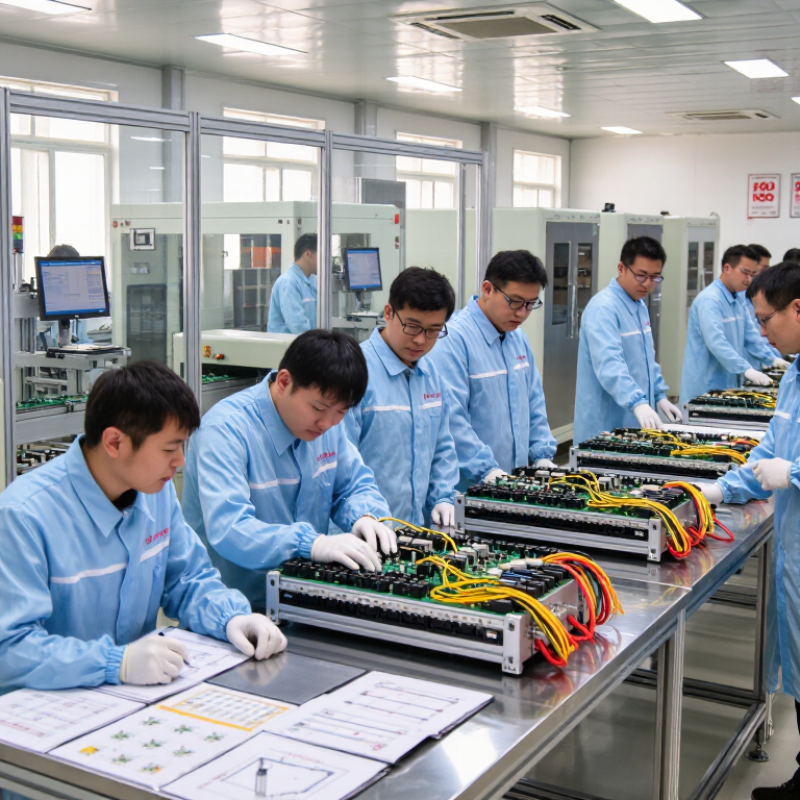
Circuit control manufacturers design and produce equipment that manages electrical power, signals, and machine operations. Their products may include control panels, relay assemblies, contactors, circuit breakers, terminal blocks, sensors, and programmable control cabinets. Some manufacturers also provide wiring, enclosure fabrication, software configuration, and customized assemblies. These products help factories start motors, protect circuits, monitor temperature, and stop equipment during abnormal conditions.
From practical supplier evaluations, production capability matters more than a polished catalog. A reliable manufacturer should explain material selection, rated voltage, current limits, insulation performance, and testing procedures clearly. Ask for wiring diagrams, sample inspection records, and traceability documents. Factory visits can reveal useful details, such as labeled wires, organized testing benches, and controlled storage for sensitive components. Certification is important, but certificates alone cannot prove consistent quality.
When choosing among China’s circuit control manufacturers, compare engineering support, production equipment, response speed, and after-sales handling. Request a sample before placing a larger order. Test terminal tightness, enclosure fit, labeling accuracy, and performance under the intended load. I have seen attractive samples fail because documentation was incomplete. That assumption can be costly. No supplier is perfect, so discuss corrective actions before problems appear. A manufacturer that accepts technical questions and records changes carefully is usually easier to trust over time.
China’s leading circuit control manufacturers are defined by more than product range or factory size. Look for clear engineering practices, consistent production controls, and evidence that products perform reliably under real operating conditions. Ask how incoming components are inspected, how soldering and assembly are monitored, and whether each production batch can be traced. Specific answers matter. Vague claims do not.
Technical capability shows in the details. A dependable manufacturer can review voltage, current, load type, operating temperature, and installation limits before recommending a control solution. Request sample test records, drawings, and relevant quality documentation. For a circuit board, check connector fit, component markings, and solder joints under good light. Small defects can become expensive field problems. I may be cautious here: a neat sample alone proves little without repeatable testing.
Communication and delivery discipline matter too. Compare engineering response times, change-control procedures, packaging, and the accuracy of production schedules. Ask what happens when a component becomes unavailable, and how proposed substitutions are approved. Strong suppliers explain trade-offs rather than promising everything. Their quotations should identify specifications, testing scope, and delivery assumptions. A factory visit can help, but it is not essential; consistent records and direct technical answers may reveal more than a polished showroom.
Choosing a circuit control manufacturer requires more than comparing prices and product photos. Ask for current datasheets showing rated voltage, current, operating temperature, and mechanical life. Check that sample markings match the documents. Small inconsistencies can signal weak control over production records.
Evaluate quality through test evidence, not promises. Request inspection results for contact resistance, insulation, temperature rise, and switching endurance where relevant to your application. Ask how defects are recorded and traced between production batches. A sample may perform well while later batches vary. This check is useful, but not perfect.
Certifications should match the product and intended market. Confirm the certificate holder, model coverage, issuing body, and validity directly with the issuer when possible. A certificate for one product family may not cover every configuration. Technical expertise shows in specific answers: can engineers explain test limits, review your wiring diagram, or identify a mismatch between load and rating? Notice how they handle uncertainty. Clear follow-up and documented revisions matter. A fast answer is not always a sound one. I would also compare the support offered after delivery, since this detail is easy to overlook when reviewing a polished quotation.
| Evaluation Dimension | What to Verify | Reliable Evidence | Recommended Benchmark | Suggested Weight |
|---|---|---|---|---|
| Quality Management System | Whether the manufacturer operates a documented quality system covering design, purchasing, production, inspection, nonconformity handling, and corrective action. | Valid third-party certificate, audit report, quality manual, process flow, and corrective-action records. | ISO 9001 certification with a scope that covers the relevant circuit-control products and manufacturing site. | 12% |
| PCB Assembly and Workmanship | Control of soldering, component placement, cleanliness, workmanship defects, and assembly consistency. | Process-control plan, inspection standards, sample inspection records, rework procedure, and production photographs or audit access. | Workmanship requirements aligned with the applicable IPC assembly class and customer acceptance criteria. | 12% |
| Electrical Testing Capability | Coverage of automated optical inspection, in-circuit testing, functional testing, insulation testing, and final verification. | Equipment list, calibration certificates, test coverage matrix, test fixtures, and traceable test reports. | 100% functional testing for critical control functions, with calibrated equipment and documented test limits. | 12% |
| Component Traceability | Ability to trace components and materials from approved suppliers through production lots and final shipments. | Lot-control records, barcode or serial-number system, incoming inspection records, and retention policy. | Traceability from finished product to production date, material lot, supplier batch, and inspection results. | 8% |
| Product Safety Compliance | Suitability of the circuit-control product for the electrical, mechanical, and environmental hazards of its intended application. | Safety test reports, technical construction file, insulation specifications, creepage and clearance records, and risk assessment. | Applicable requirements identified under standards such as IEC 62368-1, IEC 61010-1, or another product-specific safety standard. | 10% |
| Electromagnetic Compatibility | Resistance to electromagnetic disturbance and control of emissions in the intended operating environment. | EMC test reports, immunity test results, emissions data, grounding design, shielding plan, and failure-analysis records. | Testing against applicable IEC 61000-series requirements and the regulatory requirements of the target market. | 8% |
| Environmental and Materials Compliance | Control of restricted substances and environmental obligations in the target sales region. | Material declarations, supplier declarations, laboratory reports, compliance database, and change-notification procedure. | Documented compliance with applicable RoHS and REACH requirements, supported by current supplier data. | 7% |
| Design and Engineering Expertise | Capability in schematic review, PCB layout, power integrity, signal integrity, thermal design, firmware interaction, and design-for-manufacturing. | Engineering organization chart, anonymized design examples, design review checklist, simulation records, and engineering change procedure. | A documented design-review process with electrical, mechanical, thermal, software, and manufacturability reviews where applicable. | 10% |
| Customization and NPI Capability | Ability to convert specifications into prototypes, pilot builds, validated processes, and stable mass production. | New-product-introduction procedure, prototype lead-time data, pilot-build report, design-validation plan, and production-readiness checklist. | Defined stage-gate process from requirements review to design verification, process validation, and production release. | 8% |
| Reliability and Environmental Testing | Evaluation of service life under temperature, humidity, vibration, shock, electrical cycling, and other application-specific conditions. | Reliability plan, accelerated-life test reports, temperature-humidity records, vibration results, and failure-rate analysis. | Test conditions based on the actual application profile and relevant standards such as IEC 60068 where applicable. | 7% |
| Supply-Chain and Capacity Control | Stability of key component sourcing, production capacity, contingency planning, and management of obsolete components. | Approved-vendor list, capacity plan, business-continuity plan, component lifecycle policy, and dual-source strategy for critical parts. | Documented risk assessment for critical components and a formal process for substitutions and last-time purchases. | 4% |
| After-Sales Technical Support | Speed and quality of support for troubleshooting, field failures, engineering changes, warranty cases, and documentation updates. | Service-level agreement, response-time records, 8D reports, failure-analysis reports, and engineering-change notifications. | Named technical contacts, defined escalation path, and documented corrective-action response for quality incidents. | 2% |
Choosing China’s top circuit control manufacturers requires more than comparing factory size. Manufacturing capacity should be visible on the production floor. Ask for monthly output, active assembly lines, equipment lists, and recent utilization rates. Check whether the supplier uses AOI, ICT, and X-ray inspection. A sample traceability record should connect each board to operators, materials, and test results.
Customization is harder to measure. Request a real engineering review, not a polished brochure. Can the team revise a schematic, source approved alternatives, and control firmware changes? IPC industry surveys continue to identify component availability and supply-chain disruption as major electronics concerns. ISO Survey 2022 recorded more than 1.2 million ISO 9001 certificates worldwide, but certification alone does not prove strong engineering. Ask for failure-analysis reports and corrective-action examples. Small gaps appear there.
Delivery needs evidence. Request lead-time data from quotation to pilot build, then from approval to mass production. UNCTAD’s Review of Maritime Transport 2023 states that over 80% of global merchandise trade by volume moves by sea. Port congestion, customs delays, and component substitutions can therefore change a promised date. Compare buffer policies, local inventory, and backup logistics routes. A supplier offering a seven-day delivery promise may simply be optimistic. I would test this with a small pilot order, a fixed inspection plan, and written escalation contacts before releasing larger volumes.
Selecting a Chinese circuit control manufacturer starts with a clear technical brief. List operating voltage, current, switching frequency, environmental conditions, and expected service life. A controller for a warm indoor cabinet may need different protection from one exposed to vibration or dust. Small details matter.
Ask how the manufacturer checks components, soldering, and finished boards. Request sample test records, inspection criteria, and information about production traceability. If a unit fails, can the supplier identify its batch and explain the corrective action? Useful answers should be specific, not just “we have strict quality control.”
A sample board helps, too. Test it under realistic loads and temperatures before approving larger quantities. One bench test is not enough.
Compare technical support as carefully as price. Check whether engineers can review your wiring diagrams, clarify interface requirements, and respond with measurable answers. Confirm lead times, minimum order quantities, packaging, and how design changes are approved.
A tidy factory tour can be reassuring, but it cannot prove long-term reliability. I have seen buyers focus on a polished sample and overlook documentation gaps. That is easy to miss.
Keep a written record of agreed specifications, test results, and revision numbers. It may feel fussy, but it prevents avoidable confusion when production begins.