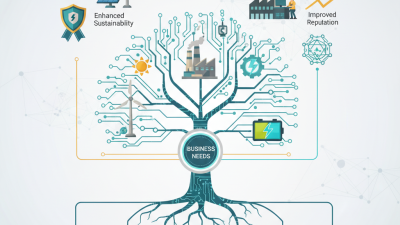
Why Choosing the Right Power Source Is Essential for Your Energy Needs?
Choosing the right power source is critical for meeting your energy needs. A reliable power source impacts not just your daily activities but also the efficiency of your devices. With numerous options available, from solar to conventional fuels, the decision can be overwhelming.
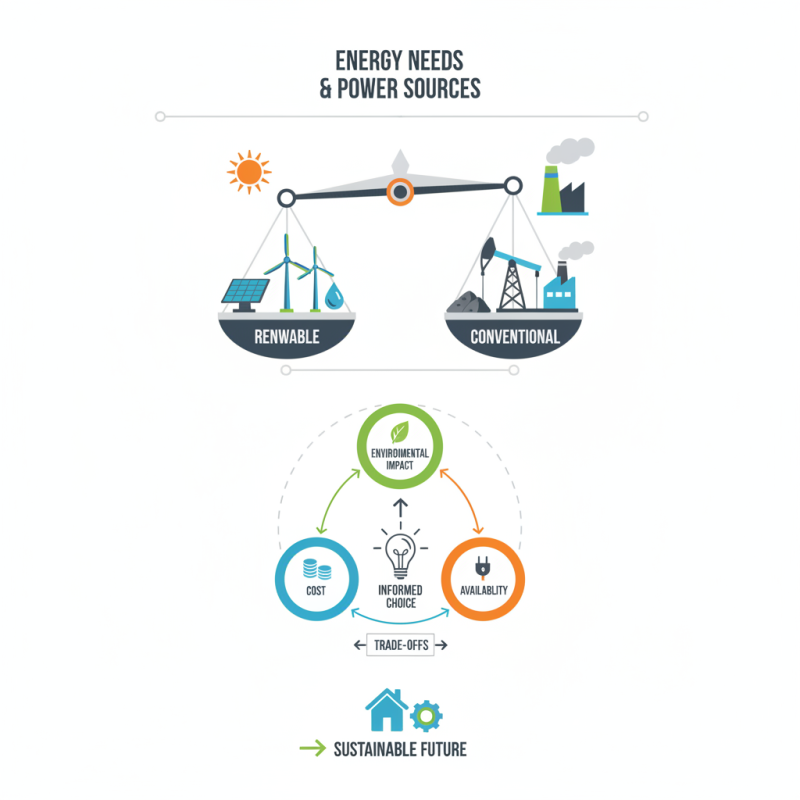
Understanding your specific energy requirements is essential. Every household and business has unique demands. For some, renewable sources might be the best fit. Others may lean toward traditional electricity. Evaluating factors like cost, availability, and environmental impact is crucial for making an informed choice.
Making a choice often involves trade-offs. You may prioritize cost over sustainability or opt for convenience over efficiency. Reflecting on these decisions will help you understand what you truly need. The right power source can empower you to achieve your goals while minimizing negative impacts. Balancing these considerations is not always straightforward, but it is vital for a sustainable future.
Importance of Energy Needs Assessment for Power Source Selection
Assessing energy needs is vital before selecting a power source. A thorough energy needs assessment can reveal specific requirements for homes or businesses. The U.S. Energy Information Administration (EIA) reports that energy consumption varies widely across different sectors. For instance, residential and commercial buildings together accounted for about 40% of total energy use in 2021.
Identifying peak demand and usage patterns is essential. Many fail to recognize their true energy needs, which can lead to oversizing or undersizing energy systems. According to a report from the International Energy Agency (IEA), improperly sized power systems can result in efficiency losses of up to 30%. This not only affects cost efficiency but can also strain the energy grid, necessitating a more robust infrastructure.
In many cases, consumers overlook future energy trends. The rise of electric vehicles and renewable energy sources is transforming energy requirements. A study by the World Economic Forum indicates that by 2030, demand for electricity could increase by 50%. Failing to adapt to these changes could leave individuals and businesses vulnerable to energy shortages or high costs.
Why Choosing the Right Power Source Is Essential for Your Energy Needs?
| Power Source Type |
Efficiency (%) |
Environmental Impact |
Cost (Per kWh) |
Availability |
| Solar |
15-22 |
Low - Renewable |
$0.08 - $0.18 |
Seasonally Available |
| Wind |
35-45 |
Low - Renewable |
$0.02 - $0.06 |
Consistent in Windy Regions |
| Natural Gas |
45-60 |
Medium - Fossil Fuel |
$0.05 - $0.10 |
Widely Available |
| Hydropower |
35-45 |
Low - Renewable |
$0.03 - $0.06 |
Seasonally Available |
| Coal |
33-42 |
High - Fossil Fuel |
$0.05 - $0.08 |
Widely Available |
Types of Power Sources: Renewable vs. Non-Renewable Options
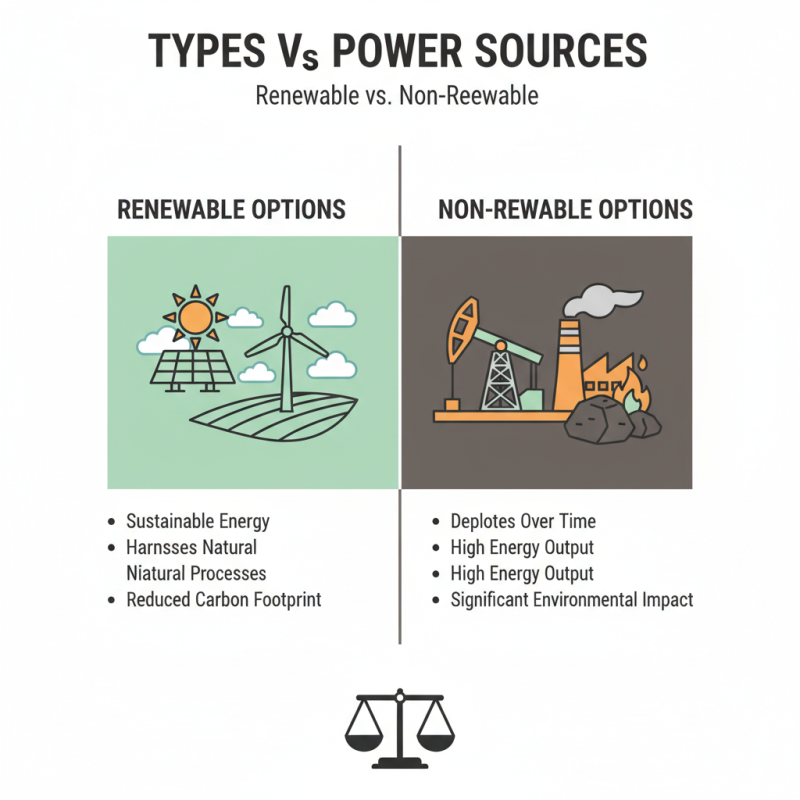
When considering power sources, understanding renewable versus non-renewable options is crucial. Renewable sources like solar and wind offer sustainable energy. They harness natural processes and reduce carbon footprint. Non-renewable sources, such as coal or natural gas, provide high energy output but deplete with time. Their environmental impacts are significant.
Choosing the right source can influence costs and reliability. For example, solar panels may require high initial investment but lead to savings over time. On the other hand, fossil fuels may seem cheaper now but will likely rise in price as resources dwindle. The choice you make today affects future generations.
**Tip:** Investigate local resources before deciding. Some areas benefit more from wind power than solar due to climate. **Tip:** Always assess long-term implications of energy choices on the planet. It's not just about immediate needs. The planet's health relies on smart energy decisions.
Factors Influencing the Choice of Power Source for Specific Applications
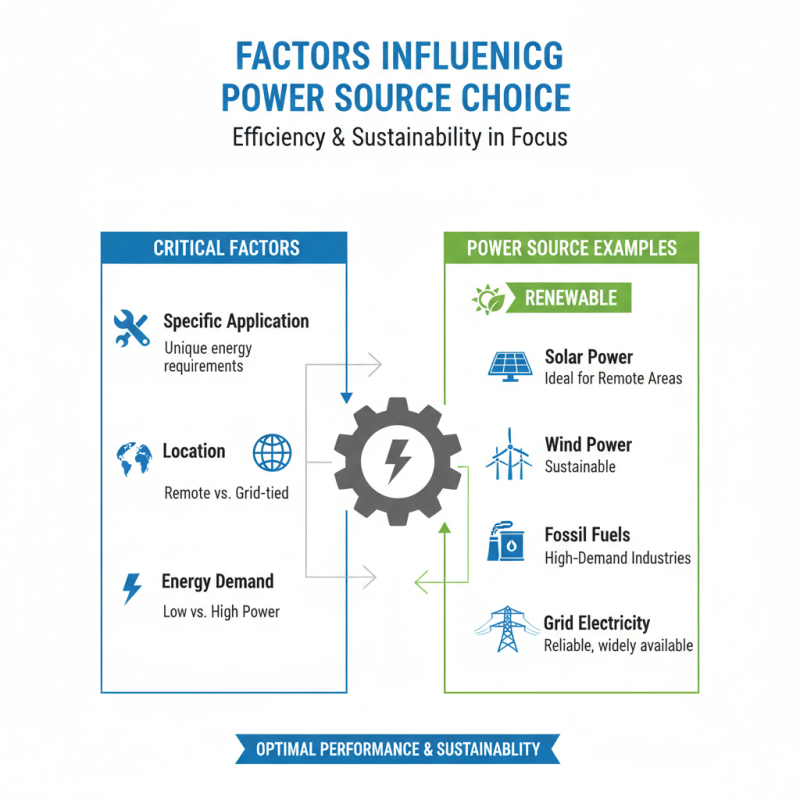
Choosing the right power source significantly impacts efficiency and sustainability. Several factors influence this decision. One critical factor is the specific application. Different projects have unique energy requirements that must be met for optimal performance. For example, renewable energy sources like solar may be ideal for remote locations. On another hand, high-demand industries often rely on traditional fossil fuels.
Infrastructure also plays a major role. The availability of resources impacts the feasibility of power sources. Areas with strong sunlight can harness solar power effectively. Conversely, regions with limited access to wind may find wind energy impractical. Another consideration is cost. Budget constraints influence choices. Sometimes, less efficient options are selected due to financial limitations, even if they are not the best long-term solution.
Technological advancements add complexity. New methods emerge regularly, making it harder to stay updated. Keeping up with trends ensures effective energy usage. However, innovation can also lead to confusion. The abundance of choices can overwhelm decision-makers, leading to missed opportunities. Understanding your specific needs and local context is essential. Navigating these factors requires careful thought and ongoing evaluation.
Cost Considerations: Long-Term Savings vs. Initial Investment
When considering a power source, cost plays a pivotal role. Initial investments can be daunting. However, these costs often mask long-term savings. For instance, solar panels require a hefty upfront payment but can significantly cut down electricity bills over time. This is crucial for households and businesses aiming for sustainability.
It’s important to analyze your energy needs deeply. A cheaper option might save money initially but could lead to higher costs in efficiency and maintenance. Think about the lifespan of equipment. Higher quality systems often last longer and require fewer repairs. In contrast, low-quality alternatives may need frequent replacements, causing unforeseen expenses.
Reflecting on these aspects sheds light on the importance of thorough research. Savings should be measured over the lifespan of the investment, not just the initial expenditure. Short-term gains can be misleading. Balancing upfront costs with future benefits is essential for making the right choice. In the end, the goal should be a power source that meets your needs and aligns with your budget.
Environmental Impact and Sustainability in Power Source Decisions
When selecting a power source, the environmental impact is crucial. According to the International Energy Agency, fossil fuels account for about 80% of global energy consumption. This reliance contributes to greenhouse gas emissions and climate change. In 2021, carbon dioxide emissions from energy use reached a staggering 36.4 billion tons. Transitioning to renewable energy sources can significantly reduce this impact.
Sustainability is vital for future energy security. The World Resources Institute indicates that investing in renewable technologies could create over 24 million jobs by 2030. However, challenges exist. Solar and wind energy depend on location and weather conditions. Not all regions can fully capitalize on these resources. This inconsistency can lead to gaps in energy supply.
The lifecycle of power sources also matters. Coal mining harms local ecosystems, while solar panel production uses toxic chemicals. Understanding these trade-offs is essential. Consumers and businesses alike should evaluate the long-term effects of their energy choices. A well-informed decision can lead to a more sustainable future for all.
Impact of Different Power Sources on Environmental Sustainability
 Skip to content