Why Choose Rigid Solar Panels for Your Solar Project?

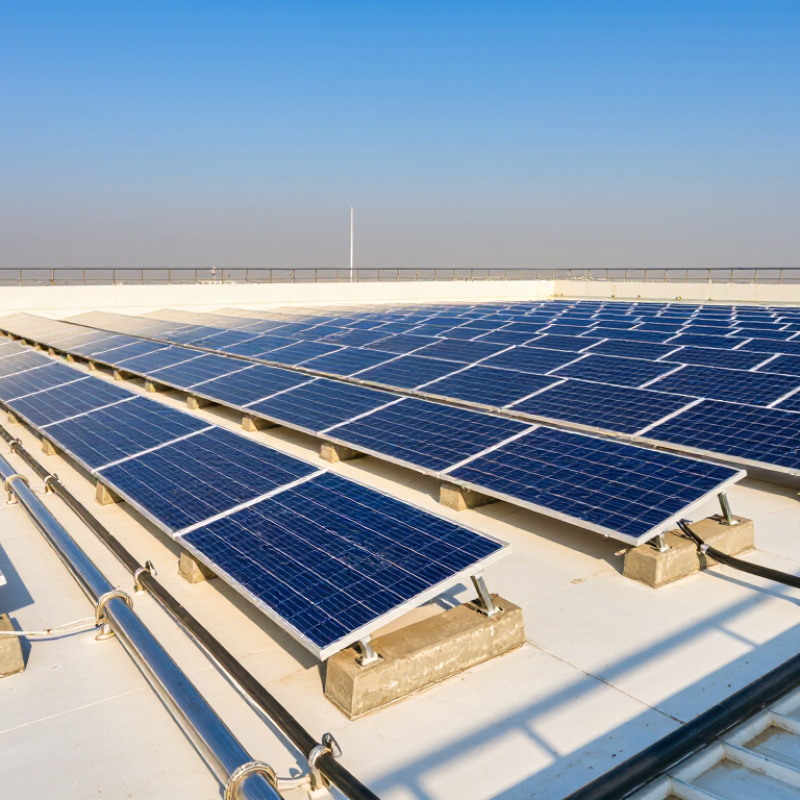
Why choose Rigid Solar Panels for your solar project? For many installations, the answer begins with structure, not appearance. A Rigid Solar Panel typically combines tempered glass, an aluminum frame, and photovoltaic cells in a fixed assembly. This design can withstand routine handling, wind exposure, and changing outdoor temperatures when properly specified. On a sunny rooftop, its solid surface feels dependable under careful installation. It is also easier to mount in regular rows. That helps installers align cables, clamps, and maintenance paths. Small details matter.

From an engineering perspective, rigid panels suit homes, farms, commercial roofs, and ground arrays. Their stable positioning supports consistent energy production over many years. The transparent front layer protects cells from rain, dust, and occasional impact. Established testing standards also help buyers compare safety and performance claims. Look for clear datasheets, applicable IEC certifications, warranty terms, and traceable technical support. Yet this choice is not automatically correct. Rigid modules can be heavier, less flexible, and harder to carry onto irregular roofs. Shading, roof loading, local climate, and available labor may change the decision. A lightweight flexible product might serve a temporary or curved surface better. That possibility deserves attention.

A strong project plan compares real site conditions and expected energy output. It should also examine installation risk and lifecycle cost. Performance figures look impressive on paper. Dust, heat, poor orientation, and loose connections can reduce actual results. Honest planning leaves room for those imperfections before selecting a Rigid Solar Panel.
Why Choose Rigid Solar Panels for Your Solar Project?

What Are Rigid Solar Panels?

Rigid solar panels are framed photovoltaic modules built for stable, long-term installation. Most use crystalline-silicon cells, glass, an aluminum frame, a protective backsheet, and a junction box. The layers are laminated under controlled heat and pressure. This structure protects the cells from moisture, wind, and handling stress.

The definition matters because rigidity supports predictable mounting. A framed module sits on rails, rooftops, or ground structures with limited movement. Certified products undergo mechanical-load, insulation, and environmental testing under IEC 61215 and IEC 61730 requirements.

In field work, installers also check roof condition, drainage, cable routing, and load capacity. A panel can be durable, yet the roof may not be.

Scale reinforces this design choice. The IEA PVPS Snapshot of Global PV Markets 2024 reported more than 400 gigawatts of new solar capacity added worldwide during 2023. It also estimated global cumulative capacity near 1.6 terawatts.

NREL research commonly reports a median crystalline-silicon degradation rate near 0.5% per year. That does not guarantee identical results. Heat, poor ventilation, salt, dust, and installation errors change performance. Rigid panels are heavier and less adaptable on curved surfaces. They are not weightless. For a properly engineered project, however, their mechanical strength, familiar installation methods, and measured service life can make them a practical foundation.

How Rigid Solar Panels Are Designed and Built

Why Choose Rigid Solar Panels for Your Solar Project?

Rigid solar panels are built around crystalline-silicon cells, protective glass, encapsulant, and a rigid frame. Each layer serves a practical purpose. The glass resists impact, while the encapsulant limits moisture movement around fragile electrical connections. Aluminum frames add stiffness and help installers maintain consistent panel alignment.

Manufacturing quality depends on controlled pressure, heat, and inspection. During lamination, trapped air can create weak points. Electroluminescence testing can reveal hidden cell cracks before shipment. Standard qualification testing under IEC 61215 commonly includes mechanical loads near 2,400 pascals, although project conditions may require stronger specifications.

The design is not flawless. Poor handling can still damage cells beneath apparently perfect glass.

Field performance depends on climate, mounting, and maintenance. IEA PVPS Task 13 reliability studies commonly report annual degradation near 0.5% for many crystalline-silicon modules. That figure is useful, but it should not become a promise. High heat, salt mist, snow, and repeated thermal movement can change results. The Fraunhofer ISE Photovoltaics Report also shows continuing improvements in commercial module efficiency, increasing power from similar roof areas. More power, however, does not remove installation risks. A rigid panel needs proper clamps, drainage space, and a structure designed for local wind and snow loads. Small details matter.

What Advantages Do Rigid Solar Panels Offer?

Why Choose Rigid Solar Panels for Your Solar Project?

What Advantages Do Rigid Solar Panels Offer?

Rigid solar panels provide a dependable option for homes, farms, and commercial rooftops. Their framed construction helps protect solar cells from wind, rain, and everyday handling. In field installations, this physical strength can reduce damage during maintenance and transport. They are not delicate.

Their fixed surface also supports consistent energy production. Rigid panels usually maintain stable alignment when mounted on a properly designed rack. This helps capture sunlight throughout the day, especially on open rooftops or ground-mounted systems. Many models use tempered glass and weather-resistant frames, which can extend service life when installation follows local engineering requirements.

Maintenance is often straightforward. Technicians can inspect the glass, wiring, mounting points, and drainage paths without removing the entire panel. A smooth surface may also make cleaning easier after dust or pollen buildup. Still, rigid panels need suitable roof structure and accurate installation. Their weight can challenge older buildings, and poor placement may create shading losses. That trade-off deserves attention.

Rigid panels also offer predictable planning. Installers can calculate available area, expected output, cable routes, and mounting hardware before work begins. However, rated performance is not guaranteed in every condition. Heat, dirt, shading, and seasonal sunlight reduce real-world production. A careful site assessment remains essential, even when the equipment appears simple.

Which Solar Projects Suit Rigid Panels Best?

Why Choose Rigid Solar Panels for Your Solar Project?

Rigid solar panels suit projects where durability, predictable output, and secure mounting matter most. They work especially well on commercial roofs, fixed ground arrays, carports, and utility-scale sites. These locations usually offer stable surfaces and enough space for repeated panel rows. The IEA PVPS Trends 2024 report recorded more than 400 gigawatts of new solar capacity in 2023. That expansion increases demand for modules that can operate reliably for decades.

Rigid framed panels are particularly practical in areas with strong wind, snow, or frequent maintenance access. Their glass surfaces resist everyday weather exposure, while aluminum frames simplify clamping and replacement. Fraunhofer ISE’s Photovoltaics Report notes that mainstream crystalline-silicon modules commonly achieve efficiencies above 20%. On a warehouse roof, that difference can mean more electricity from limited space. A technician can also inspect a rigid panel with ordinary tools. No special surface support is usually required.

However, rigid panels are not the best fit for every project. Curved roofs, lightweight vehicles, portable shelters, and irregular facades may need flexible designs. Weight can matter. So can appearance. A rigid array may also create shading problems when roof layouts are poorly measured. I would not specify these panels blindly. Site wind loads, roof condition, access paths, and local snow data deserve an engineering review. Real projects are messier than product tables.

Why Choose Rigid Solar Panels for Your Solar Project? - Which Solar Projects Suit Rigid Panels Best?

Solar Project Type Suitability for Rigid Panels Typical Installation Environment Key Advantages Main Design Considerations Typical Mounting Approach Overall Fit
Residential Rooftop Systems Rigid panels are widely suited to pitched and flat residential roofs where long-term structural support is available. Homes, garages, carports, and small outbuildings. High power density, durable framed construction, established installation methods, and broad compatibility with roof mounting hardware. Check roof age, load capacity, shading, waterproofing, roof orientation, and local wind and snow requirements. Roof hooks and rails for pitched roofs; ballasted or mechanically attached systems for suitable flat roofs. Excellent
Commercial and Industrial Rooftops Highly suitable when the roof structure can support the additional dead load and maintenance access is planned. Factories, warehouses, offices, retail buildings, and logistics facilities. Efficient use of large roof areas, scalable system design, strong mechanical protection, and straightforward array layout. Assess roof loading, membrane protection, fire access routes, drainage, wind uplift, and equipment spacing. Rail-based systems, low-tilt ballasted systems, or mechanically fixed mounting selected according to roof type. Excellent
Ground-Mounted Solar Farms Rigid panels are generally the preferred option for fixed-tilt and tracking ground-mounted arrays. Open land, agricultural areas, brownfield sites, and utility-scale solar fields. Robust frames, efficient installation at scale, strong resistance to routine outdoor exposure, and compatibility with fixed or tracking structures. Consider land grading, soil conditions, foundation type, row spacing, vegetation control, access roads, and environmental permits. Driven piles, ground screws, concrete foundations, fixed-tilt structures, or tracker systems. Excellent
Solar Carports Well suited because rigid modules can provide both electricity generation and overhead weather protection. Parking areas, transport hubs, workplaces, schools, and retail parking lots. Uses existing parking space, creates shaded areas, and can support electric vehicle charging infrastructure. Account for vehicle clearance, drainage, snow and wind loads, column placement, lighting, and electrical cable protection. Steel or aluminum canopy structures with modules mounted in landscape or portrait orientation. Excellent
Agricultural and Farm Buildings Suitable for barns, storage buildings, workshops, and other structures with adequate roof condition and capacity. Rural properties, livestock buildings, agricultural warehouses, and irrigation facilities. Provides on-site electricity for pumps, ventilation, refrigeration, lighting, and processing equipment. Evaluate corrosive environments, dust, ammonia exposure, roof materials, fire safety, and access for maintenance. Roof-mounted rails or ground-mounted structures where roof installation is unsuitable. Good
Community Solar Installations Highly suitable for shared-generation projects that require predictable output and standardized maintenance. Large rooftops, public facilities, unused land, and shared solar sites. Scalable capacity, consistent module orientation, easier inspection, and compatibility with centralized monitoring. Plan for interconnection capacity, site access, community ownership rules, shading analysis, and long-term operations. Fixed-tilt ground mounts, rooftop rail systems, or canopy structures. Excellent
Remote Off-Grid Power Systems Suitable when reliable energy production and long service life are more important than minimum transport weight. Remote cabins, telecommunications sites, field stations, water pumping systems, and emergency facilities. Durable construction, stable performance, and compatibility with batteries, charge controllers, and backup generators. Plan for battery sizing, theft protection, snow clearing, transportation, harsh weather, and limited maintenance access. Ground frames, pole mounts, small roof systems, or custom tilt structures. Good
Portable and Temporary Solar Systems Rigid panels can work for semi-portable systems but are less convenient when frequent folding, carrying, or rapid deployment is required. Temporary work sites, mobile events, disaster response, and short-term field operations. Good outdoor durability and stable output when installed on a secure temporary frame. Weight, transport dimensions, setup time, wind anchoring, cable protection, and storage requirements may be significant. Folding frames, portable racks, ground stands, or trailer-mounted structures. Conditional
Curved Roofs and Irregular Surfaces Rigid panels may be difficult to install where the mounting surface cannot accommodate a flat, stable module frame. Vehicles, boats, curved architectural roofs, and irregular lightweight structures. Possible installation with a purpose-built support structure where adequate rigidity and attachment points can be provided. Curvature, panel fit, aerodynamic forces, weight distribution, attachment strength, and water sealing require detailed engineering. Custom brackets, raised frames, or segmented mounting structures. Limited
Lightweight Structures with Low Load Capacity Rigid panels may not be appropriate if the structure cannot safely support the module, mounting system, and environmental loads. Aged roofs, temporary shelters, lightweight canopies, and delicate architectural structures. Can still be considered after structural reinforcement or engineering approval. Structural capacity, wind uplift, attachment points, vibration, and maintenance loads must be verified before installation. Reinforced roof mounts, independent ground systems, or specially engineered lightweight structures. Conditional

Note: Project suitability depends on structural capacity, local wind and snow conditions, solar resource, shading, electrical requirements, installation codes, and site-specific engineering. The ratings provide general guidance rather than a substitute for a professional site assessment.

What Factors Should Guide Your Panel Selection?

Choosing rigid solar panels requires more than comparing wattage. The right choice depends on your roof, climate, energy demand, and installation method.

Start with roof dimensions and structural capacity. A panel that fits neatly reduces wasted space and awkward mounting points. Before installation, inspect roof age, drainage, and shaded areas. In field assessments, I measure shadows during different hours, not only at noon. This simple check often changes the panel layout. Rigid panels usually offer strong frames and stable performance, but they add noticeable weight. That detail matters on older roofs.

Weather conditions should guide the panel specification. Look for suitable wind and snow-load ratings, corrosion resistance, and tested temperature performance. High heat can reduce output, especially on poorly ventilated roofs. Electrical specifications also deserve careful review. Compare operating voltage, current, inverter compatibility, and expected annual production. A higher wattage rating is not always better. I have seen projects lose efficiency because the panels were oversized for the available inverter. That mistake was avoidable.

Consider installation access, maintenance space, warranty terms, and independent safety certifications. Panels with durable glass may resist hail better, but they can still suffer damage from careless handling. Budget decisions should include mounting hardware, labor, cleaning, and future replacement. I still find estimates too optimistic when they ignore these costs. A practical selection balances output, reliability, roof safety, and the skills available for installation.

Go to Top