China Top WCS Warehouse Control System Suppliers?

China has become a major source of warehouse automation technology, including software, controls, and integrated material-handling solutions. Yet choosing China’s top Wcs Warehouse Control System suppliers requires more than comparing product brochures or software prices. A reliable evaluation should examine live project experience, system stability, integration skills, support coverage, and measurable warehouse results.

The details matter. Can the WCS coordinate conveyors, sorters, shuttles, robots, and scanners without creating delays? Can it exchange accurate data with WMS and ERP platforms? More importantly, can engineers respond when a sorter stops during a peak shipping hour? These questions often reveal more than a polished demonstration.

MHI CEO John Paxton has stated, “The future of supply chain is digital.” His observation reflects the growing role of intelligent control systems in modern distribution centers. A capable WCS Warehouse Control System can improve sequencing, visibility, throughput, and exception handling. However, software alone cannot repair poor process design or weak commissioning.

That point is easy to overlook.

This guide examines leading Chinese suppliers through a practical, evidence-based lens. It considers deployment records, customization ability, cybersecurity practices, maintenance resources, and customer communication. Public information can be incomplete, and supplier claims may not always show the full operating picture. Therefore, readers should request reference sites, performance data, service-level commitments, and realistic testing scenarios before making a decision. The strongest supplier may not be the largest. It may be the partner that understands your cartons, labor constraints, peak volumes, and daily operational frustrations.
China Top WCS Warehouse Control System Suppliers?

What Is a Warehouse Control System and Why Does It Matter?

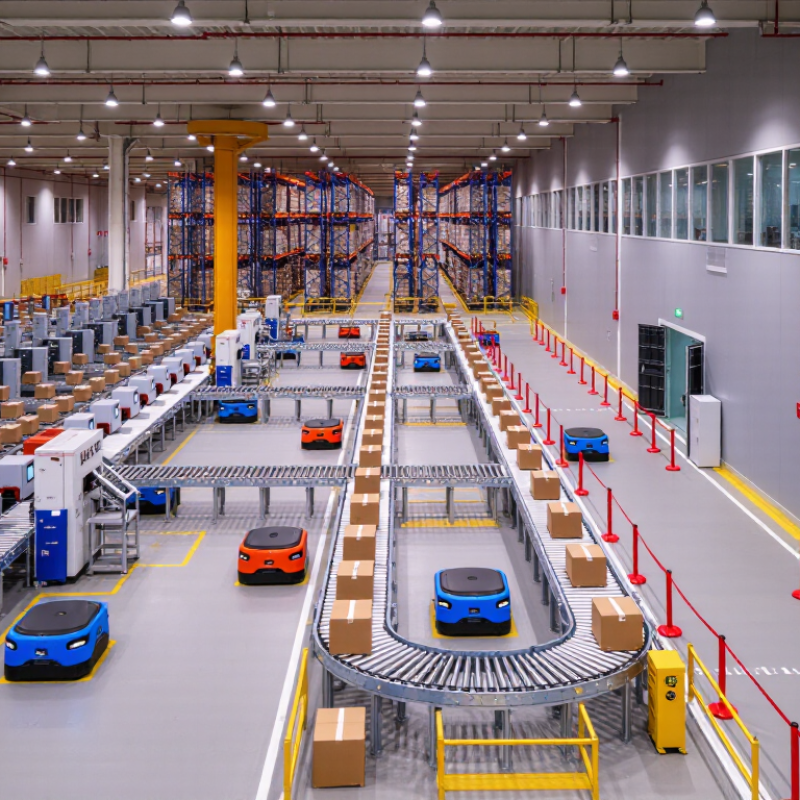
A Warehouse Control System (WCS) directs automated warehouse equipment in real time. It coordinates conveyors, sorters, shuttles, cranes, scanners, and robotic stations. The WCS converts warehouse orders into timed equipment commands. It also manages traffic, buffering, routing, and exception handling. A Warehouse Management System plans inventory and orders, while the WCS controls physical execution. The distinction is practical. If two conveyors compete for one outbound lane, the WCS must decide within seconds.

Industry data shows why this layer matters. The 2024 MHI Annual Industry Report found that 55% of supply chain professionals planned to increase technology investment. The same report identified robotics and automation as major areas of future adoption.

Deloitte’s 2024 Smart Manufacturing and Operations Survey also reported growing investment in connected systems and real-time visibility. These figures do not guarantee success. Poor master data can still create empty moves, delayed totes, and inaccurate stock signals.

A capable WCS connects equipment data with operational priorities. At 9:00 a.m., it may prioritize urgent orders. At 2:00 p.m., it may rebalance storage locations and reduce congestion. Operators need clear alarms, manual recovery options, and traceable event logs. Resilience matters more than impressive dashboards. A small communication failure can stop a large system. That weakness deserves attention. Performance should be measured through throughput, equipment utilization, order accuracy, recovery time, and energy use. The best system is not always the most complex one. It is the one workers can understand, maintain, and improve.

Core Functions and Technologies of WCS Platforms in China

China’s WCS suppliers increasingly focus on stable control, fast integration, and measurable warehouse performance. A WCS platform connects warehouse management software with conveyors, sorters, cranes, shuttles, robots, and automated storage equipment. Its central role is translating business orders into safe, timed machine actions.

Core functions include equipment scheduling, task allocation, route optimization, inventory position tracking, and exception handling. Modern platforms exchange data through APIs, industrial protocols, and real-time event streams. PLC interfaces support precise movement control, while RFID, barcode scanners, and machine vision improve identification accuracy. Dashboards can display throughput, order status, alarms, and equipment utilization. Some systems also use digital twins to test traffic patterns before deployment. This can reduce commissioning risks, although simulation results may differ from warehouse reality.

Tips: Check integration experience, recovery procedures, and open data interfaces before selecting a supplier. Ask for a live demonstration using realistic order peaks. Review how the platform handles network delays, blocked lanes, missing labels, and manual intervention. These details often reveal more than a polished presentation.

Reliable deployment requires clear responsibility between the WCS team, equipment engineers, and warehouse operators. Cybersecurity controls, user permissions, audit logs, and backup plans should be tested regularly. A platform may perform well in a small pilot but struggle after expansion. That weakness deserves honest attention. Site acceptance should measure actual throughput, response time, recovery speed, and error rates under controlled conditions.

Core Functions and Technologies of WCS Platforms in China

The chart presents a normalized engineering-priority index from 1 to 5 for capabilities commonly required in Chinese automated warehouses. Real-time equipment orchestration, WMS/WES integration, API connectivity, exception handling, traceability, and data monitoring are central to reliable WCS deployment across conveyor, AS/RS, shuttle, AGV/AMR, and robotic systems.

Leading China-Based WCS Warehouse Control System Suppliers

China Top WCS Warehouse Control System Suppliers?

China-based WCS warehouse control system suppliers now support complex distribution operations, from carton conveyors to shuttle storage and robotic picking. A capable supplier connects WCS software with WMS, PLCs, scanners, and safety devices. The best teams also understand local equipment behavior, network delays, and real warehouse pressure. Their value appears during peak shifts, not only during a polished demonstration. Clear interface design matters. So does practical troubleshooting.

Tips: Request a live workflow demonstration using your order profiles. Check API documentation, alarm handling, recovery procedures, and response times. Ask for references from warehouses with similar throughput. Confirm testing stages, operator training, spare-part support, and remote service boundaries. A low initial price may conceal costly integration work.

Reliable China-based suppliers should provide measurable performance targets, including command latency, equipment availability, and fault recovery time. Require simulation testing before on-site commissioning. Then conduct site acceptance tests with realistic cartons, mixed orders, and temporary network interruptions. This exposes weak assumptions early. One common mistake is judging WCS quality by screen appearance alone. Another is underestimating change management. Operators may need simpler prompts, clearer alarms, and repeated practice. Good engineering remains important, but daily usability decides whether the system performs consistently. Suppliers should document revisions and explain limitations honestly. No system is perfect. Short pilot deployments can reveal more than ambitious promises.

How Chinese WCS Suppliers Differ in Features and Industry Focus

Chinese warehouse control system suppliers often differ more by project experience than by software labels. Some focus on high-speed e-commerce fulfillment, where WCS coordinates conveyors, sorters, scanners, and robotic stations within seconds. Others serve manufacturing plants, linking automated storage with production lines, barcode checks, and material replenishment. The difference appears on the warehouse floor.

Industry focus also shapes system features. E-commerce projects usually require flexible order waves, peak-season scaling, and real-time exception alerts. Automotive and electronics facilities may prioritize traceability, strict routing rules, and stable integration with factory systems. Cold-chain warehouses need temperature monitoring and carefully controlled equipment responses. These are not identical requirements.

Integration quality remains a practical dividing line. Experienced suppliers usually support common PLC protocols, WMS interfaces, equipment APIs, and dashboard reporting. They should also provide simulation, fault logs, and on-site commissioning support. Small details matter, such as whether operators can acknowledge a blocked conveyor from a handheld terminal. That saves minutes.

However, technical documents do not tell the whole story. A supplier may present broad functions but lack experience with a warehouse’s actual throughput, layout, or maintenance habits. This is where careful testing matters. Buyers should request reference projects, failure-recovery records, and clear service terms. Some evaluations still overemphasize software screens. That is a mistake. A beautiful dashboard cannot fix weak control logic, poor training, or delayed field support.

China Top WCS Warehouse Control System Suppliers? — How Chinese WCS Suppliers Differ in Features and Industry Focus
Supplier Profile Typical Market Position Core WCS Functions Common Equipment Integrations Primary Industry Focus Automation and Robotics Capability Integration Approach Typical Deployment Scale Main Differentiator Best-Fit Project Requirement
Large Automation-System Integrator Full-project provider for complex automated distribution centers Real-time equipment control Task orchestration Route optimization Performance monitoring Conveyor systems, sorters, AS/RS cranes, shuttle systems, palletizers, barcode scanners and PLC networks E-commerce, retail distribution, manufacturing, automotive and large-scale logistics High; suitable for multi-zone systems combining fixed automation and mobile robots Usually supports WMS, WES, ERP, PLC, SCADA, OPC UA, REST API and database-based interfaces Medium to very large facilities with multiple process zones Broad equipment coverage and the ability to coordinate complete material-flow processes Greenfield or major expansion projects requiring one accountable automation partner
Warehouse Robotics Specialist Focused provider for robot-based storage, picking and goods-to-person operations Robot task allocation Fleet coordination Workstation balancing Exception handling AMRs, AGVs, autonomous forklifts, robotic picking cells, put walls, lifts and conveyor handoff points E-commerce, apparel, pharmaceuticals, spare parts, consumer goods and omnichannel fulfillment High; optimized for robot fleets and dynamic order fulfillment Commonly uses API-based integration with WMS, OMS, ERP and warehouse workstations Small to large facilities, particularly high-SKU and high-order-volume operations Fast robot dispatching, charging coordination and flexible workstation management Projects prioritizing scalable robotic picking or goods-to-person fulfillment
AS/RS and Storage-Control Specialist Equipment-focused provider for automated storage and retrieval systems Storage-location control Crane scheduling Shuttle control Inventory movement tracking Pallet AS/RS, mini-load AS/RS, shuttle systems, vertical lifts, stacker cranes and pallet conveyors Manufacturing, cold chain, food and beverage, automotive components and bulk distribution Medium to high; strongest in fixed storage automation and shuttle-based systems Typically integrates with WMS through standardized APIs, message queues or industrial communication protocols Medium to very large storage systems with structured inventory flows Deep equipment logic for storage density, crane utilization and inventory accuracy Facilities where automated storage reliability is more important than broad robotics coverage
Conveyor and Sortation-Control Provider Specialist for high-throughput conveying, scanning and parcel routing Divert control Barcode validation Accumulation logic Throughput monitoring Belt conveyors, roller conveyors, cross-belt sorters, sliding-shoe sorters, scanners and dimensioning systems Parcel express, e-commerce, courier hubs, retail and manufacturing dispatch Medium; robotics can be integrated, but conveyor throughput is the primary strength Frequently connects to WMS, parcel-management software, PLCs, scanners and warehouse workstations Medium to very large hubs with high carton or parcel volumes High-speed routing, accurate divert decisions and rapid fault recovery Sortation hubs and distribution centers where peak throughput is the main KPI
Manufacturing Intralogistics Integrator Provider focused on material movement between production, storage and shipping Line-side replenishment Production sequencing Material traceability Kanban support AGVs, tugger trains, conveyors, pallet systems, elevators, AS/RS and production-line interfaces Automotive, electronics, machinery, appliances, industrial components and contract manufacturing High for production logistics, line feeding and synchronized material delivery Often integrates with MES, ERP, WMS, PLC, production scheduling and traceability systems Small to large plants with repeated production and replenishment cycles Coordination between warehouse execution and production requirements Factories needing synchronized inbound, line-side and finished-goods logistics
Cold-Chain and Food Logistics Specialist Vertical-market provider for temperature-sensitive and regulated operations Batch and lot control FIFO/FEFO rules Traceability Environmental monitoring interfaces Cold-store conveyors, pallet AS/RS, shuttle systems, palletizers, scanners and temperature-monitoring devices Food and beverage, pharmaceuticals, fresh produce and temperature-controlled distribution Medium to high; automation is selected for reliability in controlled environments Commonly integrates with WMS, ERP, quality systems, batch-management software and monitoring platforms Medium to large refrigerated or temperature-controlled facilities Product traceability, stock rotation and operational reliability in demanding environments Projects requiring FEFO, lot-level control and reduced manual handling in cold areas
Software-First WCS and WES Provider Independent control-layer provider emphasizing orchestration and data visibility Order release Workload balancing Digital dashboards Simulation support Multi-vendor conveyors, AS/RS, AMRs, sorters, picking stations and robotic cells Retail, e-commerce, third-party logistics, manufacturing and omnichannel fulfillment High when multi-vendor interoperability and centralized orchestration are required API-first architecture with connectors for WMS, WES, ERP, PLC, robotics platforms and cloud services Small to very large facilities, including phased modernization projects Vendor-neutral orchestration, analytics and easier expansion across equipment types Brownfield upgrades or projects that must coordinate equipment from several manufacturers
Regional Customization and Service Integrator Local or regional provider emphasizing adaptation, commissioning and support Basic equipment control Interface customization Alarm management On-site support Conveyors, lifts, scanners, pallet systems, small AS/RS units and selected mobile equipment General manufacturing, regional distribution, wholesale, retail and smaller logistics operations Medium; capability depends strongly on project partners and installed equipment Usually provides customized interfaces for WMS, ERP, PLC and local operating procedures Small to medium facilities and retrofit projects Faster local response, practical customization and potentially lower implementation complexity Projects needing local engineering, short travel times and flexible after-sales service
Comparison criteria reflect common WCS and WES project requirements in the Chinese automation market. Actual capabilities, certifications, integration depth and service coverage should be verified during supplier qualification.

Key Criteria for Evaluating a WCS Supplier in China

Choosing a warehouse control system supplier in China requires more than comparing software screenshots. The International Federation of Robotics reported 276,288 industrial robot installations in China during 2023, representing 51% of global installations. This scale suggests strong engineering capacity, but it does not guarantee warehouse expertise. Ask for completed projects with similar storage density, order profiles, and equipment interfaces.

Integration should be tested in detail. A capable WCS must exchange accurate data with WMS, ERP, PLC, conveyors, shuttles, and sortation equipment. Request API documentation, message logs, recovery procedures, and measured response times. The 2024 MHI Annual Industry Report identifies robotics and automation as major investment priorities for supply-chain organizations. Therefore, suppliers should explain how their systems handle peak waves, blocked lanes, device faults, and temporary network loss. A polished demonstration is not proof.

Service capability often decides operational stability. Evaluate local engineers, spare-part coordination, cybersecurity controls, backup methods, and guaranteed response times. Require factory acceptance and site acceptance tests with measurable targets, including throughput, inventory accuracy, alarm recovery, and restart time. Check at least three customer references, preferably from different industries. I would also calculate five-year ownership costs, not only license fees. This remains an imperfect process. Forecasts change, and some vendors may overstate performance. Independent testing is safer than trusting optimistic presentations.

Go to Top