Top Power Switch Types for Everyday Use and Their Applications?

Power switches are integral components in both household and industrial applications. According to a report by Research and Markets, the global power switch market is expected to grow steadily, driven by rising demand for energy-efficient devices. Power switches enhance convenience and safety in our daily lives.

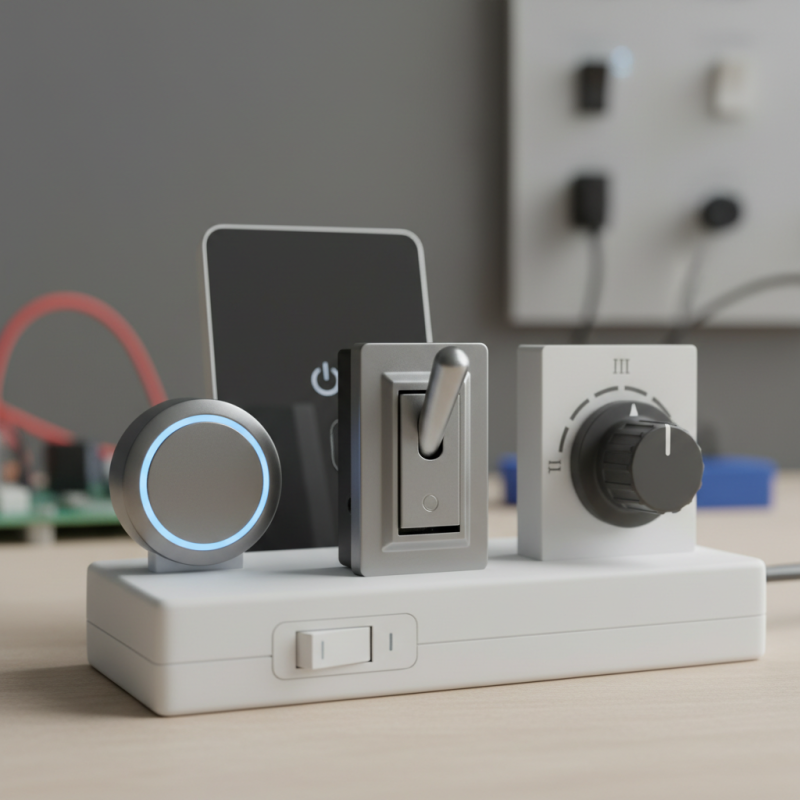
Various types of power switches have distinct functionalities. The toggle switch is popular for home applications. Push-button switches are often found in commercial settings. Rotary switches offer versatility in controlling multiple circuits. These switches not only provide control but also contribute to energy conservation in devices like smart appliances.

However, not all power switches are reliable. Users sometimes overlook the importance of quality. Poorly manufactured switches can cause failures or, worse, hazards. Understanding the different types and their applications can help in choosing the right power switch. This choice impacts safety and efficiency in everyday tasks.
Top Power Switch Types for Everyday Use and Their Applications?

Overview of Common Power Switch Types in Daily Life

Power switches come in various types, each serving unique functions in our daily lives. One common type is the toggle switch. You find it in lamps and ceiling lights. It allows you to control power easily. The design is simple and user-friendly.

Another popular option is the rocker switch. This is often seen in home appliances. The rocker switch comes in two positions: on and off. Its smooth operation makes it ideal for devices like coffee machines or microwaves.

**Tips**: Keep these switches clean. Dirt can affect their performance. Also, check connections regularly. Loose wires can cause issues and may lead to safety hazards. Consider the installation location carefully. Hard-to-reach places can be inconvenient. Choose a switch you can access with ease.

Top Power Switch Types for Everyday Use and Their Applications

Switch Type Description Common Applications
Toggle Switch A switch operated by a lever that moves in a back-and-forth motion. Lighting fixtures, fans, and small appliances.
Push Button Switch A momentary switch that is pressed to open or close a circuit. Doorbells, elevators, and household appliances.
Rockers Switch A switch that rocks back and forth to change the circuit status. Computer power supplies, home theater systems.
Slide Switch A switch that slides along a track to open or close the circuit. Batteries, small gadgets, and toys.
Dimmer Switch A switch that controls the brightness of a light. Home lighting, theater lighting.
Smart Switch A Wi-Fi-enabled switch that can be controlled via smartphone apps. Smart homes, automation systems.

Mechanical Power Switches: Features and Applications

Top Power Switch Types for Everyday Use and Their Applications?

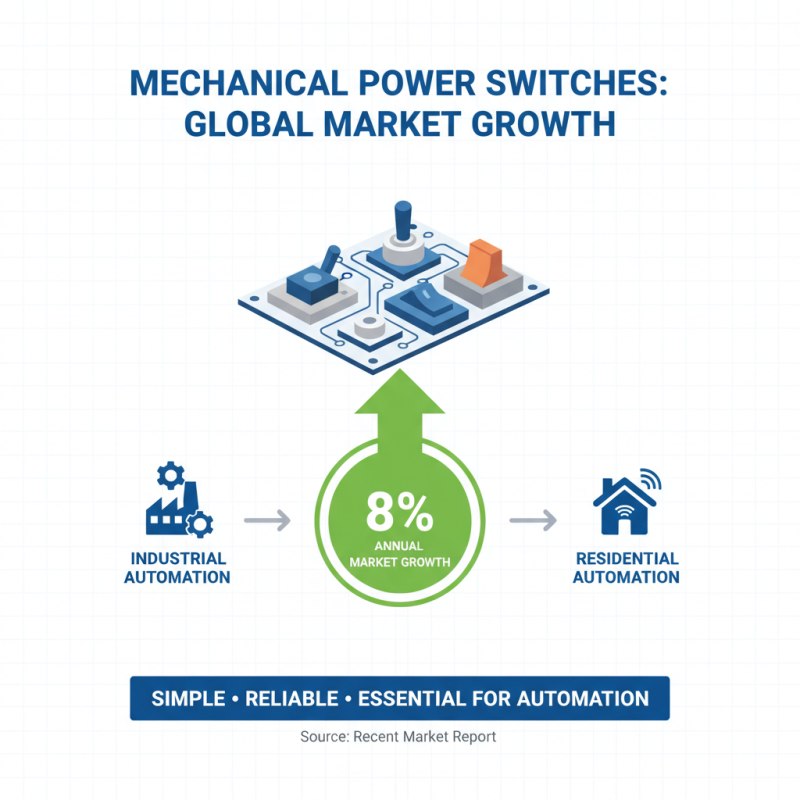
Mechanical power switches play a crucial role in various applications. They are simple yet effective devices that enable or interrupt electric current flow. According to a recent market report, the global mechanical switch market is projected to grow by 8% annually. This growth is driven by the increasing demand for automation in both residential and industrial sectors.

These switches come in several types, such as toggle, rocker, and push-button switches. Toggle switches are often favored for their reliability in high-load environments. Rocker switches, with their ergonomic design, find widespread use in consumer electronics. Push-button switches, on the other hand, are prevalent in appliances due to their compact size. Each type has unique advantages, but defects can lead to failures, impacting overall performance.

Despite their reliability, mechanical switches are not without challenges. Misuse or wear can cause them to become less responsive. Industry professionals note that regular maintenance is essential to ensure longevity. It is vital to recognize that even high-quality switches can fail if not properly maintained. Understanding the features and appropriate applications can help minimize these issues.

Electronic Power Switches: Advantages and Usage Scenarios

Top Power Switch Types for Everyday Use and Their Applications?

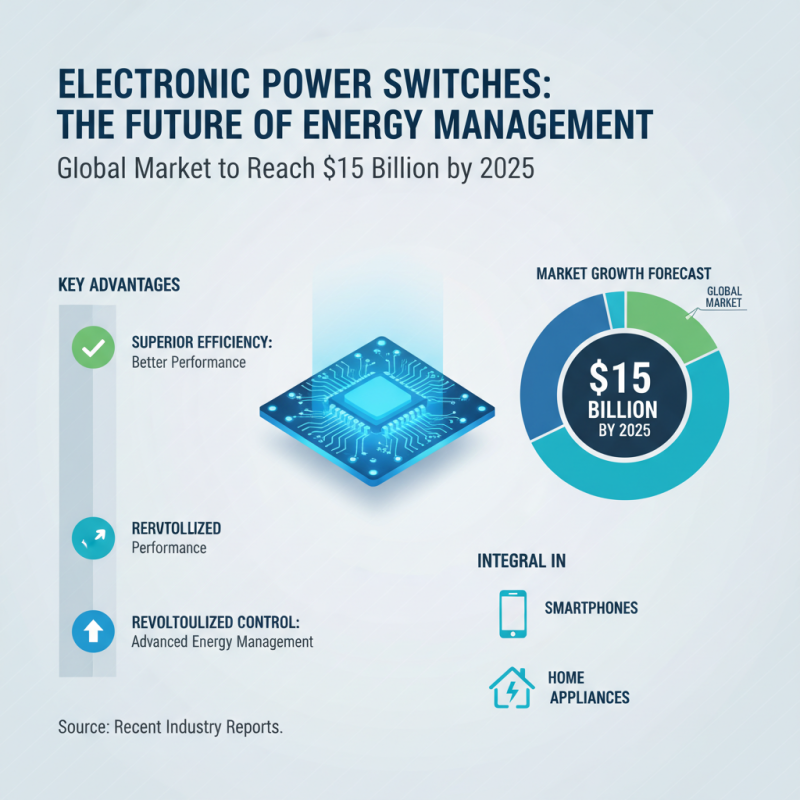
Electronic power switches have revolutionized the way we manage energy in various applications. According to recent industry reports, the global market for electronic switches is expected to reach $15 billion by 2025, reflecting a growing reliance on these technologies. They are integral in devices like smartphones and home appliances. Their efficiency often surpasses traditional switches, offering better performance.

In terms of applications, electronic power switches are used in automation systems, lighting controls, and electric vehicles. The versatility and compact design make them ideal for modern technology demands. A significant advantage is energy savings, which can be up to 30% in some applications. However, one must consider potential drawbacks, like heat dissipation issues, which can affect long-term reliability.

Tips: Always check the specifications of a power switch before installation. Choose components rated for your specific application. This minimizes risks and enhances performance. Don't overlook the impact of ambient temperature on switch effectiveness. Regularly monitor and assess your systems for optimal functionality. Understanding these factors can lead to better energy management and sustainability.

Specialized Power Switches: Smart and Safety-Centric Solutions

In the modern world, smart and safety-centric power switches have become increasingly essential. These devices cater to evolving consumer needs, enhancing both convenience and security. According to a recent market analysis, the global smart switch market is expected to grow at a compound annual growth rate of 20% from 2022 to 2028. This rapid expansion highlights a shift towards automation in our daily environments.

Safety-centric solutions often include features like surge protection and remote monitoring. These functionalities help prevent electrical hazards and provide peace of mind. Reports indicate that devices with integrated safety features reduce the risk of electrical fires by up to 40%. Some users, however, may overlook the importance of regular maintenance, leading to potential risks that could be easily avoided.

As we embrace innovative technologies, it's crucial to assess their limitations. Not all smart switches are compatible with every home setup. Compatibility issues can frustrate users aiming for seamless integration. Balancing innovation with practical application is key. Investing in quality smart switches ensures reliability, but neglecting regular updates can create vulnerabilities. It's a constant reminder that safety and technology need to work hand in hand.

Choosing the Right Power Switch for Your Needs and Environment

When choosing the right power switch, consider your daily needs and environment. Different switches serve unique purposes. For instance, rocker switches are commonly used in household appliances. They offer a simple on/off function, ideal for ease of use. In industrial settings, toggle switches are frequent. They can handle higher voltage levels and are crucial for safety.

According to a recent industry report, nearly 70% of electrical faults stem from improper switch selection. This highlights the importance of understanding your environment. A switch that works well in a dry, indoor setting may not suit outdoor or wet conditions. For instance, waterproof switches are vital in environments exposed to moisture or dust.

Evaluate the switch's current rating too. Some switches can handle only a limited capacity. Using them beyond their specifications may lead to failures. Regular testing and maintenance also help ensure reliability. This attention to detail may save you from costly repairs and safety hazards. Each choice you make should reflect understanding and suitability.

Go to Top