Top 10 Motor Starters You Need to Know About?
In the world of machinery, motor starters play a crucial role. These devices are essential for controlling the power supply to motors. Without them, industrial operations can face significant challenges. Understanding motor starters can prevent costly downtimes and enhance equipment longevity.
There are various types of motor starters available, each tailored to specific needs. From simple controls to advanced features, these devices are not one-size-fits-all. It’s important to assess your requirements carefully. Learning about the differences can aid in making informed decisions. Motor starters also come with unique installation processes that can be tricky.
Despite their importance, many overlook motor starters. This can lead to mistakes, especially in critical applications. Users may struggle with choosing the right starter or fail to understand its function fully. Recognizing these gaps can empower better choices and maintenance practices. Awareness of the top motor starters can pave the way for improved efficiency and safety.
Understanding Motor Starters and Their Importance
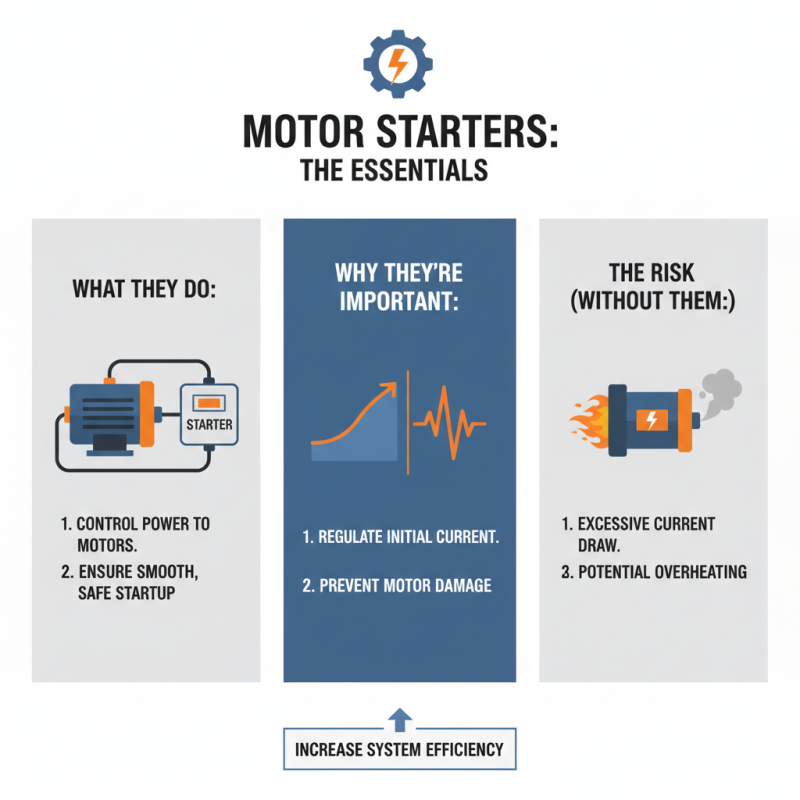
Understanding motor starters is essential for anyone involved in industrial operations. These devices control the electrical supply to motors, ensuring they start smoothly and safely. By regulating the initial current, they prevent motor damage and increase system efficiency. Without proper starters, motors can draw excessive current, leading to potential overheating. This is a simple fact but often overlooked.
Different motor starters serve various functions. Some provide overload protection, while others manage starting torque. For instance, a soft starter gradually increases voltage, reducing mechanical stress. However, not all applications need advanced features. Sometimes, a basic starter might suffice. This decision requires careful thought. Users must consider motor size, application needs, and overall system requirements.
Despite advancements, common mistakes persist. Users may underestimate the importance of proper selection. Oversizing a motor starter can lead to inefficiencies. Conversely, undersizing may cause failures. It’s a delicate balance. Proper training and understanding are crucial. Many operators find the technical details challenging. This can result in improper installations. Therefore, awareness and education about motor starters remain critical for successful operations.
Types of Motor Starters: An Overview of Options Available
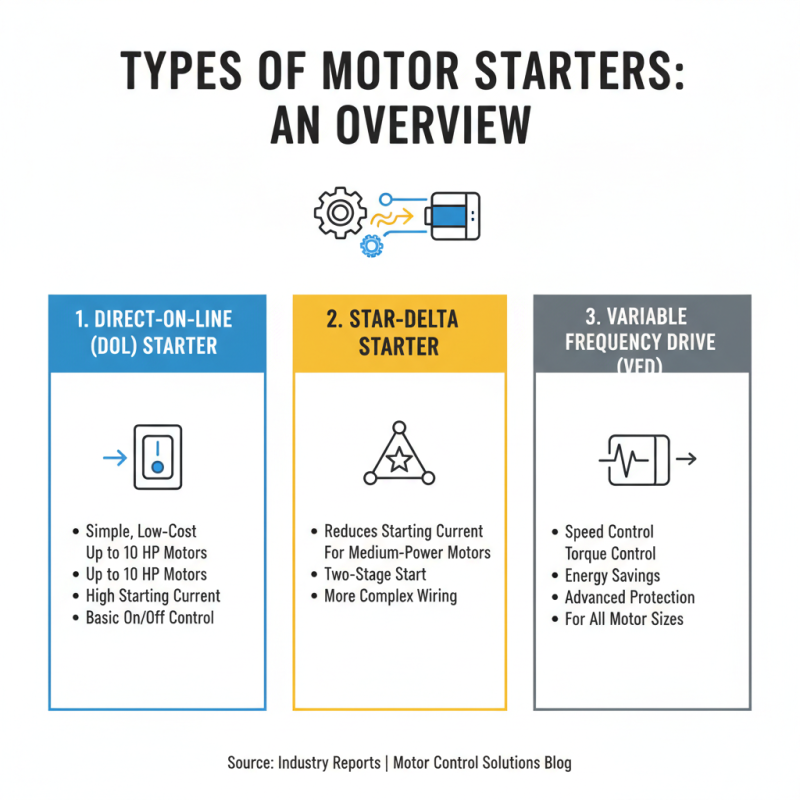
Motor starters play a crucial role in industrial applications. They initiate the rotation of electric motors and can manage their electrical supply. There are various types of motor starters available, each designed for specific operational needs. These include direct-on-line (DOL) starters, star-delta starters, and variable frequency drives (VFDs). According to industry reports, DOL starters can handle motors up to 10 HP effectively. They are straightforward and low-cost but may lead to high starting currents.
Star-delta starters reduce the initial current by first connecting the motor in a star configuration. After a short interval, the configuration switches to delta. They are suitable for motors over 10 HP. However, timing issues during the switch can lead to mechanical stress. VFDs offer advanced control, adjusting speed and torque. A study from the North American Electric Reliability Corporation indicates that VFD adoption is increasing by 15% annually, with users seeking energy efficiency and performance.
While each starter type has its advantages, they also come with limitations. For instance, DOL starters may not be ideal for larger motors due to high starting current. Star-delta configurations require precise control to avoid mechanical strain. It's essential to weigh these trade-offs when selecting the right motor starter for specific applications. Choosing the wrong type could lead to inefficiency and increased operational costs.
Key Features to Consider When Choosing a Motor Starter
When selecting a motor starter, understanding key features is vital. These components ensure your motor operates efficiently and safely. Start with the starter type—direct-on-line, star-delta, or soft starter. Each has unique applications. For example, a soft starter can reduce initial launch torque, preventing mechanical stress.
Consider voltage ratings. Many manufacturers report failures when voltage exceeds specifications. Check if the starter suits your motor’s voltage. Overloading can lead to overheating, equipment failure, or even fire hazards. Ratings should match your application demands.
**Tip:** Always consult technical data sheets for ratings. A common mistake is overlooking ambient temperature. Starters perform poorly in extreme conditions. Ensure your chosen model fits the environment to extend its life.
Next, evaluate control methods. Some starters provide manual and automatic options. Automatic starters are beneficial for reducing operator error. However, reliance on them might lead to delays in troubleshooting. Maintaining manual control in certain cases is essential for oversight.
**Tip:** Keep spare starters available. This simple practice can save time during breakdowns. Regular maintenance is also crucial. Checking connections and settings can prevent premature failures, leading to costly downtime. Sometimes, even minor adjustments can yield significant improvements.
Top 10 Motor Starters You Need to Know About
This bar chart illustrates the key features to consider when choosing a motor starter, including efficiency, voltage rating, and starting torque capabilities among the top 10 motor starters.
Top 10 Motor Starters: Performance and Application Insights
When choosing motor starters, understanding their performance and applications is essential. A report from the International Electrotechnical Commission highlights that motor starters can enhance efficiency by up to 30% in industrial settings. Different types cater to varied requirements. For instance, Direct-On-Line (DOL) starters are simple and effective for small motors. They provide high starting torque but can lead to serious inrush currents.
Soft starters are another popular option. They are designed to gradually ramp up voltage and current. This prevents mechanical stress and extends motor life. Industry studies show that soft starters can reduce stress-induced failures by as much as 50%. However, their initial costs can be a drawback. Many without proper budgeting get caught off guard. Proper assessment of application needs is vital.
Across industries, federated reports indicate that over 40% of users face inefficiencies with their motor starters. This often arises from outdated models or improper sizing. The selection process should not be rushed. Ignoring specific load conditions can lead to performance issues. Reflection on real-time operational demands is necessary for optimal efficiency.
Top 10 Motor Starters: Performance and Application Insights
| Starter Type |
Voltage (V) |
Current Rating (A) |
Application |
Efficiency (%) |
| Induction Starter |
400 |
30 |
Industrial Machinery |
85 |
| Soft Starter |
230 |
25 |
Pumps and Fans |
90 |
| Direct-On-Line Starter |
380 |
60 |
Compressors |
80 |
| Star-Delta Starter |
400 |
50 |
Large Motors |
88 |
| Variable Frequency Drive |
480 |
40 |
HVAC Systems |
95 |
| Capacitor Start |
230 |
20 |
Small Motors |
82 |
| Autotransformer Starter |
400 |
70 |
Conveyor Belts |
89 |
| Relay Starter |
230 |
15 |
Small Pumps |
75 |
| Electronic Starter |
480 |
35 |
Industrial Applications |
93 |
| Drip Starter |
400 |
45 |
Generators |
86 |
Installation and Maintenance Tips for Motor Starters
When installing motor starters, proper setup is crucial for optimal performance. Industry reports suggest that nearly 30% of operational failures can be traced back to installation errors. Ensuring the wiring is correctly secured and connections are tight will prevent unnecessary breakdowns. Always double-check your work to avoid costly mistakes.
Maintenance is just as important. Regular inspection of motor starters is recommended. According to a 2021 maintenance report, 40% of motor starter failures occur due to lack of routine checks. Schedule monthly inspections to monitor wear and tear. Look for signs of overheating or corrosion, which can signal potential issues.
Tip: Use thermal imaging to spot problems. This method can reveal hot spots that aren't visible to the naked eye. Staying vigilant reduces downtime and maintenance costs. Remember, even small details matter. Neglecting them could lead to bigger, more expensive issues down the line. Regular training for staff on proper handling is also vital. It helps to minimize errors during both installation and maintenance.
 Skip to content