Top 10 CNC Turning Centers in China for Precision Machining?
The CNC Turning Center has revolutionized the machining industry in China. These advanced machines offer high precision and efficiency, essential for modern manufacturing. Many companies rely on CNC Turning Centers for their projects, ensuring tight tolerances and intricate designs.
In this dynamic landscape, China stands out with its top CNC Turning Centers. These machines combine technology with skilled craftsmanship. However, the selection process isn’t always straightforward, as it involves balancing cost, quality, and capability. Some manufacturers may not meet expectations, leading to production delays and resource wastage.
Understanding the best options available is key for businesses aiming for excellence. This exploration highlights ten leading CNC Turning Centers in China. Each choice reflects unique strengths and potential challenges. As industries evolve, so too must our approach to these crucial tools. Choosing wisely can shape the future of precision machining.
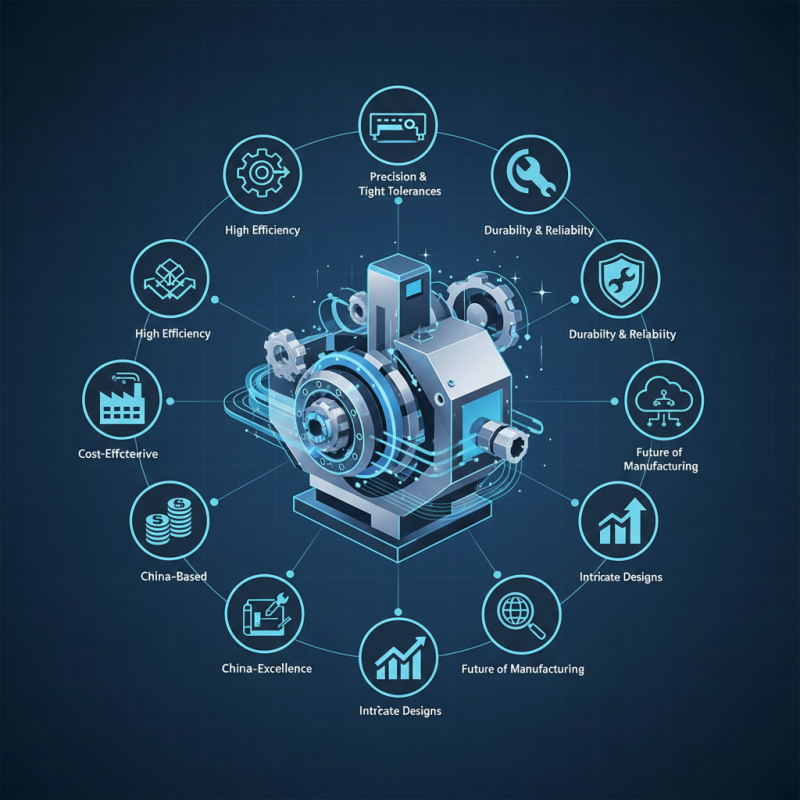
Overview of CNC Turning Centers and Their Importance in Precision Machining
CNC turning centers are vital in precision machining. These machines enhance the efficiency of creating components with high precision. They achieve this through automated processes, which reduce human error. Manufacturers appreciate these centers for their ability to produce complex geometries. The fast setup times allow for flexibility in production runs.
With CNC technology, the capabilities of turning centers have expanded. They can now handle various materials, providing versatility in manufacturing. However, the learning curve can be steep for operators. Proper training is essential to maximize efficiency and accuracy. Some operators may struggle with advanced programming features, leading to potential mistakes in production.
In the ever-evolving landscape of manufacturing, relying on CNC turning centers is a double-edged sword. While they offer significant benefits, the initial setup and programming require careful attention. The challenge lies in finding the right balance between automation and skilled oversight. As companies adapt to these machines, there’s a continuous need for evaluation and improvement. Understanding both their strengths and weaknesses is crucial for success in precision machining.
Criteria for Evaluating the Best CNC Turning Centers in China
When evaluating the best CNC turning centers in China, several criteria should be prioritized. Precision, reliability, and technological advancement play key roles. According to a 2022 industry report, accuracy is paramount in machining. Machines with a precision of 0.01 mm significantly enhance efficiency.
Another essential aspect is the machine’s versatility. Multi-functioning machines are preferred. Operators can perform various tasks without switching machines. Flexibility is crucial for meeting diverse production needs.
Tips: Focus on the RPM range of the CNC turning center. A higher RPM often indicates better performance. Additionally, consider the user interface. A complex interface can lead to errors.
It is vital to assess maintenance requirements too. Machines demand regular upkeep. Neglecting maintenance can lead to costly breakdowns. Reliability is directly influenced by consistent service.
Data-driven analytics show that the best centers maintain less than 5% downtime. Regular calibration and monitoring are critical. Reflect on how machine performance can impact overall production.
Top 10 CNC Turning Centers in China: Features and Specifications
CNC turning centers are vital for precision machining in various industries. They perform tasks that demand accuracy and efficiency. Choosing the right machine can be challenging. Features vary widely among models, impacting their performance.
Some common specifications include spindle speed and tool capacity. Machines often have a high spindle speed, enabling faster production. Tool capacity can range from a few tools to over twenty. More tools allow for complex machining in a single setup. However, this can lead to maintenance challenges. Regular checks are crucial to ensure all tools function well.
Additionally, many centers come with advanced control systems. These systems enhance user experience and help achieve tight tolerances. However, learning these systems can be daunting for new users. User-friendly interfaces can ease this process but are not always present. Understanding machine capabilities is essential for optimal performance. Users often need to reflect on their specific needs before investing.
Top 10 CNC Turning Centers in China for Precision Machining
Comparative Analysis of Leading CNC Turning Centers in the Market
In the competitive landscape of precision machining, CNC turning centers play a vital role. These machines are designed for accuracy and efficiency. They handle various materials with ease, but not all centers deliver the same level of performance. Evaluating turning centers can be challenging. Many factors, such as programmability, spindle speed, and tooling options, impact their effectiveness.
Some turning centers might excel in speed but compromise on precision. It's important to assess how each machine interacts with different materials. Additionally, user-friendliness can vary significantly. Some operators find certain interfaces intuitive while others are cumbersome.
Regularly, companies must balance speed, accuracy, and ease of operation. Often, a good machine can become less effective without proper maintenance and calibration.
Despite advancements, no turning center is perfect. Some might require frequent adjustments to remain in optimal condition. Users may also struggle with finding the right parts when repairs are needed.
As the market evolves, integrating new technologies into these machines can enhance their functionality. However, it remains critical to analyze which innovations genuinely improve outcomes versus those that merely add complexity.
Future Trends in CNC Turning Technology and Its Impact on Machining
CNC turning technology is evolving rapidly, impacting precision machining significantly. Recent reports indicate that the global CNC machine market size is projected to reach $100 billion by 2025. This growth can be attributed to the rise of automation and Industry 4.0. Manufacturers are increasingly adopting smart technology to enhance precision.
Data shows that 75% of CNC users are now integrating IoT capabilities. This integration allows for real-time monitoring and improved productivity. However, challenges remain. Many operators still struggle with a skills gap. The need for highly trained personnel is pressing. As automation increases, operators are often overwhelmed with new systems.
Moreover, sustainability is becoming a major focus. Reports suggest that energy-efficient CNC machines could reduce operational costs by up to 30%. Nevertheless, transitioning to greener technologies presents barriers. Some traditional manufacturers resist change. They worry about initial costs and downtime. The road to innovation is not without its bumps. Embracing these trends is crucial, but it requires commitment and investment.
 Skip to content
