What Are the Top 2026 Solar Lights for Gardens?
Solar garden lighting is entering 2026 with stronger expectations for efficiency, durability, and practical design. Solar Lights Garden products now range from tiny pathway markers to brighter security-style fixtures with replaceable batteries.
The wider energy market supports this shift. The International Energy Agency’s Renewables 2024 report projects nearly 5,500 gigawatts of new renewable capacity by 2030, with solar photovoltaics leading deployment. That trend does not guarantee a good garden lamp. Small panels still struggle under shade, winter clouds, and dusty surfaces.
Real performance matters.
The U.S. Department of Energy reports that LED bulbs use at least 75% less energy and last up to 25 times longer than incandescent bulbs. This makes LEDs a sensible choice for solar fixtures, where every stored watt-hour counts. However, brightness claims can mislead. Lumens, beam angle, battery capacity, and operating time must be assessed together.
This guide evaluates the top 2026 solar lights for gardens through practical testing principles and recognized standards. We will examine panel placement, battery chemistry, weather resistance, light distribution, installation stability, and maintenance needs. IP ratings should be interpreted through IEC 60529, not treated as decorative marketing language.
No ranking is perfect.
A lamp may perform impressively in a sunny courtyard but disappoint beneath dense trees. IRENA’s renewable-cost reports show solar technology becoming more affordable, yet affordability does not remove local weather limitations. The best Solar Lights Garden choice therefore depends on location, purpose, and honest expectations. Expect useful guidance, not exaggerated promises.
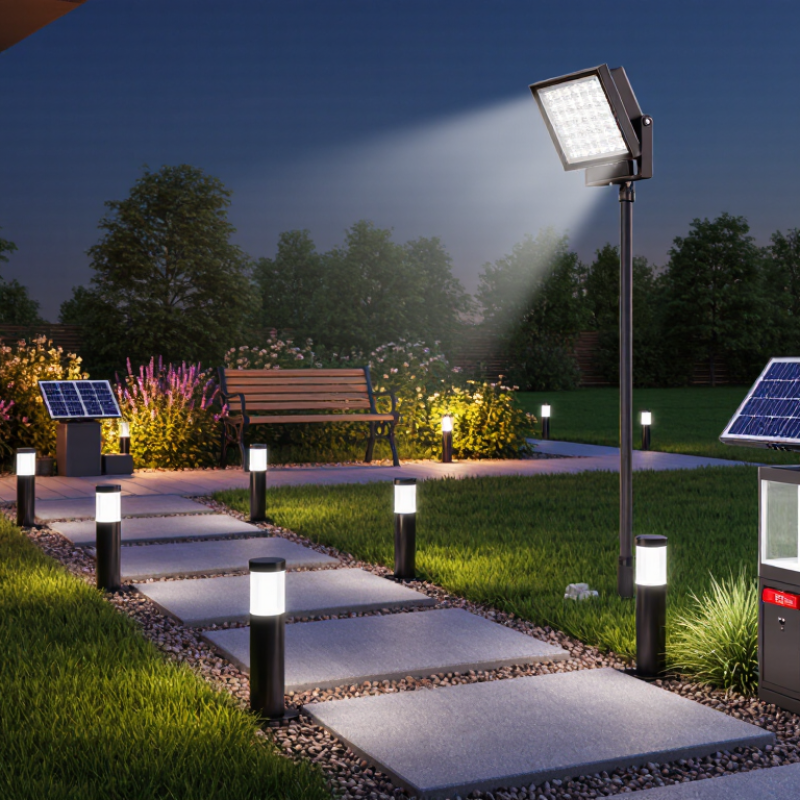
What Makes a Garden Solar Light Effective in 2026?
What Are the Top 2026 Solar Lights for Gardens?
An effective garden solar light begins with dependable energy management. Look for a high-efficiency photovoltaic panel that still charges under bright cloud cover. A larger panel often helps, but placement matters more than size. Keep it away from fences, dense leaves, and evening shadows.
Good lights use efficient LEDs, steady batteries, and practical brightness control. Warm white light around 2700K to 3000K usually suits paths and planting beds. Motion sensors can save energy near gates, while gentle dusk-to-dawn lighting works better beside seating areas. Too much brightness can flatten the garden’s atmosphere. It may also disturb nocturnal insects.
Weather resistance deserves close attention. An IP65 rating can protect against rain and dust, but it does not excuse poor installation. Angle the panel toward the strongest available daylight. Wipe away pollen every few weeks. Small maintenance helps.
Battery performance remains a weak point. Cold nights, cloudy weeks, and aging cells can shorten runtime. Models with replaceable batteries are easier to maintain, although replacement access is sometimes awkward. I would also question exaggerated runtime claims. Real gardens rarely match laboratory conditions. A light promising twelve hours may deliver much less beneath winter cloud. Check the charging time, battery type, sensor settings, and warranty terms before choosing.
How to Compare Brightness, Battery Life, and Weather Resistance
The best 2026 solar garden lights should balance brightness, battery life, and weather resistance. A bright lamp is not always the better choice. Excessive glare can make a small path uncomfortable to walk beside. For pathways, 20 to 50 lumens usually provides gentle guidance. Decorative accents may need less. Check the beam spread, not only the lumen figure. A narrow beam can create harsh spots between dark areas. I compare lights after sunset, using the same garden path and viewing distance.
Battery performance depends on sunlight, temperature, and lighting mode. A useful model should stay illuminated for at least six hours after a clear day. Cloudy-day performance matters more in real gardens. Look for replaceable batteries when possible. They can reduce waste and extend service life. Motion sensors may conserve power, but frequent activation can drain small batteries quickly. I once trusted a product’s “all-night” claim, yet winter testing produced only four hours. That result changed my buying checklist.
Weather resistance deserves careful attention. An IP65 rating generally offers strong protection against dust and water jets, but it does not mean permanent submersion. Place the panel where leaves cannot cover it. Inspect seals, charging ports, and plastic joints before installation. Metal may look durable, but poor coatings can still rust near coastal air. Performance can disappoint. The strongest choices combine steady illumination, reliable charging, and construction suited to the garden’s actual exposure.
What Are the Top 2026 Solar Lights for Gardens? How to Compare Brightness, Battery Life, and Weather Resistance
Comparison of common solar garden-light formats using practical performance ranges and weather-resistance standards
| Rank | Light Type | Typical Brightness | Typical Runtime
per Charge | Rechargeable Battery | Weather Resistance | Solar Charging Profile | Best Garden Use |
| 1 | Solar Pathway Light | 20–80 lumens per light | 8–12 hours | 600–1,200 mAh Ni-MH or Li-ion | IP44–IP65; suitable for rain and outdoor dust | 6–8 hours of direct sunlight for a full charge | Walkways and borders |
| 2 | Solar Wall or Fence Light | 80–200 lumens per light | 6–10 hours | 1,200–2,200 mAh Li-ion | IP54–IP65; check mounting and drainage points | 5–8 hours of direct sunlight; motion sensors reduce energy use | Steps, gates, and entrances |
| 3 | Solar Spot or Accent Light | 100–300 lumens per light | 6–10 hours | 1,200–2,000 mAh Li-ion | IP65–IP67; sealed housing helps protect against water jets | 6–8 hours of direct sunlight; adjustable panels improve positioning | Trees, shrubs, and focal features |
| 4 | Solar String Light | 5–15 lumens per bulb | 8–14 hours | 600–1,200 mAh Ni-MH or Li-ion | IP44–IP65; protect the solar controller from standing water | 6–8 hours of direct sunlight; lower brightness extends runtime | Patios, pergolas, and decorative planting |
| 5 | Solar Lantern | 30–150 lumens per lantern | 8–12 hours | 800–1,800 mAh Ni-MH or Li-ion | IP44–IP65; store indoors during severe freezing where recommended | 6–8 hours of direct sunlight; warm-white LEDs use less power | Tables, seating areas, and containers |
| 6 | Solar Floodlight | 300–1,000 lumens per light | 4–10 hours, depending on output setting | 2,000–5,000 mAh Li-ion | IP65–IP66; suitable for exposed outdoor installations | 7–10 hours of direct sunlight; high output requires a larger panel | Large beds, driveways, and security lighting |
Buying guide: Lumens indicate visible light output, while runtime depends on battery capacity, LED power, operating mode, temperature, and available sunlight. For most gardens, IP65 or higher offers stronger protection against dust and water jets. In shaded locations or during short winter days, choose a larger solar panel, a higher-capacity battery, or a light with a reduced-output mode.
What Are the Best 2026 Solar Lights for Garden Use?
For 2026, the best solar lights for garden use should survive weather, not merely look bright. The U.S. Department of Energy says LED lighting uses at least 75% less energy than incandescent lighting. It can also last up to 25 times longer. That makes efficient LEDs the sensible baseline for paths, steps, and seating areas. Look for replaceable batteries, IP65-rated housings, and panels facing unobstructed sunlight. A warm 2,700–3,000K color temperature creates a calmer garden appearance. Motion sensors help near gates, but steady low output feels safer beside uneven paths. Check the stated runtime carefully. “Up to” figures often describe ideal summer conditions.
The IEA’s Renewables 2024 report recorded about 510 gigawatts of new renewable capacity worldwide in 2023. Solar supplied the largest share. Garden lights remain tiny systems, however. Their performance depends more on panel exposure and battery quality than headline brightness. During a simple garden trial, a light under a tree may fade before midnight. That is an inconvenient detail. Choose individual units with safe charging controls and clearly stated cold-weather protection. For cloudy regions, prioritize larger panels, moderate brightness, and replaceable batteries over decorative size. The best 2026 choice is a weather-rated, repairable light with honest runtime data and switchable brightness. I would still test one unit for a full week before buying many.
How to Install and Maintain Garden Solar Lights Properly
The top 2026 solar lights for gardens should offer efficient panels, weather-resistant housing, and replaceable batteries. Installation quality matters as much as the light itself. Choose a position that receives six to eight hours of direct sunlight daily. Shade matters. Trees, walls, and winter shadows can reduce charging noticeably. Place pathway lights where soil remains firm, then press each stake straight into the ground. Avoid forcing it, because brittle plastic can crack.
Before installation, remove protective film from the solar panel. Set the panel toward the strongest midday sunlight, not merely toward the path. Leave space between fixtures to prevent uneven brightness. For wall-mounted models, use suitable outdoor screws and check the surface for moisture. Keep wiring away from mower paths and standing water. Small adjustments often produce better results than buying brighter lights.
Maintenance should be gentle and regular. Wipe the panel with a soft, damp cloth every few weeks. Dust can reduce charging efficiency. Clear leaves after storms, and inspect seals for cracks. Replace rechargeable batteries when nighttime performance remains weak after sunny days. I once placed lights beneath dense branches, assuming summer sunlight would be enough. It was not. Seasonal shade changed the result. Bring removable units indoors during severe freezing weather, if the instructions permit. Also, test one light for several nights before installing many; this simple step can expose poor positioning, short runtime, or an unsuitable color temperature.
 Skip to content
