What is a Pressure Reducing Regulator and How Does It Work?
Pressure Reducing Regulators play a crucial role in managing gas and fluid systems. As John Smith, a leading expert in the field, once stated, "Effective regulation is key to safety and efficiency." Understanding how these devices function is essential for anyone involved in industrial applications.
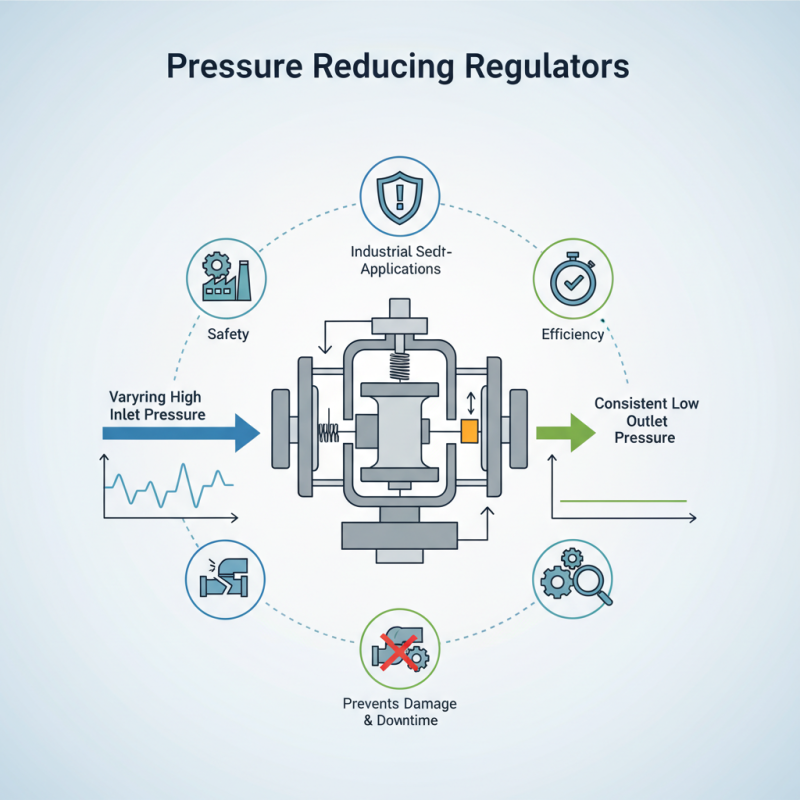
Pressure Reducing Regulators maintain steady outlet pressure despite varying inlet pressure. This stability is vital in systems where precise pressure control is required. These regulators prevent damage to equipment and ensure smooth operations. Without them, fluctuations can lead to failures and costly downtime.
The design of Pressure Reducing Regulators is fascinating yet complex. They can vary widely in size and application. Each type has its own benefits and challenges. Choosing the right regulator may seem straightforward, but it can be a mistake. Often, the wrong choice can result in system inefficiencies. Even experienced professionals can overlook critical details. Understanding the intricacies is essential for optimal performance.
What is a Pressure Reducing Regulator?
A pressure reducing regulator is a vital component in various systems. It controls and maintains the output pressure, ensuring safe operation.
When gas or liquid enters the regulator, it encounters a diaphragm. This diaphragm reacts to changes in pressure. If the output pressure rises, the diaphragm pushes back. It adjusts the flow, stabilizing the pressure. The result is a consistent and safe output.
These regulators are crucial in industrial operations, laboratories, and even residential settings. They help prevent equipment damage. However, some might overlook regular maintenance. This could lead to performance issues. Users should reflect on the importance of these devices. Small oversights may result in significant problems down the line.
The Importance of Pressure Regulation in Various Applications
Pressure regulation is essential in many industries. In gas distribution systems, for example, maintaining safe pressure levels ensures efficient operation. High pressure can lead to leaks and failures. A pressure reducing regulator controls this by lowering and stabilizing the pressure within a system.
In manufacturing, proper pressure regulation enhances safety. Machines often rely on specific pressure ranges to function correctly. Too much pressure can cause equipment damage or unsafe conditions for workers. Effective regulators can prevent such risks. Hospitals also depend on accurate pressure regulation for gas supply to vital systems. Without it, medical equipment may malfunction, jeopardizing patient care.
While pressure regulators are reliable, they are not infallible. Regular maintenance is necessary to ensure their function. Neglecting this can lead to inconsistent performance. It's crucial to monitor systems for any signs of malfunction. Such oversights can have serious consequences in critical applications. Thus, understanding the importance of pressure regulation is vital for safety and efficiency.
What is a Pressure Reducing Regulator and How Does It Work? - The Importance of Pressure Regulation in Various Applications
| Application | Required Pressure (psi) | Pressure Reducing Regulator Type | Advantages |
| Industrial Heating | 15-30 | Spring Loaded | Stable output pressure, easy maintenance |
| Gas Distribution | 5-10 | Diaphragm | Accurate pressure control, compact design |
| Hydraulic Systems | 20-40 | Pneumatic | High efficiency, reliable operation |
| Water Supply | 30-60 | Pilot Operated | Reduces water hammer effect, improved flow control |
| Medical Equipment | 10-15 | Electronic | Precise pressure regulation, enhanced safety features |
Key Components of a Pressure Reducing Regulator
A pressure reducing regulator is essential in various systems. It controls high-pressure gas or liquid, ensuring safety and efficiency. Key components include the valve, diaphragm, and spring. Each part plays a crucial role in regulating pressure.
The valve is the heart of the regulator. It opens and closes in response to pressure changes. The diaphragm senses pressure variations. It adjusts the valve’s position based on the set pressure. This interaction is vital for stable output. However, if the diaphragm wears out, it can lead to inconsistent pressures.
The spring is another significant component. It provides the necessary force to keep the valve in place. The spring tension directly affects the set pressure. If the spring is too weak, the regulator may fail to maintain desired pressure. Regular maintenance is essential to check these components, ensuring they function correctly. Ignoring small issues can lead to larger problems down the line.
How a Pressure Reducing Regulator Works: Step-by-Step Process
A pressure reducing regulator is essential in many systems. It controls the flow and pressure of fluids or gases. This device ensures that the downstream pressure remains stable, even when upstream pressure fluctuates. Understanding how it works is crucial for effective utilization.
The process begins with the inlet pressure. The regulator receives this high pressure from the source. Inside, a diaphragm reacts to the pressure. When the force exceeds a set point, the diaphragm moves. This action opens a valve, allowing excess pressure to escape. As pressure decreases, the diaphragm returns to its original position, reducing the flow.
Adjusting the regulator can be tricky. If set too low, systems may starve. Conversely, an excessive setting might lead to damage. It's vital to find a balance. Regular maintenance is necessary to ensure accurate readings. Users should periodically check for wear and tear. Understanding these steps aids in achieving optimal performance.
Pressure Reducing Regulator Performance Analysis
Common Types of Pressure Reducing Regulators and Their Uses
Pressure reducing regulators come in various types, each designed for specific applications. A common type is the spring-loaded regulator. It employs a spring mechanism to control the outlet pressure. These regulators are often used in gas systems. They adjust pressure based on the demand of the connected device.
Another type is the diaphragm regulator. This regulator utilizes a flexible membrane to sense pressure changes. Diaphragm regulators are frequently used in medical applications. They ensure a stable gas supply for patient breathing systems. However, they might require more maintenance due to their sensitive components.
Lastly, electronic pressure regulators offer advanced control. They can be programmed for precise pressure settings. This type is increasingly popular in industrial automation. Yet, they can be complex to set up. Users may find the learning curve steep. Each regulator type has its strengths and weaknesses. Understanding these differences can lead to better system performance.
 Skip to content
