Nylon Insulated Terminal Usage Tips for Better Connections?
In the world of electrical connections, Nylon Insulated Terminals play a vital role. Expert John Smith, a leading authority in electrical engineering, emphasizes, "Properly using Nylon Insulated Terminals ensures durability and reliability." These terminals offer insulation that protects against corrosion and improves connection efficiency. However, many users overlook essential installation tips.
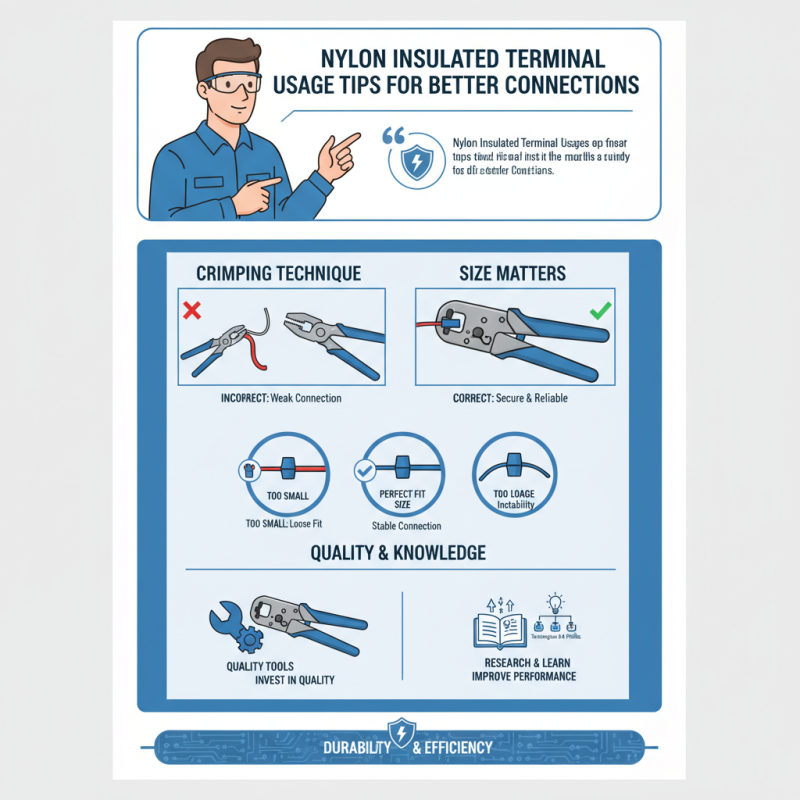
One common mistake is improper crimping. It can lead to weak connections and potential failures. A poorly connected terminal can disrupt an entire electrical system. Additionally, selecting the right size for your application is critical. A terminal that is too small may not fit securely, while one that is too large can lead to instability.
To achieve the best results with Nylon Insulated Terminals, users should prioritize quality tools. Investing in high-quality crimping tools can make a significant difference. Take time to research proper installation techniques and common pitfalls. These efforts can enhance the performance of your electrical connections and extend the life of your terminal applications.
Understanding Nylon Insulated Terminals and Their Benefits
Nylon insulated terminals are widely used in various electrical applications. They offer excellent protection against moisture and corrosion. This makes them a popular choice for automotive and marine environments. Additionally, their durability ensures a reliable connection over time.
When using nylon insulated terminals, it’s essential to select the right size. A loose connection can lead to increased resistance and potential heat buildup. On the other hand, a tight fit can damage the wire insulation. It’s often overlooked, but ensuring a perfect fit is crucial for optimal performance. Also, keep in mind that stripping wires too much can expose them unnecessarily, increasing the risk of short circuits.
Some users may neglect proper crimping techniques. Without adequate pressure, the terminal may fail. However, over-crimping can also lead to wire damage. Finding the right balance requires practice and attention. Regularly inspect connections to ensure they remain secure and functional. Small issues can turn into significant problems if ignored. Remember, good connections are vital for safety and reliability.
Choosing the Right Size and Type of Nylon Insulated Terminal
Choosing the right size and type of nylon insulated terminal is crucial for creating effective electrical connections. The wrong terminal size can lead to loose connections or damage. Measure your wire gauge properly. Use a wire stripper for accurate stripping. This ensures the terminal fits snugly onto the wire.
Tips for selecting terminals: Consider the application. For automotive use, choose terminals designed for resistant environments. Environmental factors might affect your choice. Corrosion and heat can weaken connections over time. Ensure you select terminals that can withstand these challenges.
Don't forget to check the crimping process. A poorly crimped terminal can lead to intermittent connections. Test connections after installation. If you notice inconsistency, re-evaluate your choices. Sometimes it's easy to overlook terminal specifications. This can lead to failures later on. Always double-check your selections. Attention to detail can save you future headaches.
Preparing Wires for Optimal Connection with Nylon Insulated Terminals
Preparing wires for optimal connection with nylon insulated terminals requires attention to detail. Start by stripping the insulation from the wire carefully. Aim for a clean cut to avoid fraying. A frayed wire can lead to poor connections, which can cause electrical failures. Make sure to expose just the right amount of wire. Too much exposure can lead to short circuits.
Next, consider the crimping process. It's crucial to choose the right crimping tool for the terminal type. A firm squeeze ensures a good bond between the wire and terminal. However, too much pressure can damage the wire, leading to weak connections. After crimping, check the connection. Gently tug on the wire to ensure it’s secured. If it comes loose, re-crimp and inspect again.
Lastly, pay attention to the environment. Dirt or moisture can affect connectivity. Ensure that all connections are clean and dry before proceeding. Unforeseen issues can arise. Sometimes, even a well-prepared wire won't connect properly. Reflecting on the process can help improve future connections. Take time to evaluate each step for better reliability.
Nylon Insulated Terminal Usage Tips for Better Connections
| Wire Gauge | Terminal Type | Insulation Type | Recommended Crimp Tool | Connection Tips |
| 18 AWG | Female Disconnect | Nylon | Crimping Tool Model A | Ensure wire is fully inserted into the terminal before crimping. |
| 16 AWG | Male Disconnect | Nylon | Crimping Tool Model B | Use a heat-shrink sleeve for added protection. |
| 14 AWG | Ring Terminal | Nylon | Crimping Tool Model C | Make sure the terminal is securely attached to the connector. |
| 12 AWG | Spade Terminal | Nylon | Crimping Tool Model D | Check for proper alignment before crimping. |
| 10 AWG | Butt Connector | Nylon | Crimping Tool Model E | Use a wire stripper for clean cuts before crimping. |
Techniques for Crimping and Securing Nylon Insulated Terminals
Crimping nylon insulated terminals requires precision. Start by selecting the right size terminal for your wire gauge. The connection must be snug. If it’s loose, the connection may fail over time. The crimping tool should match the terminal size. Using the wrong tool can lead to poor connections.
When crimping, ensure the wire insulation is stripped appropriately. Exposed wire should not exceed the terminal's barrel length. An exposed section that is too long can cause shorts. After crimping, tug gently on the wire. If it pulls out easily, it's a signal to try again. This is a step often overlooked, but it’s crucial for reliability.
Heat shrink tubing can add another layer of protection. Slide it over the crimped connection. Use a heat source to shrink it securely. It helps prevent moisture ingress. But if applied incorrectly, it can trap air bubbles. This can lead to corrosion over time. Regularly inspect your connections to ensure they stay secure and functional. If you notice any signs of wear, take action immediately.
Maintaining Connections for Long-Term Performance and Reliability
Proper maintenance of nylon insulated terminals is crucial for long-term performance. Over time, connections can corrode due to moisture and environmental factors. Regular inspection helps identify issues before they escalate. Clean connections can prevent signal loss and ensure reliability. Use a brush or cloth to remove dirt or oxidation.
Another tip is to apply the right torque when securing terminals. Too much force can damage connectors, while too little can cause poor connections. Consider the environment where terminals are used. Extreme temperatures or humidity can affect performance. Always check specifications for suitable materials and torque values. A small oversight can lead to bigger problems later on.
One common mistake is not using sufficient dielectric grease. This can lead to moisture ingress and deterioration over time. A thin layer can create a barrier against moisture and dirt. Even simple steps like re-checking connections can make a difference. Embrace the routine. When connections are stable, performance follows.
Nylon Insulated Terminal Connection Reliability
This bar chart illustrates the performance metrics of nylon insulated terminals regarding various factors essential for maintaining reliable connections over time. Each metric represents a percentage performance level, indicating how well these terminals resist temperature fluctuations, corrosion, and vibrations, while also ensuring good electrical conductivity and ease of use.
 Skip to content
