What is Motor and Control Solutions for Your Business Needs?
In today's rapidly evolving industrial landscape, the demand for efficient motor and control solutions is paramount. Industry expert Dr. Sarah Thompson emphasizes this need, stating, “Motor and control solutions are the backbone of modern automation.” Her expertise highlights the essential role these systems play in optimizing operations and enhancing productivity.
Businesses must navigate various challenges, from reducing energy consumption to improving equipment reliability. Motor and control solutions can address these issues effectively. Advanced technologies, such as variable frequency drives and smart motors, are at the forefront of this revolution. They enable companies to achieve energy savings and better performance.
However, selecting the right motor and control solutions requires careful consideration. Each application has unique requirements and constraints. A one-size-fits-all approach often falls short. There are numerous options available, and the choices can be overwhelming. Companies may encounter pitfalls in integration or underestimating maintenance needs. Identifying the right balance between innovation and practicality is crucial. Each decision impacts overall operational efficiency and long-term success. Thus, businesses need to invest time in understanding their specific needs in the realm of motor and control solutions.
Understanding Motor and Control Solutions in Modern Business
Motor and control solutions play a vital role in modern business operations. They enhance efficiency, precision, and energy management. According to a recent industry report by MarketsandMarkets, the global motor control market is expected to grow to $26 billion by 2025. This growth is driven by the increasing need for automation across various sectors.
Businesses must choose the right motor and control solutions to meet specific needs. Consider the application environment—temperature, humidity, and vibration all impact performance. Selecting the appropriate motor, like AC or DC, influences operational efficiency. For instance, AC motors are often more suitable for continuous applications, while DC motors excel in applications requiring variable speed.
Tip: Always look for solutions that offer adaptability. Systems that can integrate new technologies seamlessly will save costs in the long run.
While exploring these solutions, businesses should reflect on their power consumption metrics. A recent study revealed that up to 30% of energy costs can come from inefficient motor systems. Investing in high-efficiency motors and smart control systems can lead to significant energy savings. Monitoring and adjusting these systems regularly can drastically improve performance.
Tip: Regular audits of motor and control systems help identify inefficiencies. Instant adjustments can lead to immediate cost reductions.
Understanding Motor and Control Solutions in Modern Business
Key Components of Motor and Control Systems for Optimal Performance
In the realm of industrial automation, motor and control systems are crucial for efficiency. These systems convert electrical energy into mechanical motion. Key components include motors, drives, and controllers. Each plays a vital role in performance.
Choosing the right motor type is essential. There are AC and DC motors. Each has unique benefits depending on application needs. For precise control, servo motors are ideal. They provide accuracy for complex tasks.
Tip: Always assess your application requirements before selecting a motor. Consider torque, speed, and environmental factors. Drives modulate power and enhance motor control. Variable frequency drives (VFDs) are common for energy savings.
Control systems integrate sensors and feedback loops. They ensure optimal performance and reliability. Designing an effective system requires understanding interactions between components. Sometimes, overlooked factors can lead to inefficiencies.
Tip: Review your system design regularly. Ensure all components work harmoniously. Small adjustments can yield significant efficiency improvements. Understanding these key components can enhance your operational performance and sustainability.
What is Motor and Control Solutions for Your Business Needs? - Key Components of Motor and Control Systems for Optimal Performance
| Component |
Description |
Applications |
Benefits |
| Electric Motor |
Converts electrical energy into mechanical energy |
Pumps, fans, conveyors |
High efficiency, low maintenance |
| Variable Frequency Drive (VFD) |
Controls the speed and torque of an electric motor |
HVAC systems, industrial pumps |
Energy savings, improved process control |
| Servo Motor |
Provides high precision control of angular or linear position |
Robotics, CNC machinery |
High accuracy, fast response |
| Programmable Logic Controller (PLC) |
Digital computer used for automation of electromechanical processes |
Manufacturing lines, machinery |
Flexibility, customization |
| Motor Controller |
Device that manages the operation of an electric motor |
Electric vehicles, industrial machines |
Enhanced control, reduced power consumption |
Benefits of Implementing Motor and Control Solutions for Enterprises
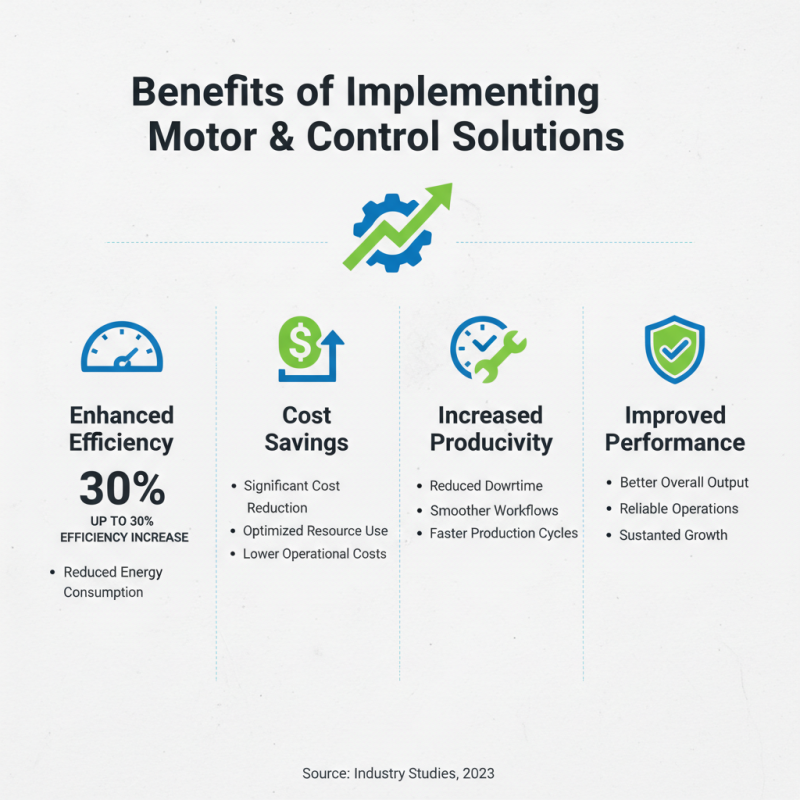
Businesses increasingly turn to motor and control solutions to streamline operations. Recent studies indicate that implementing these solutions can enhance efficiency by up to 30%. This figure demonstrates the potential for significant cost savings and productivity gains. Companies report reduced downtime and smoother workflows, which directly contribute to better overall performance.
Another advantage is improved energy efficiency. Research from industry analysts shows that motor systems account for nearly 65% of electricity consumption in industrial sectors. By upgrading to advanced motor and control systems, businesses can reduce energy use by approximately 20%. This is not just an environmental win; it translates to substantial savings on utility bills.
However, some enterprises fail to adopt these innovations. The reasons vary, from budget constraints to inadequate understanding of benefits. Many organizations overlook the long-term value of improved reliability and reduced maintenance costs. These challenges highlight the need for thorough evaluation and professional guidance when navigating these solutions. In many cases, businesses must reassess their approach to fully capitalize on available technologies.
Choosing the Right Motor and Control Solution for Your Specific Needs
Choosing the right motor and control solution requires careful consideration. Each business has unique requirements. From manufacturing to automation, the right motor can improve efficiency and performance. Motors come in various types, such as AC, DC, and stepper motors. Each type serves different purposes. It's crucial to assess the specific application needs.
Speed, torque, and load capacity are key factors to think about. The environment also plays a role. Is it clean, or does it involve dust and moisture? These details affect the choice. Collaborating with experts can help navigate these decisions. They can provide insights based on experience.
Overlooking maintenance needs can lead to problems. A solution may seem ideal but could require excessive upkeep. Testing prototypes in real-world scenarios may reveal flaws. This step is essential for understanding operational limits. Balancing performance with reliability ensures better long-term results. Seek solutions that match current demands and future growth.
Future Trends in Motor and Control Technology for Business Applications
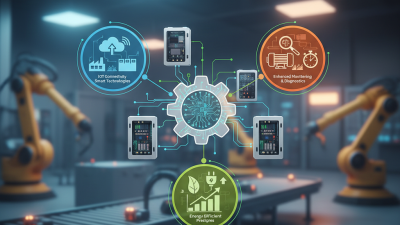
Future trends in motor and control technology are reshaping business applications. Companies are increasingly adopting
smart motors equipped with IoT capabilities. These advancements
enable real-time monitoring and predictive maintenance. IoT-integrated systems can minimize downtime
and enhance efficiency.
Another trend is the shift towards energy-efficient motors. As businesses strive for sustainability,
these motors significantly reduce energy consumption. They lead to lower operational costs, making them an attractive option for various industries.
However, implementing these technologies comes with challenges. Many organizations face integration issues with existing systems.
Additionally, the rise of automation and robotics cannot be overlooked. Automated
systems require precise control solutions to operate effectively. This demand drives innovation in control algorithms and motor designs.
Businesses must stay updated on these developments to remain competitive. While the future looks promising, continuous learning and
adaptation are essential.
 Skip to content