10 Essential Tips for Choosing the Right Power Motor
Choosing the right power motor can significantly impact your project's success. According to Dr. Emily Chang, a leading expert in motor technology, "The right motor can make or break your operation." Understanding the essentials of power motors is crucial for anyone involved in engineering or manufacturing.
Power motors come in various types, sizes, and capabilities. Selecting the right one requires a blend of technical knowledge and practical experience. For instance, consider your project's specific requirements. Is it for a large industrial machine or a small consumer device? Each application will demand different specifications.
Moreover, the selection process often reveals uncertainties. Many people struggle to balance power efficiency with performance. Mistakes in this area can lead to increased costs or equipment failure. Reflecting on past choices can provide invaluable insights. Each decision shapes future results. Understanding these dynamics is essential for making an informed choice in power motors.
Factors to Consider When Selecting a Power Motor
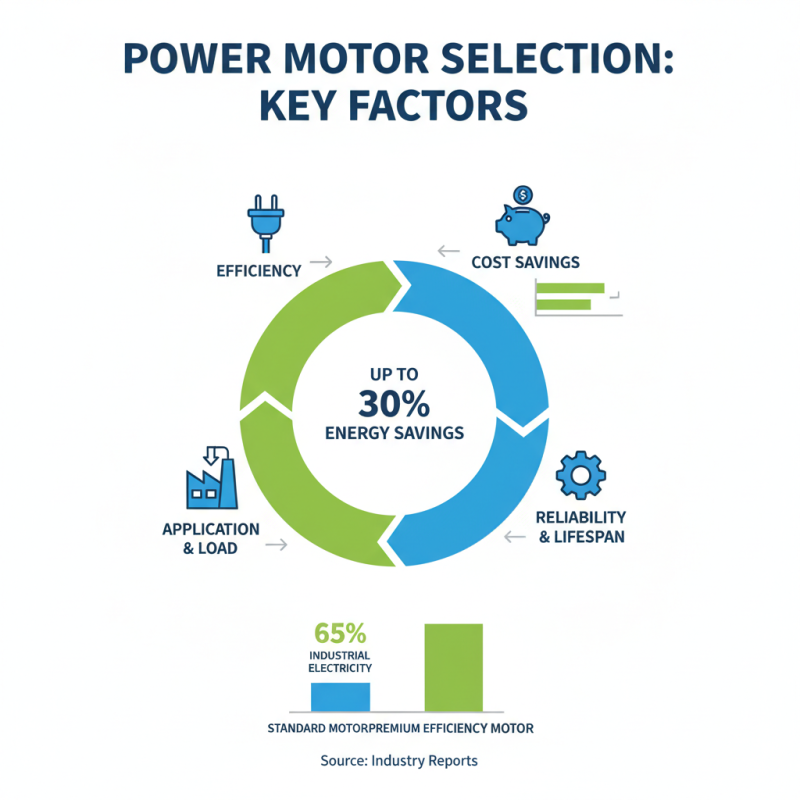
When selecting a power motor, several key factors come into play. Efficiency is crucial. According to recent industry reports, motors account for about 65% of total industrial electricity consumption. A high-efficiency motor can save substantial energy, reducing operational costs significantly. For instance, switching to a premium efficiency motor can lead to energy savings of up to 30% over its lifetime.
The application type is also critical. Different motors serve various purposes. For instance, a motor used in a conveyor belt may require different torque characteristics compared to one in a power tool. It's essential to consider load requirements. Under-sizing a motor can lead to overheating, while over-sizing can waste energy. Industry standards suggest running a motor at around 75% of its capacity for optimal performance.
Additionally, environmental factors should not be overlooked. Humidity, temperature, and vibration in the motor’s environment can impact its performance. Experts advise that motors exposed to high humidity should be rated for that condition. Neglecting these factors can shorten a motor's lifespan, leading to unexpected downtime and repair costs. Balancing these considerations is vital for selecting an appropriate motor.
Understanding Different Types of Power Motors Available
When choosing a power motor, understanding the types available is crucial. There are several types, each designed for specific tasks. Electric motors are widely used due to their efficiency and versatility. They are quiet and require minimal maintenance. However, they may not be powerful enough for heavy-duty applications.
On the other hand, gas-powered motors offer high power output. They are ideal for outdoor equipment like lawn mowers or generators. Yet, they can be noisy and emit fumes, which may not be suitable for all environments. Considerations like these are essential in your decision-making process.
Don’t overlook the importance of size and weight. A heavy motor may be less portable and harder to handle. Conversely, a smaller motor can lack the capacity you need. Moreover, reflect on your specific needs. Will you use the motor frequently or just occasionally? This can shape your choice significantly.
Evaluating Motor Specifications for Your Application Needs
Choosing the right power motor can greatly influence your project’s success. Evaluating motor specifications is crucial for ensuring it meets your application needs. Start by identifying the required power output. This will help you narrow down options. Remember that efficiency matters. An efficient motor can save energy and reduce costs in the long run.
Consider the environmental conditions. Motors can be sensitive to dust, moisture, and temperature. If your application is in a harsh environment, you may need a specialized motor. Pay attention to the torque and speed requirements as well. These factors determine how well the motor performs in your application.
Another important tip is to evaluate the available space. Size constraints can limit your options. Sometimes, a motor that seems perfect might not fit. Additionally, consider the maintenance needs. Some motors require more attention than others. Weighing these factors can help you make a more informed decision for your project.
10 Essential Tips for Choosing the Right Power Motor
Assessing Motor Efficiency and Performance Ratings
When assessing motor efficiency, it’s crucial to understand performance ratings. These ratings often indicate how well a motor converts electrical energy into mechanical energy. According to industry studies, a motor's efficiency can greatly vary, often ranging from 60% to 95%. It’s essential to aim for motors with a higher efficiency rating. However, efficiency alone does not tell the full story.
Consider the operating conditions. A high-efficiency motor may not perform well in extreme temperatures. Additionally, load characteristics significantly impact performance. For example, a motor may operate efficiently at full load but dramatically decrease efficiency at partial loads. This inconsistency can lead to higher energy costs and reduced lifespan.
Performance ratings can be misleading. Some ratings may not reflect real-world conditions. Therefore, it’s wise to look for detailed test reports. Every application poses unique challenges. A careful examination of specific needs and potential scenarios will ensure better decision-making. Balancing efficiency with real-world performance often requires further reflection and evaluation.
10 Essential Tips for Choosing the Right Power Motor - Assessing Motor Efficiency and Performance Ratings
| Motor Type |
Power Rating (kW) |
Efficiency (%) |
RPM |
Torque (Nm) |
| AC Induction Motor |
5.5 |
90 |
1500 |
35 |
| DC Brushless Motor |
2.0 |
85 |
3000 |
15 |
| Stepper Motor |
1.5 |
80 |
400 |
2.5 |
| Synchronous Motor |
10.0 |
92 |
1800 |
60 |
| Universal Motor |
0.75 |
75 |
3500 |
3 |
Importance of Manufacturer Reputation and Warranty Options
When choosing a power motor, the manufacturer’s reputation plays a crucial role. A recent industry analysis found that 73% of consumers consider brand reputation when making their purchase decisions. Reputable manufacturers often have a track record of quality and reliability. They invest in better materials and innovative technology. Customers can feel more confident in their choices.
Warranties are another critical factor. A spare motor with a strong warranty can save money. According to a report by the International Motor Association, motors with extensive warranties typically indicate higher quality. A warranty not only reflects a manufacturer's confidence but also provides peace of mind to buyers. However, some companies offer misleading terms. Prospective buyers should read the fine print carefully.
Consumers sometimes overlook the warranty details, leading to regrets later. Often, warranties are limited and come with many restrictions. Knowing the exact coverage can prevent miscalculations. Exploring manufacturer reviews from diverse sources can provide insights into long-term satisfaction. While most research data supports purchasing from known brands, some lesser-known manufacturers may offer high-quality alternatives worth considering.
 Skip to content