How to Choose the Right Wheel Motor in 2026?

Choosing the right Wheel Motor in 2026 requires more than comparing torque figures and catalog prices. Vehicle weight, wheel size, road surface, battery voltage, thermal limits, and control software all shape real performance. A compact delivery vehicle faces different demands than an off-road utility platform. The numbers must meet the work.

Professor Ali Emadi, a respected electric-drive researcher, offers a practical engineering principle: “Design the motor around the duty cycle, not the peak number.” That idea matters when evaluating Wheel Motor options. A motor may advertise impressive peak torque, yet overheat during repeated hill climbs. Another model may deliver less headline power but maintain steady output for longer. Check continuous torque, peak torque, rated speed, efficiency maps, ingress protection, brake integration, and service support. Look closely.

Installation details can decide the result. Measure available wheel space before selecting the motor. Confirm unsprung weight, suspension strength, cable routing, sealing, and steering clearance. A few extra kilograms at each wheel can affect ride comfort and handling. Regenerative braking also needs careful calibration, especially on wet or uneven roads.

The best choice is rarely the most powerful model. It is the one that fits the vehicle’s daily operating pattern and safety requirements. Still, specifications can hide assumptions. Testing a prototype on the actual route remains essential. Engineers should record temperature, energy use, acceleration, braking behavior, and noise. Some early estimates will be wrong. That is acceptable, if the testing reveals why. This guide explains how to compare Wheel Motor technologies with clearer evidence, practical judgment, and fewer expensive surprises.
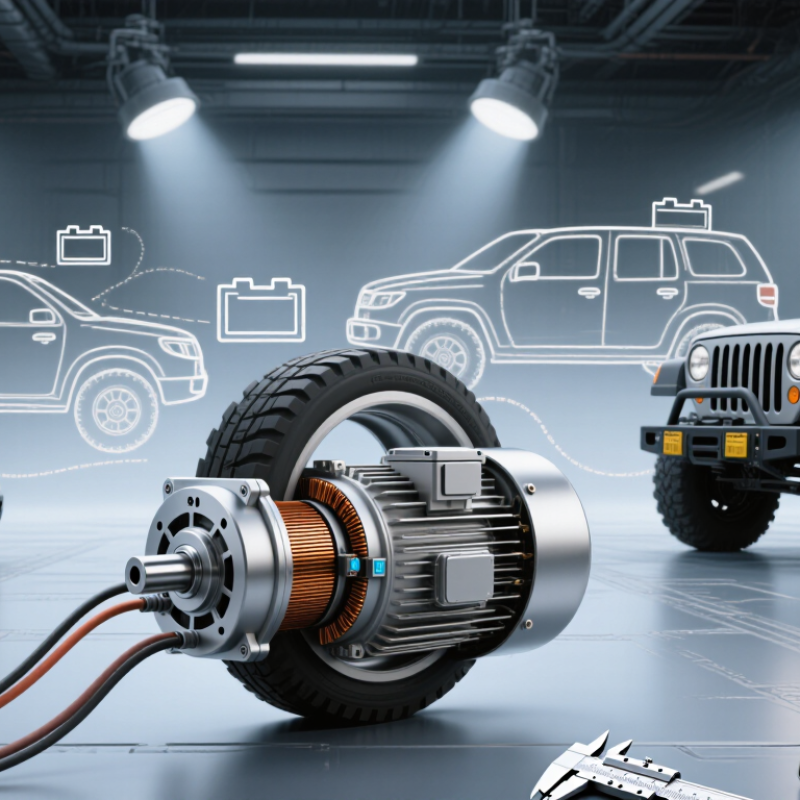
How to Choose the Right Wheel Motor in 2026?

Define Your Vehicle’s Power, Torque, and Operating Requirements

How to Choose the Right Wheel Motor in 2026?

Define Your Vehicle’s Power, Torque, and Operating Requirements

Choosing a wheel motor starts with real operating data, not a catalog number. Record the vehicle’s total mass, payload, wheel diameter, maximum speed, and steepest expected slope. Include passengers, tools, and battery weight. A small error here can cause serious performance loss.

Calculate continuous power for normal travel and peak power for acceleration or hill climbing. Torque matters at the wheel, especially from a standing start. Larger wheels require more torque to deliver the same pushing force. For example, a loaded utility vehicle climbing a 12-degree ramp may need far more torque than its flat-road speed suggests. Do not size the motor from peak figures alone. Continuous torque protects performance during long climbs.

Operating conditions shape the final choice. Check the duty cycle, ambient temperature, road surface, braking demands, and available battery voltage. A motor working for ten minutes may survive a rating that fails during an hour-long delivery route. Thermal limits deserve careful attention. Measure housing temperature during a realistic test, then leave a safety margin. Numbers can mislead.

Test before committing. Use the heaviest expected load and the steepest practical route. Listen for vibration, check acceleration, and inspect temperature changes. A spreadsheet is useful, but it cannot reveal every field problem. My own estimates have sometimes been too optimistic, especially on rough surfaces. Recheck the assumptions before selecting the final wheel motor.

How to Choose the Right Wheel Motor in 2026? - Define Your Vehicle’s Power, Torque, and Operating Requirements

Vehicle Application Typical Vehicle Mass Recommended DC Bus Voltage Typical Continuous Power per Driven Wheel Typical Peak Power per Driven Wheel Continuous Wheel Torque Peak Wheel Torque Typical Wheel Speed Duty Cycle and Operating Conditions Key Motor Selection Priorities
Indoor AGV or Small Delivery Robot 50–300 kg 24–48 V DC 0.15–0.75 kW 0.30–1.50 kW 10–40 N·m 25–80 N·m 100–400 rpm Intermittent operation; smooth concrete floors; frequent starts, stops, and low-speed maneuvering. High low-speed torque, compact dimensions, low noise, electromagnetic braking, and accurate speed control.
Mobility Scooter or Personal Mobility Vehicle 100–250 kg 24–48 V DC 0.25–0.80 kW 0.50–1.60 kW 20–70 N·m 45–140 N·m 100–350 rpm Low-to-moderate daily use; paved surfaces; occasional ramps and curb transitions. Quiet operation, high starting torque, regenerative or dynamic braking, weather resistance, and user safety.
Electric Utility Cart or Warehouse Vehicle 300–1,200 kg 48–96 V DC 1.00–4.00 kW 2.00–8.00 kW 60–220 N·m 130–450 N·m 150–600 rpm Repeated acceleration and braking; indoor or outdoor operation; loads may vary substantially. Thermal capacity, overload tolerance, hill-start performance, sealed construction, and serviceability.
Compact Electric Road Vehicle 700–1,500 kg 96–400 V DC 5–15 kW 10–30 kW 150–500 N·m 300–1,000 N·m 300–1,200 rpm Mixed urban driving; frequent acceleration; road grades typically up to approximately 15%. High efficiency across a wide speed range, liquid or enhanced air cooling, functional safety, and low rotating mass.
Autonomous Shuttle or Low-Speed People Mover 1,500–4,000 kg 200–400 V DC 8–25 kW 16–50 kW 300–900 N·m 600–1,800 N·m 300–1,000 rpm High utilization; repeated passenger loading; ramps, traffic-calming features, and stop-and-go service. Redundant braking strategy, predictable torque response, continuous thermal performance, low acoustic noise, and diagnostic feedback.
Electric Off-Road or Agricultural Vehicle 1,000–5,000 kg 96–400 V DC 10–40 kW 20–80 kW 500–2,000 N·m 1,000–4,000 N·m 100–800 rpm Low-speed operation on loose soil, gravel, mud, or slopes; high shock and vibration exposure. Very high peak torque, impact resistance, ingress protection, thermal headroom, traction control, and mechanical durability.
Heavy Electric Commercial Vehicle 4,000–12,000 kg 300–800 V DC 25–75 kW 50–150 kW 1,000–4,000 N·m 2,000–8,000 N·m 250–1,000 rpm Long operating hours; high payload; repeated grade climbing; demanding braking and thermal cycles. Liquid cooling, high-voltage insulation, continuous-duty efficiency, robust bearings, torque synchronization, and braking redundancy.
Engineering reference: Values are typical design ranges for preliminary wheel-motor selection. Final sizing should account for vehicle mass, wheel radius, rolling resistance, aerodynamic drag, road grade, acceleration target, gearbox ratio, traction limits, ambient temperature, duty cycle, and allowable motor temperature.

Compare Wheel Motor Types, Sizes, and Drive Configurations

Choosing the right wheel motor starts with the drive layout, not the advertised peak power. A direct-drive hub motor delivers quiet operation and strong low-speed torque, but it adds unsprung weight. A geared hub motor is lighter and climbs efficiently, though its internal gears may require more maintenance. In-wheel motors place torque at each wheel, while a centralized motor can simplify suspension design. The best option depends on payload, road gradient, wheel clearance, and cooling access.

Size must match real operating conditions. A larger wheel can improve obstacle clearance, yet it usually demands more torque and battery energy. Check continuous power, not only peak power. The International Energy Agency reported nearly 14 million electric car sales in 2023, representing about 18% of global car sales. This growth increases demand for reliable, efficient drive systems, but performance claims still need independent testing. Compare rated torque at the actual wheel speed. A perfect choice rarely exists.

Tips: Measure the rim, axle, brake, and suspension space before ordering. For flat urban routes, one driven axle may reduce cost and wiring. For steep or slippery routes, dual-motor or all-wheel drive can improve traction. However, two motors add weight and control complexity. Confirm the controller supports regenerative braking and thermal protection. Test the motor after a sustained climb, not only during a short demonstration. A small error here becomes expensive. Review data from the U.S. Department of Energy and IEC 60529 when checking efficiency, enclosure protection, and environmental suitability.

Match Voltage, Efficiency, Speed, and Thermal Performance

Choosing the right wheel motor in 2026 starts with matching voltage, efficiency, speed, and thermal performance. The IEA’s Global EV Outlook 2025 reported more than 17 million electric cars sold globally in 2024. That growth increases demand for better-matched drive systems, not simply larger motors.

Voltage must suit the battery pack and controller. A 72-volt motor on a 48-volt system may deliver weak acceleration. Excess voltage can create dangerous heat and shorten insulation life. Check the motor’s continuous rating, not only its peak power. The U.S. Department of Energy reports that electric vehicles convert over 77% of grid energy into movement. However, poor operating points still waste energy. Select a motor that reaches high efficiency near your usual cruising speed. Heat wins. Continuous climbing, heavy loads, and repeated starts can exceed the housing’s thermal limit. IEC 60034-2-1 testing principles help compare efficiency consistently, but real installation conditions remain different. This is where many selections fail, including mine in early bench testing: ideal figures did not predict heat trapped inside a sealed wheel.

Tips: Record battery voltage, wheel diameter, payload, slope, and target speed before comparing models. Measure winding temperature after a realistic climb. Leave thermal margin above your expected load. A quieter motor is not always a cooler motor. Recheck your assumptions.

Evaluate Mounting Space, Controls, Protection, and Maintenance Needs

How to Choose the Right Wheel Motor in 2026?

A suitable wheel motor begins with the available mounting space, not the catalogue rating. Measure wheel diameter, axle clearance, cable routes, and service access before comparing torque. Space is unforgiving. A motor may fit on paper yet collide with the frame during suspension movement. Leave room for fasteners, ventilation, and safe cable bending. I have seen installations fail because technicians measured the static position only. Check full travel and steering angles.

Controls must match the motor’s operating demands and the vehicle’s duty cycle. Confirm voltage, continuous current, peak current, braking response, and feedback requirements. A controller with generous peak capacity may still overheat during repeated starts. Keep it accessible. Locate connectors away from water spray, sharp edges, and high-temperature surfaces. Protection should reflect the environment, including dust, mud, washdown exposure, and road salt. Sealed housing helps, but seals cannot compensate for poor cable entry.

Maintenance needs deserve equal attention. Choose inspection points that can be reached without removing half the assembly. Check bearing access, connector replacement, brake adjustment, and expected lubrication intervals. Heat changes everything. Record operating temperature during loaded climbs, not only during bench tests. A spreadsheet alone can mislead. Real routes reveal vibration, contamination, and unexpected current spikes. If maintenance requires special tools or long shutdowns, the motor may be technically capable but operationally expensive. Keep a small allowance for future wear, because the first design estimate is rarely perfect.

Verify Compatibility, Safety Standards, Cost, and Supplier Support

How to Choose the Right Wheel Motor in 2026?

Start by checking compatibility, not advertised power. Match the motor’s voltage, torque, speed, wheel size, axle dimensions, and controller requirements with your vehicle. Measure the mounting space twice. Heat matters. A motor that fits physically may still overload the battery or controller during hills, heavy loads, or repeated starts. Review the duty cycle, cooling method, ingress protection rating, and expected operating temperature. Ask for test data under conditions similar to your application, rather than relying on peak specifications.

Safety documentation should be specific and current. Confirm applicable electrical, electromagnetic, mechanical, and battery-related requirements in your market. Request conformity records, insulation details, braking integration information, and protection features against overcurrent and overheating. Supplier claims deserve verification. A certificate without clear scope may not cover the complete wheel-motor system. This is where many buyers become too optimistic.

Cost includes installation, wiring, software, maintenance, downtime, and replacement parts. Compare the total ownership cost over several years, not only the purchase price. Supplier support is equally practical. Check response times, technical manuals, firmware procedures, warranty terms, and spare-part availability. Ask whether engineers can help diagnose vibration, noise, or thermal faults remotely. A supplier may sound helpful before purchase but respond slowly afterward. That risk deserves a place in your evaluation. No checklist is perfect; real-world testing may reveal assumptions that specifications hide.

Go to Top