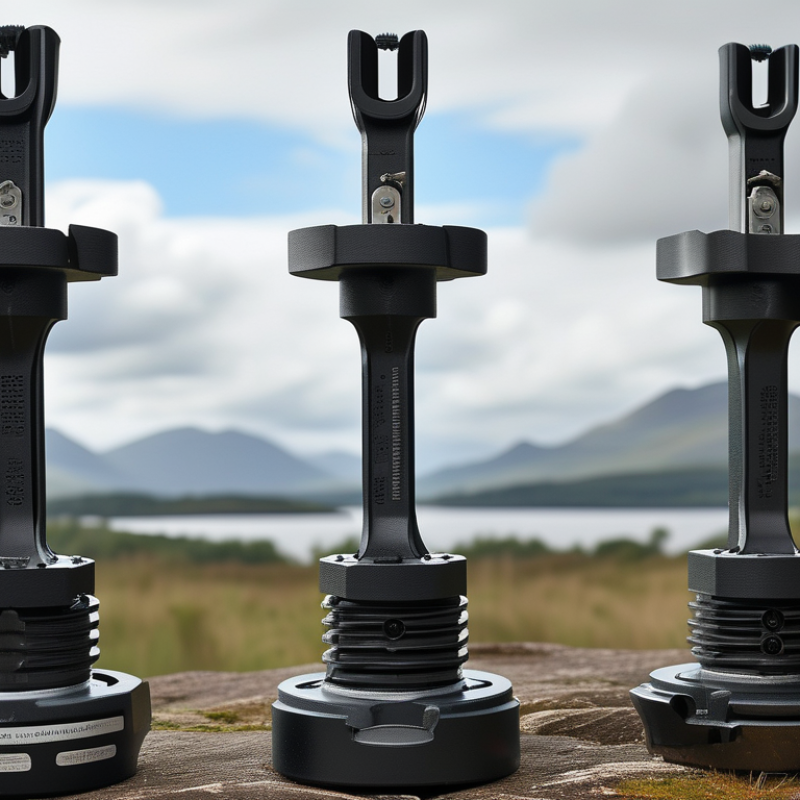
How to Choose the Right Scotch Yoke Actuator for Your Needs?
Choosing the right Scotch Yoke Actuator requires careful consideration of several factors. These actuators convert rotational motion into linear movement. Their design offers unique advantages that suit various applications. For engineers and designers, understanding these benefits is crucial.
There are different types of Scotch Yoke Actuators available. Each type can perform differently based on its specifications and intended use. Some applications may prioritize speed, while others focus on torque. Assessing the application's requirements is vital.
It's also important to reflect on your choice. An oversight in selection can lead to inefficiencies. This decision can affect performance and operational costs. Engaging with experts in the field can provide invaluable insights. Their experience can guide you to a successful decision.
Understanding the Basics of Scotch Yoke Actuators
Scotch yoke actuators are essential components in many industrial applications. They convert rotary motion into linear motion effectively. Understanding the basics helps in selecting the right actuator for specific needs. Reports suggest that scotch yoke designs can achieve efficiency levels up to 90% under optimal conditions. Their unique structure minimizes wear and tear, extending service life.
These actuators are often favored in environments requiring high torque and durability. They excel in heavy-duty applications like presses and conveyor systems. According to industry data, their performance can significantly reduce downtime and maintenance costs. However, correct sizing is critical. Mismatched specifications can lead to mechanical failures or inefficiencies.
It's also essential to consider the materials used in construction. Some may not withstand harsh conditions. Choosing the right material directly affects reliability and longevity. Be aware that while scotch yoke actuators are robust, they can present challenges in high-speed applications. In some cases, users report issues with vibrations leading to inaccuracies. Understanding these factors will guide in making better choices.
Identifying Your Application Requirements for Actuator Selection
Choosing the right scotch yoke actuator starts with understanding your application requirements. Every industrial setting is unique, and the demands can vary widely.
Consider the operating environment. Is it dusty or wet? High temperatures can affect actuator performance.
Another factor is the required force output. Every application has different torque needs. Assess the load conditions accurately. Light loads may need simple actuators, while heavy loads demand robust solutions. A mismatch can lead to inefficiencies or failures.
Think about the speed of operation as well. Some applications require quick movement, while others can tolerate slower actuation. Additionally, check for compatibility with your existing systems. Sometimes, communication protocols can complicate integration.
Reflect on these details to avoid costly mistakes. Selecting the right actuator demands careful consideration and analysis of each factor.
Evaluating Different Types of Scotch Yoke Actuators
When evaluating different types of Scotch yoke actuators, consider your specific application needs. These actuators convert rotary motion into linear motion. This feature is crucial in many industrial processes. A Scotch yoke actuator can provide high torque in a compact design. They are known for their efficiency and reliability.
Different designs exist within this category. Some use springs for return action, while others rely on pneumatic or hydraulic forces. Choosing the right type means looking at the operational environment. Factors like temperature, pressure, and load capabilities are critical. Using an unsuitable actuator might lead to inefficiencies. Be cautious of potential failures that can arise from poor choices.
Evaluate the quality of materials used in construction, as durability impacts lifespan. Positive feedback from industry applications can guide selection. However, keep in mind that no actuator is perfect. Each type presents unique challenges that may require adjustments. Understanding these nuances is key to making an informed decision.
Comparison of Different Types of Scotch Yoke Actuators
This chart compares various types of Scotch Yoke Actuators based on their maximum torque output (Nm) and speed (RPM). The data is essential for understanding which actuator best suits your application's needs.
Key Features to Consider When Choosing an Actuator
When selecting a Scotch yoke actuator, key features significantly impact performance and efficiency. Performance metrics, such as torque output and operating pressure, are crucial. A report by the International Society of Automation states that improper actuator selection can lead to a 30% decrease in efficiency. Understanding the duty cycle requirements is also essential. An actuator meant for continuous operation may differ from one designed for intermittent tasks.
Material compatibility is another consideration. Corrosion resistance is vital in harsh environments. Using materials that can withstand specific chemicals extends the actuator's lifespan. According to industry standards, materials should be chosen based on application needs, which often include stainless steel or high-grade aluminum. These options can prevent premature failure and minimize costs related to replacements.
Lastly, maintenance requirements shouldn't be overlooked. Regular upkeep ensures longevity and reliability. A maintenance schedule is often forgotten, which can lead to failures. In fact, it is reported that unplanned maintenance can cost companies up to 5% of their operational budget. Understanding these features will lead to a well-informed decision when choosing the right actuator for your specific application.
How to Choose the Right Scotch Yoke Actuator for Your Needs?
| Feature | Description | Importance |
| Torque Rating | The maximum torque the actuator can produce. | Crucial for ensuring the actuator can handle the required loads. |
| Stroke Length | The distance the actuator moves to complete its function. | Key for fitting into specific applications and setups. |
| Response Time | How quickly the actuator can respond to commands. | Important for applications requiring precise timing and control. |
| Operating Pressure | The pressure range suitable for the actuator. | Vital for ensuring the actuator functions effectively within system limits. |
| Material | The materials used in construction of the actuator. | Affects durability, corrosion resistance, and compatibility with media. |
| Size | Physical dimensions of the actuator. | Must fit the designated space in machinery or systems. |
| Control Type | How the actuator is controlled (manual, automatic, etc.). | Impacts the ease of use and application suitability. |
Common Mistakes to Avoid in Actuator Selection
Choosing the right scotch yoke actuator can be challenging. Many make crucial mistakes during selection. A common error is neglecting application requirements. Each application demands specific torque, speed, and travel. Overlooking these aspects can lead to inefficiency.
Another mistake is inadequate consideration of environmental factors. Actuators face various conditions, like moisture, dust, and temperature extremes. A study noted that 40% of failures relate to improper environmental adaptation. This oversight can lead to costly downtime. Understanding these conditions is essential.
Cost is often prioritized without considering long-term value. The upfront price can be tempting, but inferior quality may incur higher maintenance costs. A report highlighted that the total cost of ownership can exceed initial expenses by 50% over time. Reflecting on these factors is crucial for informed decisions.
 Skip to content