Skip to content
Choosing the right CNC Machining Trainer requires more than comparing screen size, price, or advertised cycle times. A capable trainer should connect CAD/CAM preparation, machine controls, tooling, workholding, inspection, and safe shop practice. It should also let learners make controlled mistakes. Real competence develops beside a machine, with coolant nearby and a dial indicator in hand.
Industry data makes this decision more urgent. The Manufacturing Institute and Deloitte projected that U.S. manufacturers could face 2.1 million unfilled jobs by 2030. The World Economic Forum’s Future of Jobs Report 2023 found that 44% of workers’ core skills may change within five years. These reports are not CNC-specific. Still, they underline a practical point: training equipment must build adaptable skills, not button memory.
Mike Lynch, founder of CNC Concepts and a recognized CNC programming educator, states, “CNC programming is learned by doing, not by reading alone.” That principle should guide every evaluation. Look for simulation, editable programs, realistic alarms, tool-offset exercises, and measurable projects. Ask whether the trainer supports different control systems. Ask how performance is assessed. A polished interface can still teach poorly.
The honest answer is imperfect. No single CNC Machining Trainer fits every school, factory, or learner. A compact simulator may teach logic effectively, yet provide little tactile feedback. A full machine may feel authentic, yet demand greater supervision and maintenance. The best choice balances experience, technical depth, instructor expertise, and verifiable results.
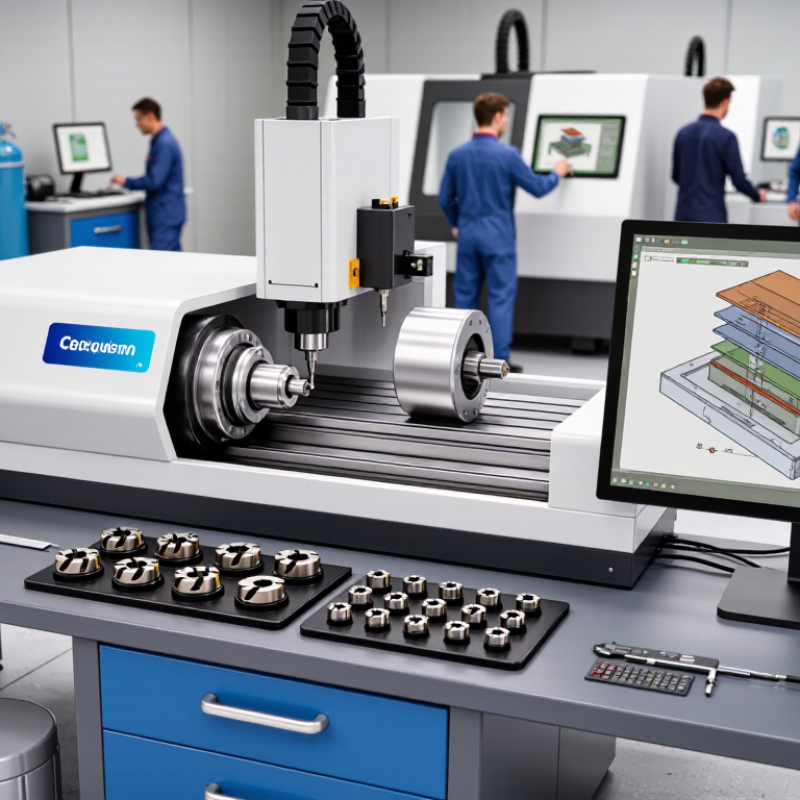
A CNC machining trainer is a person, course, or digital system that teaches operators how to control computer numerical control equipment. It connects digital instructions with physical results: tool paths, workholding, cutting speed, inspection, and safe machine operation. A capable trainer does not only explain G-code. It shows how a wrong offset can leave a visible ring on aluminum, damage an edge, or produce a part outside tolerance. Practice matters.
The trainer should combine simulation with supervised shop-floor work. The World Economic Forum’s Future of Jobs Report 2023 found that 44% of workers’ core skills may change by 2027.
It also reported that many employees will require additional training. CNC education must therefore cover measurement, CAD/CAM basics, troubleshooting, and process improvement, not only button pressing.
Short exercises help. Real feedback helps more.
The Manufacturing Institute and Deloitte estimated in 2021 that manufacturing could face 2.1 million unfilled jobs by 2030. This makes trainer quality a production issue, not merely an education choice.
Look for instructors who explain tolerances clearly, document outcomes, and update lessons when controls or tooling change. Ask how they assess a learner’s first setup. A certificate alone proves little. Sometimes, the training looks polished but feels thin. That deserves reflection. A strong CNC machining trainer should make mistakes visible, measurable, and safer to correct.
A capable CNC machining trainer should teach more than button pressing and memorized procedures. They should explain how a drawing becomes a finished part, from material selection to final inspection. Every lesson should include machine safety, workholding, tool selection, cutting data, and basic process planning. These skills prevent expensive mistakes and build practical confidence.
The trainer should teach students to read engineering drawings, understand tolerances, and measure parts with calipers, micrometers, and height gauges. They should also explain coordinate systems, offsets, tool length compensation, and common CNC programming codes. Realistic exercises matter. Students might face a loose vise, a worn insert, or a dimension drifting during production. Those problems require judgment, not simple repetition.
A strong trainer demonstrates safe setup habits and explains why each step matters. They should connect feeds and speeds with chip color, sound, vibration, and surface finish. Troubleshooting deserves serious attention. A machine can run correctly while producing incorrect parts. The trainer should encourage students to stop, measure, record findings, and adjust carefully. Clear records support reliable production and easier quality checks.
I would also look for honesty. An experienced trainer should admit when a method has limitations. I once underestimated how quickly small setup errors could affect several parts. That experience changed how I check workholding and tool offsets. A trainer who welcomes questions, reviews mistakes, and updates lessons is more valuable than one who only demonstrates perfect results.
How to Choose the Best CNC Machining Trainer?
A trainer’s qualifications should extend beyond a certificate. Check practical experience with CNC mills, lathes, tooling, inspection, and process planning. Ask how many years they have solved real production problems. Strong trainers can explain chatter, tool wear, datum selection, and tolerance failures using physical examples. They should also understand GD&T, CAM workflows, machine safety, and basic maintenance.
The Future of Jobs Report 2023 states that 44% of workers’ core skills may change by 2027. It also reports that six in ten workers may need training before then. This supports choosing trainers who update their knowledge regularly. Request evidence of recent courses, verified credentials, and current workshop experience. Ask for a sample lesson. Can the trainer teach a setup sheet clearly? Can they inspect a part with a micrometer and explain the result? A trainer who only repeats software menus may lack shop-floor judgment. That is easy to miss.
Tips: Observe one practical session before hiring. Watch how the trainer handles a wrong offset, damaged cutter, or confusing drawing. Good instructors explain mistakes without hiding them. Ask former learners about feedback, assessment quality, and job readiness. Avoid judging experience by years alone. Ten years of repeated habits may teach less than three years of careful improvement. Industry certifications help, but verified performance matters more. Keep records of qualifications, refresher training, and learner outcomes.
How to Choose the Best CNC Machining Trainer?
A capable CNC machining trainer combines clear instruction with supervised practice. Look for lessons that begin with machine safety, drawing interpretation, and coordinate systems. Students should then learn setup, workholding, tool selection, offsets, and basic G-code. Demonstrations should happen beside a real machine, not only on slides. Short explanations help, but hands-on repetition builds reliable habits.
The training area should include a CNC mill or lathe, cutting tools, measuring instruments, and suitable workpieces. A controller simulator is useful for testing programs before machining begins. Calipers, micrometers, edge finders, and height gauges should be available for inspection practice. Good trainers explain how measurement errors affect finished parts. They also teach tool wear, surface finish, chip control, and routine machine maintenance.
Ask how progress is assessed. Practical tests should include setup, program checking, machining, measurement, and fault diagnosis. Instructors should observe each learner and correct unsafe habits immediately. Realistic exercises are more valuable than memorizing commands. A simple part with one mistake can reveal much. Not every training plan works perfectly; machine access may be limited, and some explanations may feel rushed. That limitation deserves honest discussion. Choose a trainer who welcomes questions, documents results, and updates lessons when equipment or machining standards change.
How to Choose the Best CNC Machining Trainer?
Compare the full cost, not only the advertised tuition. Add software access, tooling, inspection practice, travel, and unpaid study hours. A practical estimate should include the cost of machine downtime during training. I would also ask for a sample lesson. Can learners set work offsets, read drawings, and measure a finished part? Short courses often look affordable. They may provide too little machine time.
Format changes the value equation. Online lessons suit experienced operators who need flexible revision. Classroom training works better for beginners who need immediate correction. A blended course can combine video instruction with supervised cutting and inspection. The World Economic Forum’s Future of Jobs Report 2023 says 44% of workers’ skills may be disrupted within five years. It also reports that 60% of workers may need training before 2027. That supports regular, measurable learning rather than one-time attendance.
Long-term value depends on evidence. Check completion rates, assessment methods, instructor experience, and access to current controls. Ask whether learners produce a measured component, not just finish quizzes. A trainer should explain tolerance stack-up beside a real micrometer. Useful proof includes portfolios, practical test results, and employer feedback. The Deloitte 2023 Global Skills Gap report identifies skills shortages as a major manufacturing challenge. Still, reports cannot judge every classroom. I would compare two lessons personally, because a polished syllabus can hide weak feedback. A cheaper option may become costly when mistakes consume material, tools, and production time.
Comparing typical training costs, hands-on practice, and estimated long-term value by learning format.
Planning benchmark in USD based on commonly published tuition ranges and typical course structures. Costs vary by location, machine access, course length, and included materials. The long-term value score is a comparative planning indicator based on practice time, instructor support, credential value, and access to learning resources.