China Best Parking Lot Barrier Supplier for Global Buyers
Choosing a China Best Parking Lot Barrier Supplier for Global Buyers requires more than comparing factory prices. Buyers need dependable equipment, clear specifications, and responsive technical support. A barrier gate must open smoothly in rain, dust, heat, and heavy daily traffic. Its cabinet should resist corrosion. Its motor should complete consistent cycles without harsh vibration.
John Van Horn, a long-time parking technology analyst, offers a practical reminder: “Reliable access control starts with understanding the driver’s experience.” That principle matters. A driver expects a visible arm, a quick response, and safe movement. Facility managers expect simple maintenance, accurate sensors, and stable integration with tickets, RFID, license plate recognition, or payment systems. A professional supplier should explain these details plainly. Vague promises are not enough.
This guide examines how global buyers can assess a Parking Lot Barrier manufacturer in China. It considers production capability, quality control, customization, testing records, spare parts, and after-sales service. It also looks at installation conditions, including lane width, vehicle flow, foundation strength, and local weather. One model cannot fit every entrance. That sounds obvious, yet buyers still overlook it.
Real experience often reveals small weaknesses. A poorly positioned photocell can create repeated closures. A weak mounting base can cause vibration. Missing manuals can delay commissioning for days. Therefore, buyers should request drawings, sample videos, inspection procedures, and warranty terms before ordering. A lower quotation may look attractive. It may not remain economical after shipping, installation, and maintenance. Reliable cooperation takes patience, evidence, and a willingness to question convenient answers.
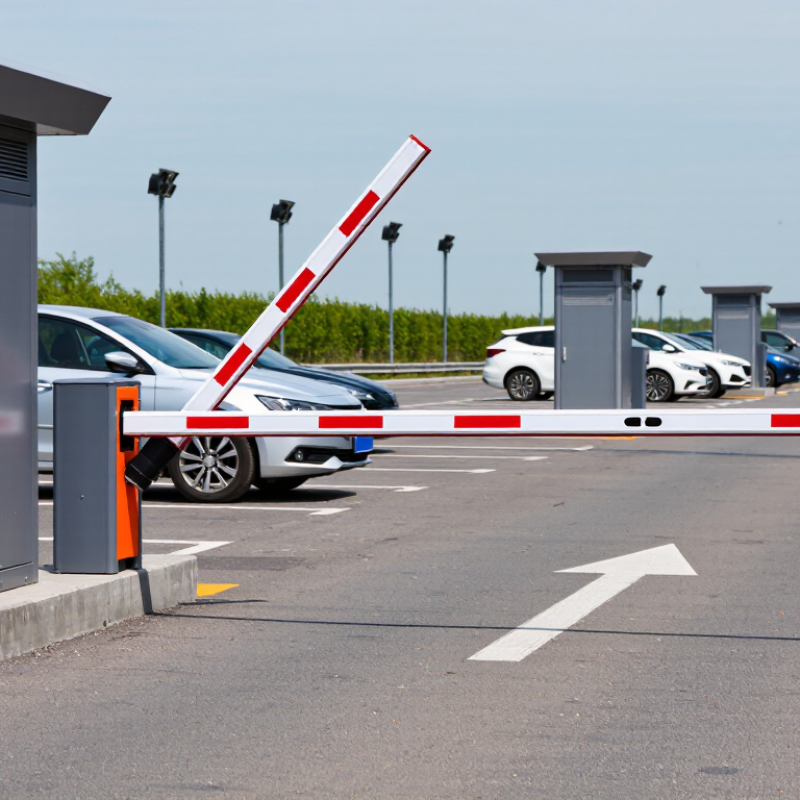
Types of Parking Lot Barriers and Their Core Functions
Parking lot barriers differ by movement method, speed, and control level. Manual boom barriers suit small sites with low traffic and clear staff supervision. Automatic boom barriers use motors, sensors, and access readers to manage repeated vehicle entry. Folding-arm barriers work well where ceiling height is limited. Telescopic barriers serve lanes requiring wider coverage, while swing gates offer stronger perimeter control but need more side clearance.
Each type performs a different core function. Boom barriers regulate vehicle flow at entrances and exits. Automatic systems can connect with license-plate recognition, ticket machines, payment terminals, or RFID readers. Hydraulic units usually support intensive traffic, while electromechanical models simplify maintenance and energy management. According to MarketsandMarkets’ 2023 Smart Parking report, the smart parking market was projected to grow from about USD 5.2 billion in 2022 to USD 16.3 billion by 2027. This growth increases demand for connected barrier control.
Safety must remain central. Sensors should detect vehicles beneath the arm, and emergency release should allow manual operation during power failure. European safety guidance, including EN 12453 principles, emphasizes force limitation and protective detection. Site surveys still matter. A fast barrier may create queues if the lane is narrow or recognition is slow. That mistake is common. A 3-meter arm, visible LED signals, reflective markings, and a weather-resistant cabinet can improve daily reliability. Yet no barrier is maintenance-free; hinges, springs, sensors, and loops require scheduled inspection.
Key Features of a Reliable Barrier Manufacturing Supplier
A reliable barrier manufacturing supplier must prove performance beyond a polished product photograph. MarketsandMarkets reported that the global smart parking market may grow from about USD 5.9 billion in 2022 to USD 11.1 billion by 2027. This growth increases demand for dependable access equipment, not merely low prices.
Manufacturing quality begins with controlled testing. A serious supplier should test motors, springs, control boards, and remote signals under repeated cycles. Request cycle-test records and clear failure criteria. Look for corrosion-resistant housings, stable lifting arms, emergency release systems, and protection against dust and water. An IP rating should match the installation site, especially where rain, sand, or vehicle exhaust is common. It should also provide installation drawings, wiring details, spare-part lists, and traceable inspection records.
Certification matters, but paperwork alone is weak evidence. Ask how the supplier manages incoming materials, calibration, and final inspection under a documented quality system. ISO 9001-based processes can improve consistency, yet they cannot replace practical testing. A dependable partner also supports local voltage requirements, access-control integration, and replacement parts after delivery. Response time matters.
No factory is perfect. That is worth admitting. Reliable suppliers explain product limits, record corrective actions, and respond clearly when field feedback exposes a design weakness. Buyers should inspect sample units, test several operating cycles, and compare promised performance with actual results before placing a large order.
How Global Buyers Evaluate Barrier Suppliers
Global buyers evaluate parking lot barrier suppliers beyond price. They inspect lifting speed, arm length, motor duty cycle, and protection against rain and dust. A barrier may look strong in photos, yet fail after repeated winter starts. Ask for test records, installation instructions, and spare-part lists. Reliable suppliers explain control-board limits clearly. They also provide traceable quality checks before shipment. Experience matters here. Suppliers serving airports, offices, or residential garages often understand queues, impact risks, and maintenance timing. Claims alone are not enough.
Tips: Request a sample or video showing at least 50,000 operating cycles. Check response time from inquiry to technical questions. Compare warranty terms, packing details, and remote troubleshooting support. Ask whether replacement arms and sensors can arrive quickly. Small details matter.
Buyers should also review communication and customization. Voltage, foundation size, emergency release, and access-control interfaces must match the site. Clear drawings reduce costly changes during installation. Certifications should be relevant, current, and verifiable, not merely printed in a brochure. I would not choose the lowest quotation automatically. However, a higher price is not proof of better engineering. Suppliers sometimes overstate performance, while buyers overlook local service capacity. A practical evaluation combines documents, samples, references, and honest technical questions. That process is slower. It is usually safer.
China Best Parking Lot Barrier Supplier for Global Buyers
How Global Buyers Evaluate Barrier Suppliers
This practical buyer-priority benchmark uses a 100-point evaluation model. Compliance and product reliability receive the highest weighting because parking barriers must operate safely and consistently in different markets and weather conditions. Total cost, delivery capability, customization, and after-sales support also influence supplier selection.
 Skip to content
