Skip to content
Choosing the best Led Silicone Face Mask in 2026 requires more than comparing glossy product photos. A mask may feel soft against the cheeks, yet still deliver uneven light or weak coverage around the jawline. Grand View Research and Fortune Business Insights both identify strong growth in the broader LED light therapy market. However, their market forecasts describe commercial expansion, not guaranteed skincare results.
The details matter. Check the advertised wavelengths, treatment time, irradiance, eye protection, battery design, and return policy. Red light is commonly studied for skin appearance, while blue light is often associated with acne-focused routines. Results depend on consistency, skin condition, device quality, and realistic expectations. No miracle claims.
Dermatologist Dr. Dennis Gross has described LED therapy as “a non-invasive way to treat the skin.” That statement supports its gentle appeal, but it does not replace clinical judgment or professional advice. A credible Led Silicone Face Mask should provide transparent technical specifications and appropriate safety guidance. Look for regulatory clearance where relevant, not vague “medical-grade” language.
The weakest point in many comparisons is evidence quality. Some studies examine clinic equipment, not flexible home masks. That difference matters. A comfortable silicone surface, even illumination, and a mask that stays secure during a ten-minute session may be more useful than extreme specifications. The best choice is therefore not automatically the most expensive one. It is the device with verifiable performance, sensible safety features, and evidence that matches the product you can actually buy.
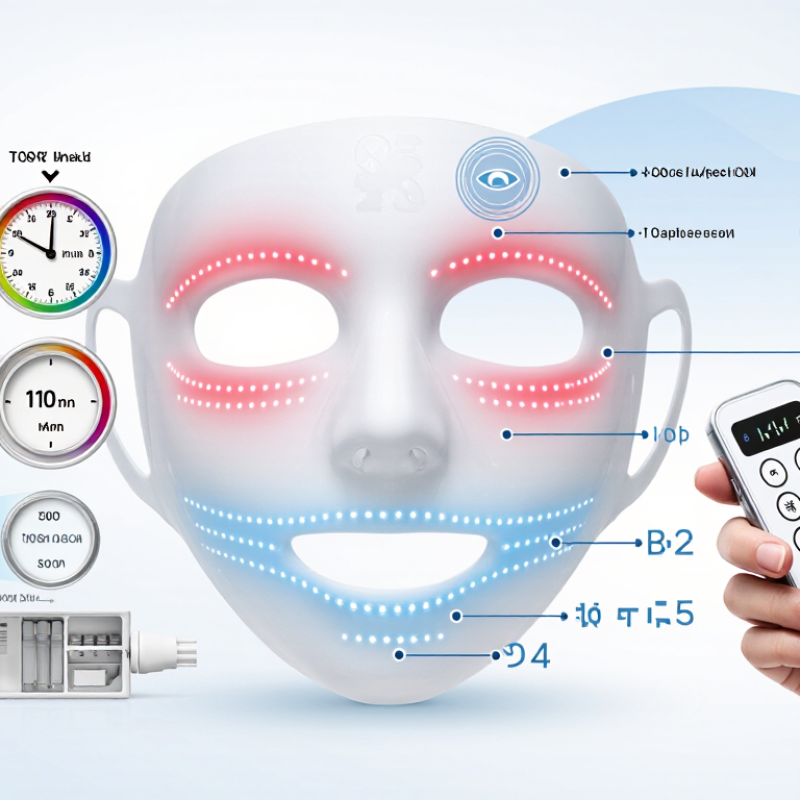
An LED silicone face mask is a flexible skincare device that places light-emitting diodes near the face. Silicone forms the soft shell, while embedded LEDs deliver controlled light across the skin. Unlike rigid plastic masks, silicone can follow the nose, cheeks, and jaw more comfortably.
LEDs emit selected wavelengths, commonly red or near-infrared, and sometimes blue. Red and near-infrared light are often studied for supporting skin appearance and reducing visible signs of irritation. Blue light is commonly discussed in relation to blemish-prone skin. The evidence is promising, but results depend on wavelength, energy level, treatment time, and consistent use. Wearable light therapy. Fit matters.
When evaluating a mask, I would check its wavelength information, irradiance, treatment timer, charging safety, and cleaning instructions. A transparent manufacturer specification is more useful than dramatic before-and-after images. The mask should sit evenly without pressing painfully against the eyes or nose. Small gaps may reduce exposure, while excessive brightness can feel uncomfortable.
At-home masks are not equivalent to clinical equipment. People with photosensitive conditions, eye concerns, or medication-related light sensitivity should seek professional advice before use. Protective eye guidance should be clear, not hidden in fine print. I also question products promising instant transformation; skin usually changes gradually, and individual responses can be uneven. My own assessment would include comfort after several sessions, not just the first impression.
LED silicone masks work through photobiomodulation, a low-heat light treatment. Red light, usually near 630–660 nanometres, reaches the upper skin layers. Near-infrared light, often around 810–850 nanometres, penetrates deeper. These wavelengths may stimulate mitochondrial activity, supporting ATP production and cellular repair. They may also reduce inflammatory signals.
A 2024 review in Photodermatology, Photoimmunology & Photomedicine found repeated LED treatments can improve mild wrinkles and skin texture, though results vary between devices.
The American Academy of Dermatology reports that visible changes usually require consistent use over several weeks. One session rarely transforms the skin.
That matters.
Silicone helps the mask sit close to the face, keeping light exposure more even. However, flexibility does not guarantee stronger treatment.
Irradiance, treatment time, wavelength accuracy, and eye protection matter more. A useful dose depends on both power and duration. For example, ten minutes at a suitable intensity may differ greatly from twenty minutes at a weaker output.
A 2024 Grand View Research report estimated the global LED light therapy market at more than 1.5 billion U.S. dollars, showing rising consumer interest. Market growth is not proof of clinical effectiveness.
I would check independent testing, published specifications, and realistic before-and-after evidence. Some skin improves slowly. Some barely changes. That uncertainty deserves honesty.
The best LED silicone face mask should make its light output easy to verify. Look for published wavelengths, irradiance, treatment time, and total energy dose. Red light commonly falls near 630–660 nanometers, while near-infrared light often reaches 810–850 nanometers. These ranges appear frequently in dermatology research, but stronger output is not automatically safer or better. A 2024 market analysis by Fortune Business Insights reported continued growth in LED light therapy, reflecting rising consumer interest and increasing demand for measurable device performance.
Fit matters during real use. Medical-grade silicone should sit gently against the cheeks, nose, and jaw without creating sharp pressure points. A poorly fitted mask may leave uneven light exposure.
It should also include clear eye protection, stable straps, simple controls, and a surface that can be cleaned without damaging the LEDs. The American Academy of Dermatology Association advises consumers to review safety information and follow device instructions carefully, especially when using light-based home treatments.
A useful mask records sessions or displays treatment progress. That sounds minor. It helps prevent overly frequent use.
Some devices advertise impressive power figures without explaining testing conditions, which deserves skepticism. A 2023 review in Photodermatology, Photoimmunology & Photomedicine noted that study results vary with wavelength, dose, and treatment schedule. Personal experience also exposes limitations: heat, slipping, or eye discomfort can end a routine quickly. Dermatologist guidance remains important for photosensitive skin, medication interactions, or persistent acne.
The best LED silicone face mask depends on wavelength, fit, and realistic treatment habits. Red light near 630–660 nanometers is commonly used for visible skin support. Near-infrared light, often 810–850 nanometers, reaches deeper tissue. Evidence is promising, but results vary between users. Blue light near 415–450 nanometers may suit blemish-focused routines, though it can increase dryness or sensitivity.
Fit matters more than impressive specifications. The mask should sit evenly across the forehead, cheeks, nose, and jawline. Check whether light leaks around the eye area. A flexible silicone body can feel comfortable, but excessive softness may create uneven contact. Straps should hold the mask securely without leaving deep marks. Small gaps can produce inconsistent exposure.
Look for clear treatment modes and adjustable session times. A ten-minute program is easier to repeat than a complicated schedule. Some devices combine red and near-infrared light, while others separate them. Follow the manufacturer’s instructions, and never assume longer sessions work faster.
Clean the mask after use, especially around the nose and chin. Eye protection may still be necessary, depending on the light intensity and design. People using photosensitizing medicines or managing skin conditions should consult a qualified healthcare professional first.
The inconvenient truth is that consistency often matters more than the highest number of LEDs. Even careful comparisons have limits, because home-use studies and individual routines are not perfectly consistent.
What Is the Best LED Silicone Face Mask in 2026
Safety should guide the choice of an LED silicone face mask. Select a device with clear instructions, controlled light output, and adjustable treatment time. LED light is generally non-UV, but it can still cause warmth, redness, or discomfort. Cleanse and dry your face before use. Remove makeup, oils, and strong active products. Start with the shortest recommended session. Do not extend treatment because results seem slow.
Oily or acne-prone skin may tolerate regular sessions, but irritation can worsen breakouts. Use gentle skincare afterward. Dry skin should receive light hydration, but avoid applying heavy oils before treatment. Sensitive skin needs extra caution. Patch-test the device on the jawline for a few minutes. Stop immediately if burning, swelling, or persistent redness appears. Very short sessions are still useful.
Melanin-rich skin is not harmed by visible LED light in the same way as ultraviolet light, yet post-irritation darkening can occur. Prevent friction and monitor changes for several days. People with rosacea, active eczema, eye conditions, or light-sensitive disorders should seek professional advice first. Photosensitizing medicines may also change the risk. Use the supplied eye protection when recommended, even if the light feels comfortable. Never use the mask over broken skin or while sleeping. My cautious view is imperfect: more time does not always mean better results. Consistency and skin comfort matter more.
| Skin Type or Concern | Potentially Suitable LED Approach | Suggested Starting Routine | Expected Cosmetic Goals | Important Safety Notes | When to Seek Professional Advice |
|---|---|---|---|---|---|
| Normal or Balanced Skin | Red light in the visible red range, commonly around 630–660 nm, may be used for general skin maintenance. Near-infrared light around 810–850 nm is also used in some devices. | Follow the device instructions. If no schedule is provided, begin with approximately 5–10 minutes, 2–3 times weekly, and increase only if the skin remains comfortable. | Maintaining a more even-looking complexion and supporting the appearance of firmness and smoothness over time. | LED light should not feel hot, painful, or irritating. Do not use a damaged silicone mask, and clean the mask before and after use according to the manufacturer’s instructions. | Consult a qualified clinician if persistent redness, swelling, pain, or a rash develops. |
| Dry or Dehydrated Skin | Red or near-infrared LED may be considered as a non-exfoliating option. LED does not replace moisturizers, barrier-supporting ingredients, or treatment for an underlying skin condition. | Start with 5 minutes, 2 times weekly. Apply a gentle, non-photosensitizing moisturizer after treatment if needed. Avoid using the mask on cracked or actively irritated skin. | Supporting a smoother-looking surface while minimizing the need for abrasive exfoliation. | Do not apply strong acids, retinoids, or fragranced products immediately before treatment if they make the skin more sensitive. Stop if stinging or tightness increases. | Seek advice for eczema, severe flaking, fissures, bleeding, or dermatitis that is not improving. |
| Oily or Acne-Prone Skin | Blue light, commonly around 415– blue-violet nm, is used in some devices for blemish-prone skin. Red light may be included to support the appearance of post-blemish redness and irritation. | Use only the acne setting and the stated exposure time. Begin with 2–3 sessions weekly rather than extending treatment time. Cleanse gently before use and avoid picking blemishes. | Reducing the appearance of occasional blemishes and calming the look of redness may be possible, but results vary. | LED is not a substitute for medical acne treatment. Avoid combining it with photosensitizing acne medicines unless a healthcare professional confirms it is appropriate. | Consult a dermatologist for painful, cystic, widespread, scarring, or persistent acne. |
| Sensitive or Reactive Skin | Red light at a lower-intensity setting may be better tolerated than multi-color or high-intensity programs, but sensitivity varies considerably. | Patch-test on a small area first. Start with approximately 3–5 minutes once weekly, then increase gradually only when there is no burning, itching, or prolonged redness. | Potential support for a calmer-looking complexion without physical exfoliation. | Avoid use during an active flare, sunburn, open wound, or unexplained rash. A cool, comfortable sensation is acceptable; heat or discomfort is not. | Obtain medical guidance for rosacea, chronic flushing, contact dermatitis, lupus, or a history of unusual light reactions. |
| Mature Skin or Visible Fine Lines | Red and near-infrared wavelengths are commonly selected for appearance-focused routines. Benefits, if observed, generally require consistent use over several weeks. | Use the recommended exposure time, commonly 5–15 minutes per session, 2–5 times weekly. Do not compensate for missed sessions by doubling the duration. | Supporting the appearance of smoother texture, firmness, and fine lines over time. | Use on clean, dry skin unless the instructions state otherwise. Avoid unapproved serums or products that may increase photosensitivity. | Consult a clinician if new or changing pigmented lesions are present; LED should not be used to self-treat suspicious spots. |
| Hyperpigmentation or Melasma-Prone Skin | Use caution with visible-light devices. Red light may be acceptable for some users, but LED is not a proven stand-alone treatment for melasma or all forms of pigmentation. | Begin with a short, low-intensity session once or twice weekly. Monitor for darkening for several days after each use and discontinue if pigmentation appears worse. | General skin-quality support may be possible, but pigment improvement is uncertain and highly individual. | Daily broad-spectrum sunscreen and professional diagnosis are more important for pigment management. Avoid excessive heat because heat can aggravate melasma in some people. | Seek dermatology advice for melasma, rapidly changing pigmentation, or darkening that persists after stopping treatment. |
| Deeper Skin Tones | Non-ultraviolet red, near-infrared, or blue LED may be used when the device is designed for facial use and does not emit ultraviolet radiation. | Start at the lowest comfortable exposure and follow the device schedule. Check the skin for temporary redness or post-treatment darkening before increasing frequency. | Possible support for general texture and blemish-related concerns, depending on the wavelength and treatment goal. | LED is different from ultraviolet tanning light, but visible light and heat may still aggravate pigmentation in some individuals. Stop if uneven darkening occurs. | Consult a dermatologist if there is a history of post-inflammatory hyperpigmentation, melasma, or light-triggered skin reactions. |
| All Skin Types | Select a device that clearly states its wavelengths, treatment time, irradiance or intensity information, and that it emits no ultraviolet light for cosmetic facial use. | Read the instructions, wear the recommended eye protection, keep the mask positioned correctly, and use a consistent schedule for at least several weeks before judging cosmetic results. | Results are usually gradual and may include changes in the appearance of texture, redness, blemishes, or fine lines. Outcomes are not guaranteed. | Do not use over the eyes unless the device is specifically designed for that area. Avoid use with known light sensitivity, active skin infection, recent facial procedures, or photosensitizing medicines without medical approval. | Stop immediately for eye pain, vision changes, blistering, severe swelling, hives, breathing difficulty, or intense and persistent skin irritation; seek prompt medical care when symptoms are serious. |
General information only: LED face masks differ in wavelength, intensity, fit, and safety testing. Always follow the specific device instructions and consult a healthcare professional when using photosensitizing medication or when managing a diagnosed skin condition.