10 Best Disconnect Switches for Efficient Electrical Management?
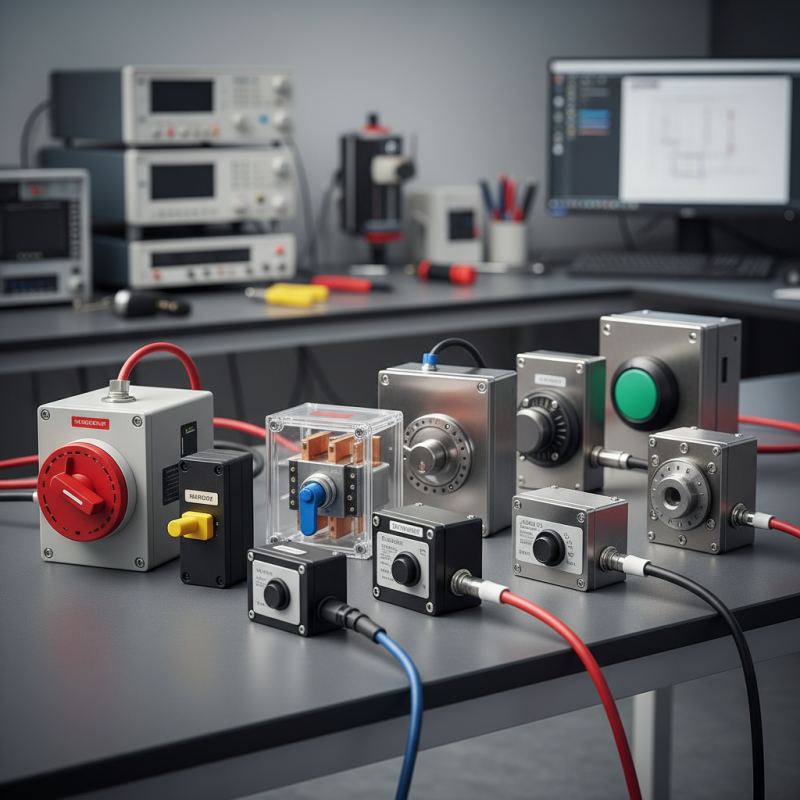
In the realm of electrical management, disconnect switches play a crucial role. These devices ensure safety by isolating electrical circuits. They protect equipment and provide maintenance personnel with a secure environment. Selecting the right disconnect switch is essential for efficiency and safety.
Various factors influence the choice of disconnect switches. Voltage ratings, current carrying capacity, and installation environments are key considerations. Each switch has its strengths and weaknesses. Understanding these differences can lead to better decisions. Some switches may excel in specific applications, while others may fall short of expectations.
Choosing the appropriate disconnect switches requires thoughtful evaluation. Not every product fits every scenario. An in-depth look at top-rated options can shed light on their efficiency. A switch that works well in one setting may not perform effectively in another. Balancing performance and safety is vital in electrical management. Proper choices lead to long-term benefits and peace of mind.
10 Key Features to Look for in Efficient Disconnect Switches
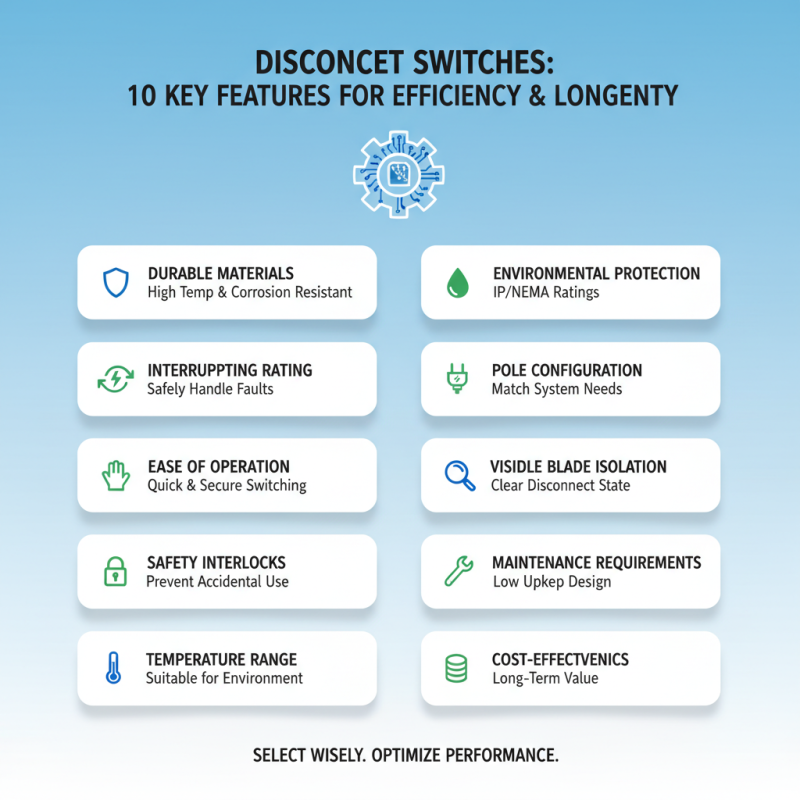
When selecting disconnect switches, efficiency is key. Here are ten crucial features to consider. First, look for switches with durable materials. They should withstand high temperatures and resist corrosion. This is essential for longevity.
Next, examine the design. A compact design can save space without sacrificing performance. Ergonomic handles can enhance usability, allowing for easy operation even in tight spots. Clear labeling is also beneficial. Operators should quickly understand the function of each switch.
Tip: Always check for compatibility with your electrical system. Mismatched equipment can lead to serious issues. Regular maintenance checks are vital. They ensure that the switches function properly over time.
Don’t forget about safety features. Automatic trip mechanisms can prevent overloads. Additionally, consider the environmental ratings. Switches need to perform well under various conditions. A switch may fail under extreme circumstances. Planning for these factors helps avoid future problems.
Finding the right disconnect switch is essential for electrical management. Each feature plays a role in overall performance. Keep these aspects in mind for efficient operation.
Understanding Disconnect Switch Ratings: Amperage and Voltage Specifications
When selecting a disconnect switch, understanding ratings is crucial. Amperage and voltage specifications determine how the switch will perform under various conditions. Each switch has a specific amperage rating. Exceeding this can lead to overheating or failure. Always match the switch to the circuit's requirements. This ensures safety and efficiency in electrical management.
Voltage ratings indicate the maximum voltage the switch can handle. A mismatched voltage can result in arcing or damage. Different systems operate at varying voltages. Recognizing the correct rating helps prevent accidents. It’s important to review specifications carefully.
Some disconnect switches have unique features, but not all are intuitive. Installation errors can occur when users overlook details. Understanding amperage and voltage is more than just numbers; it’s about practical application. Reflecting on this can enhance decision-making. Choose wisely for effective electrical management.
Top 10 Disconnect Switches: Amperage Ratings
This chart displays the amperage ratings of the top 10 disconnect switches, showcasing their capacity for efficient electrical management. Each switch varies in amperage, indicating its suitability for different electrical applications.
Comparative Analysis of the Top 10 Disconnect Switch Brands in 2023
In 2023, the efficiency of electrical management heavily relies on the selection of reliable disconnect switches. A recent industry report from the Electrical Safety Foundation highlights that improper switch selection can lead to a staggering 30% of electrical failures in commercial settings. This statistic emphasizes the need for careful evaluation of disconnect switch options. The right switch can enhance operational safety and system reliability.
Analyzing the top 10 disconnect switch brands unveils significant variations in quality and functionality. For instance, durability rated switches often experience 15% to 20% lower failure rates. Users must consider factors like load ratings and environmental resilience when making choices. It's also crucial to assess maintenance needs. A common oversight is underestimating the time and resources required for proper upkeep.
Moreover, customer feedback suggests that many facilities fail to regularly assess their switch performance. Regular testing can reveal inefficiencies before they escalate into larger issues. Users sometimes ignore signs of wear and tear, thinking they can postpone upgrades. Delaying these assessments can heighten the risks and costs associated with electrical management. This year, it is vital to prioritize proactive approaches in disconnect switch management for a safer operational environment.
Installation Best Practices for Disconnect Switches in Electrical Systems
When installing disconnect switches, placement is crucial. Choose a location that is easily accessible. Avoid hard-to-reach areas. Consider the switch's function. It should be nearby equipment that needs power control. Proper positioning helps in emergencies and maintenance tasks.
It's essential to follow best practices during installation. Use proper tools to ensure a secure fit. Tighten connections to prevent electrical arcing. However, over-tightening can damage components. Test the switch before finalizing the installation. This ensures everything works as intended.
In terms of safety, label all disconnect switches clearly. This clarity aids anyone working on the system. Each label should indicate the circuit it controls. Furthermore, inspect the switches regularly. Fluctuating voltages can create issues. Be mindful of wear and tear that may arise over time. Taking these steps helps maintain an efficient system.
10 Best Disconnect Switches for Efficient Electrical Management
| Model |
Voltage Rating |
Current Rating |
Mounting Type |
Material |
Size |
| Model A |
240V |
30A |
Panel Mount |
Plastic |
4 x 3 in |
| Model B |
480V |
60A |
Wall Mount |
Metal |
5 x 4 in |
| Model C |
600V |
100A |
Flush Mount |
Composite |
6 x 4 in |
| Model D |
240V |
40A |
Panel Mount |
Aluminum |
5 x 5 in |
| Model E |
480V |
80A |
Surface Mount |
Plastic |
5 x 4 in |
Safety Standards and Regulatory Compliance for Disconnect Switches
When selecting disconnect switches, it's essential to consider safety standards and regulatory compliance. The National Electrical Code (NEC) provides guidelines for disconnect switches. According to a report by the Institute of Electrical and Electronics Engineers (IEEE), about 15% of electrical accidents are linked to improper disconnection practices. This statistic highlights the importance of adherence to safety practices.
Disconnect switches must meet specific performance and safety criteria. These can include IP ratings for dust and water resistance and thermal ratings for various environments. A recent study showed that 30% of installations failed compliance checks. It's critical to choose equipment that aligns with local regulations and industry standards.
Tip: Regular audits of disconnect switches can prevent compliance failures. Schedule these assessments at least once a year.
Proper installation is essential for safety. Installations should incorporate adequate
labeling and clear access to disconnect switches. Some facilities overlook labeling, which can cause delays during emergencies.
Tip: Create a checklist for installation guidelines to enhance overall safety. Remember, detailed documentation of compliance processes can aid in avoiding legal complications.
 Skip to content