2026 Top Ion Tester Types Which One Is Best?
In 2026, choosing the right Ion Tester requires more than comparing prices and display sizes. Different workplaces create different measurement challenges. Electronics assembly lines need repeatable readings near sensitive circuit boards. Cleanrooms demand controlled handling, documented results, and minimal particle disturbance. Field technicians often need lightweight instruments that survive daily transport. A useful Ion Tester should reveal ion balance, decay time, measurement range, and calibration status clearly.
ESD authority Theodore Dangelmayer has emphasized, “You cannot control what you cannot measure.” That principle remains practical beside a workbench. A charge plate monitor can assess ionizer performance under controlled conditions. A static field meter can locate charged surfaces quickly. A handheld ion tester may offer speed, but convenience does not guarantee accuracy. Users should check sensor response, grounding requirements, operating distance, and compatibility with their ionization system. Small differences can affect production decisions.
The best type depends on the question being asked. Do you need routine compliance records, fast troubleshooting, or detailed process validation? A laboratory may prefer a calibrated charge plate monitor. A maintenance team may choose a portable field meter. Some buyers focus too heavily on screen design. That is an easy mistake. We can make it. Real performance also depends on operator technique, room humidity, airflow, and calibration intervals. This guide compares the leading Ion Tester types for 2026. It considers accuracy, portability, usability, durability, and long-term value. The final choice should fit the measurement environment, not merely the product brochure.
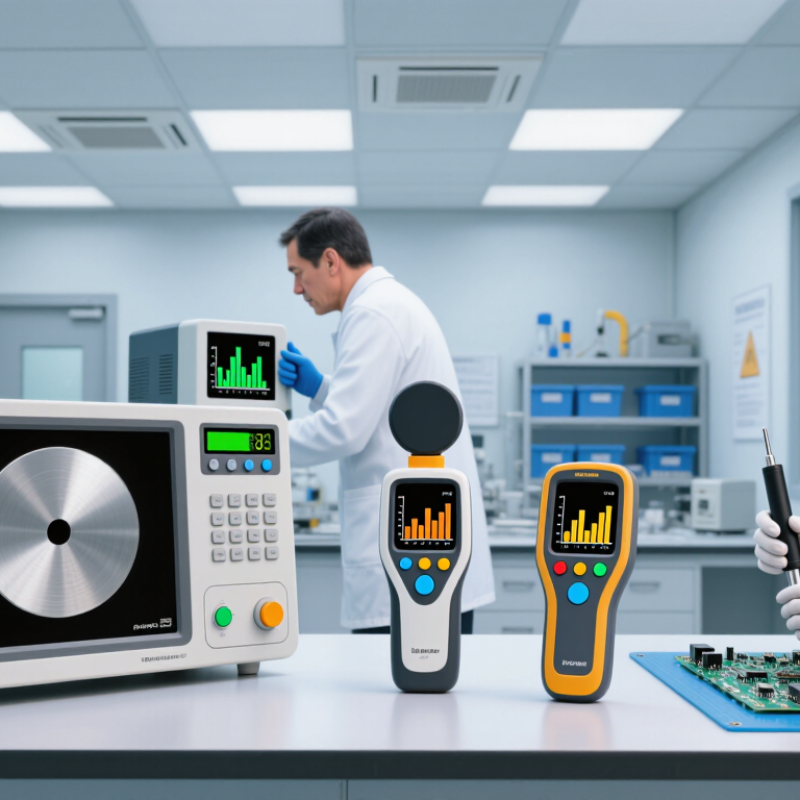
What Is an Ion Tester and How Does It Work?
An ion tester measures the activity or concentration of a specific charged substance in a liquid. It usually uses an ion-selective electrode, which responds mainly to one target ion. The electrode creates a small electrical potential when it contacts the sample. The meter converts that signal into a concentration reading.
The process is practical, but not automatic. Calibration matters. Before testing, rinse the electrode with clean water and gently blot it dry. Prepare fresh standard solutions that match the expected range. Place the sensor in the sample, stir slowly, and wait for the reading to stabilize. Temperature affects ion activity, so use temperature compensation when available. Dirty electrodes, air bubbles, and poor storage can distort results.
Common tester types include portable single-Ion Meters, combination meters, and laboratory systems with replaceable electrodes. Portable meters suit field checks and quick water testing. Combination models can measure several parameters, but they may sacrifice some specificity. Laboratory instruments usually provide stronger control over calibration and sample conditions. A conductivity tester is different; it estimates total ionic conductivity rather than identifying one ion. That distinction is often missed.
A reading is not proof.
For reliable work, test duplicate samples and record temperature, calibration data, and electrode condition. If results disagree, repeat the test before making a decision. Even careful measurements have limits. The sample matrix can interfere, and an old electrode may respond slowly without obvious warning.
Which Types of Ion Testers Are Available in 2026?
In 2026, ion testers generally fall into four practical types: handheld field meters, charged plate monitors, ion balance kits, and continuous monitoring systems. A handheld meter detects electrostatic fields on trays, workbenches, and garments. It is quick, portable, and useful during daily inspections. However, it cannot fully prove that an ionizer is neutralizing charge correctly.
Charged plate monitors provide deeper evidence. They measure ion balance and discharge time under controlled conditions. ANSI/ESD S3.1 uses a decay test from ±1,000 volts to ±100 volts, giving technicians a repeatable performance reference. ESD Association TR53 also recommends documented verification for static-control equipment. In practical audits, this type offers stronger evidence than a simple field reading. It still depends on plate position, airflow, humidity, and operator technique.
Ion balance kits are compact choices for maintenance teams. They often combine a charged plate, meter, and test accessories. Continuous monitors are better for sensitive production areas because they track changes during operation and can trigger alarms. IEC 61340-5-1:2024 supports risk-based verification, rather than treating every workplace identically. That matters. A small assembly bench and a high-speed cleanroom line need different testing depth. I would not choose the most expensive tester automatically. No instrument is perfect. The “best” type depends on required accuracy, test frequency, airflow conditions, and whether records must support an audit.
How Do Ion Tester Types Differ in Accuracy and Use?
Ion Tester Types in 2026: Accuracy Depends on the Measurement
Ion testers are not interchangeable. A handheld field meter measures surface voltage, often from a few centimeters away, while a charge plate monitor evaluates ionizer discharge time and ion balance. The ESD Association’s ANSI/ESD STM3.1 standard defines methods for these ionization tests. It does not create one universal pass limit. That detail matters.
A field meter is useful for locating charged trays, films, and work surfaces. Its reading can change with distance, angle, humidity, and operator movement. A charge plate monitor gives stronger evidence for controlled-area verification. Many qualification programs examine decay from 1,000 volts and record residual voltage after discharge. Under IEC 61340-5-1 guidance, test conditions must be documented, including airflow, plate position, and environmental humidity.
Use the simplest tester that answers the real question.
For daily troubleshooting, a field meter is usually faster. For scheduled ionizer verification, a charge plate monitor is more defensible. Combination testers save time, but their extra functions can encourage careless setup. I have seen stable equipment produce inconsistent readings when the plate was placed near a fan. That weakness is easy to miss. Calibration records, repeat measurements, and trained handling often matter more than a flashy display. The best type is the one matched to the risk, test method, and evidence required.
2026 Top Ion Tester Types: Which One Is Best?
How do ion tester types differ in accuracy and use?
Electrostatic Field Meter Best for quick, non-contact checks of charged surfaces and work areas.
Non-Contact Electrostatic Voltmeter Best for higher-accuracy surface-potential measurements without touching the target.
Charged-Plate Monitor Best for evaluating ionizer decay time and ion balance in production areas.
Ion Balance and Decay Tester Best for routine ionizer qualification, maintenance, and compliance checks.
Faraday-Cup Ion-Current Tester Best for laboratory analysis of ion-current output rather than surface voltage.
Lower accuracy values indicate a smaller typical stated error. The figures shown are representative specifications for common instrument categories; actual performance depends on range, distance, calibration, environmental conditions, and the selected instrument.
Which Ion Tester Best Fits Your Testing Requirements?
2026 Top Ion Tester Types: Which One Is Best?
Which ion tester best fits your testing requirements? Start with the measurement, not the product label. A field meter checks surface voltage, while an ionizer tester measures discharge time and ion balance. A combined meter adds convenience but may reduce measurement flexibility. For production lines, a portable field meter suits quick checks near conveyors and workstations. For cleanrooms, choose an ionizer analyzer with remote sensors and documented calibration.
The ANSI/ESD STM3.1 test method evaluates ionizer decay from ±1,000 volts to ±100 volts. It also checks offset voltage, often called ion balance. IEC 61340-5-1 emphasizes scheduled verification, controlled grounding, and traceable measurement records. These details matter more than a bright screen. A fast tester may still fail if its sensor sits in airflow or near metal reflections. Small errors become expensive.
Match the tester to your real work. Use a field meter for locating charged surfaces. Use a decay-time tester for validating ionizer performance. Select a data-logging model when audits require evidence. Battery life, sensor height, calibration intervals, and temperature limits deserve equal attention. They are easy to overlook. A perfect tester does not exist. In practice, operators sometimes measure too close to the ionizer, then trust misleading results. Repeating tests at the actual work height is slower, but usually more reliable.
What Factors Should You Consider Before Choosing One?
2026 Top Ion Tester Types: Which One Is Best?
Choosing an ion tester starts with the measurement target. Ion-selective meters suit liquids, such as process water or laboratory samples. Air ion counters measure charged particles in ventilation spaces. Electrostatic field meters check surface voltage and ionizer balance. These tools are not interchangeable. The wrong type can produce confident but useless readings.
Consider accuracy, measuring range, resolution, and response time. A narrow range may fail in changing environments. A very sensitive sensor may also react to humidity, airflow, or nearby electrical equipment. Check the calibration method and available reference standards. Calibration records matter. They support reliable decisions and make results easier to review. For field work, choose a lightweight tester with a clear display, durable housing, and rechargeable power. Data logging is valuable when readings change throughout the day.
Your environment should guide the probe design. Cleanrooms may require low-particle materials and easy decontamination. Industrial areas may need shielding and a wider operating range. For liquid testing, sample temperature and contamination control deserve attention. For air testing, sensor placement can change results dramatically. Place it too close to a fan, and the reading may look unusually high. That is an easy mistake. I would also question unusually stable data; real environments rarely behave perfectly. Check the manual, compare repeated readings, and use an independent reference when possible.
 Skip to content
